
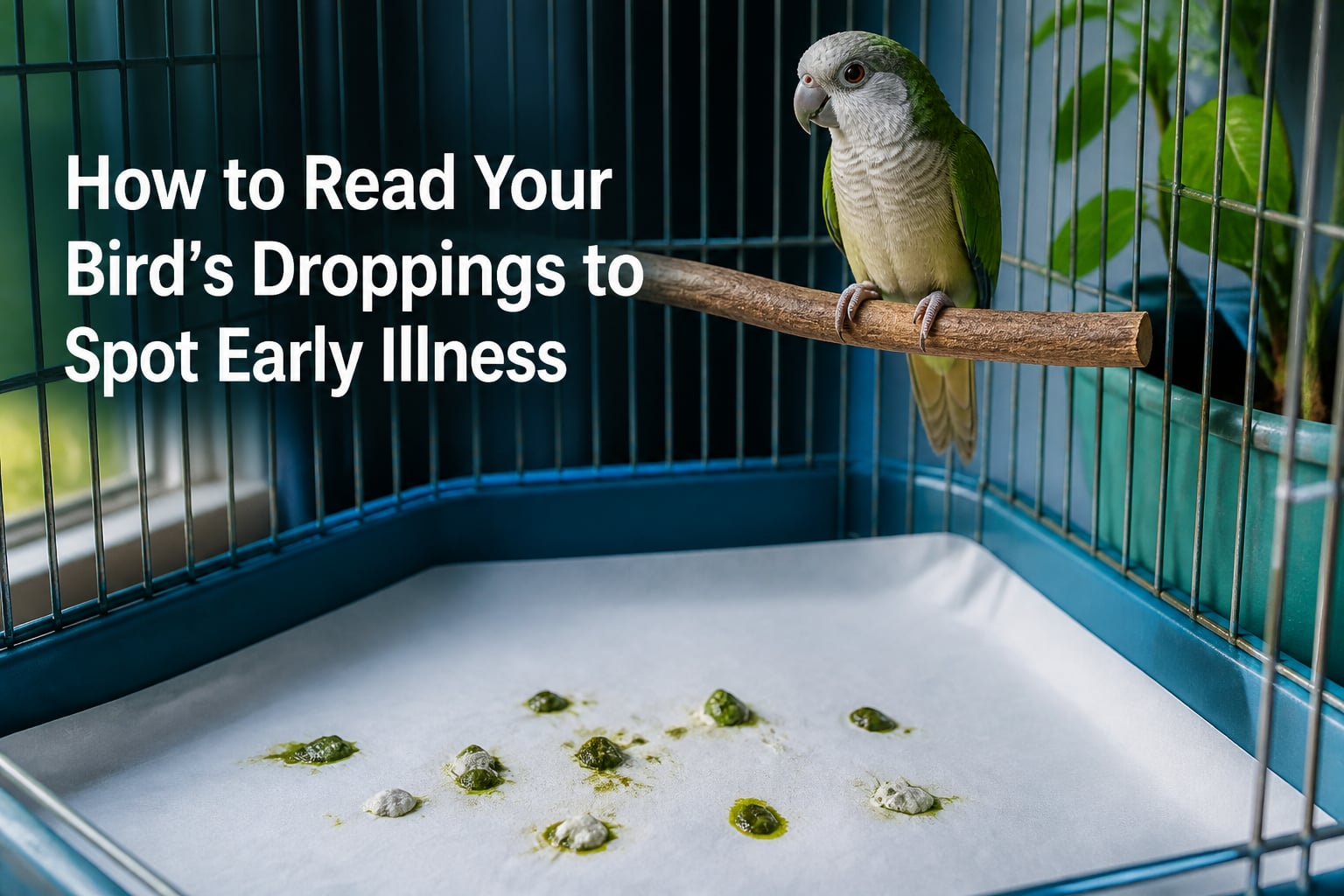
Learning how to read your bird’s droppings to spot early illness is one of the most valuable skills any bird owner can develop. Birds mask symptoms instinctively — by the time a parrot looks visibly sick, the illness is often advanced. Your bird’s droppings are the one window into their health that they cannot hide.
I have kept parrots and budgerigars for over a decade, and I can tell you that catching a problem through dropping changes has saved more than one of my birds. The sooner you notice something off, the better the outcome.
This guide walks you through what healthy droppings look like, which color and texture changes matter, and exactly when to pick up the phone and call your avian vet. Whether you have a cockatiel, a budgie, or a large parrot, these bird droppings illness signs apply across species.
Table of Contents
Why Your Bird’s Droppings Tell the Real Story?
Birds are prey animals. In the wild, showing weakness attracts predators, so birds have evolved to hide signs of illness until they physically cannot anymore. This means a bird can be seriously ill and still look perfectly normal.
Droppings bypass that survival instinct. What comes out of the cloaca reflects what is happening inside the digestive, urinary, and reproductive systems — in real time. No other daily observation gives you this much information.
Forum members on Avian Avenue and r/parrots consistently emphasize the same point: know your bird’s normal baseline before anything goes wrong. Once you know what normal looks like, the abnormal becomes obvious within hours rather than days.
The Three Components of Healthy Bird Droppings
Every dropping your bird produces is actually three things combined into one movement. Understanding each component is the foundation of bird dropping analysis.
Feces (The Solid Part)
The fecal portion is the digested food waste. In a healthy bird, it is a formed, semi-solid log or coil. The color ranges from olive green to medium brown depending on diet. It should hold its shape and not be watery or liquid.
Urates (The White Part)
Urates are the solid form of uric acid — essentially the bird equivalent of urine. They appear as a chalky white or off-white paste, usually sitting on top of or beside the feces. Birds do not produce liquid urine the way mammals do; urates are how they conserve water.
Liquid Urine (The Clear Part)
A small amount of clear, watery liquid surrounds the feces and urates. This is the actual liquid urine. A few drops are normal. A puddle that soaks the cage paper is not — that is called polyuria and warrants attention.
What Normal Bird Droppings Look Like
Normal bird droppings have a formed green-to-brown fecal center, a chalky white urate cap, and a small ring of clear liquid. There should be no strong odor, no blood, and no undigested food visible.
Frequency varies by species and diet. A budgie might produce 25 to 50 droppings per day. A large parrot produces fewer but larger movements. What matters most is consistency — you are looking for your bird’s personal normal, not comparing against a textbook average.
Use plain cage paper (newspaper, paper towels, or butcher paper) on the cage floor. Colored or printed liners make it harder to spot subtle color changes. I check the paper every morning before I refresh food and water — it takes about thirty seconds.
How to Read Your Bird’s Droppings to Spot Early Illness?
Here is the daily monitoring routine I follow with my own flock. It takes less than two minutes and has caught problems early more times than I can count.
Step 1: Line the cage with plain paper each evening. This gives you a fresh sample every morning and lets you see an entire night’s worth of droppings at once.
Step 2: Check color first thing in the morning. Look for the expected green or brown feces and the white urates. Any red, black, yellow, or undigested seed is a flag.
Step 3: Assess consistency. Pick up the paper and tilt it slightly. The feces should stay put. If it runs or soaks a large circle into the paper, note whether it is the feces or excess urine.
Step 4: Count the droppings. A drastic drop in the number of droppings overnight can mean your bird stopped eating — a serious red flag.
Step 5: Smell for odor. Healthy droppings have almost no smell. A foul or sour odor points to bacterial overgrowth or infection in the digestive tract.
Keep a simple mental note or a quick phone photo if something looks different. A single odd dropping is usually nothing. Two or more in a row that look abnormal is when you act.
Bird Poop Color Chart and What Each Color Means
Color is the single most useful indicator in abnormal bird droppings. Here is what each color typically signals.
Bright Red Feces
Bright red indicates fresh blood in the lower digestive tract or cloaca. Possible causes include cloacal papillomas, egg-binding in females, internal injury, or heavy metal toxicity. This is a veterinary emergency — do not wait.
Dark Black or Tarry Feces
Black, tarry droppings (called melaena) indicate digested blood from the upper digestive tract. This points to bleeding in the proventriculus or gizzard. It can signal ulcers, tumors, or proventricular dilatation disease. This also requires an immediate vet visit.
Yellow or Mustard-Colored Feces
Yellow droppings often point to liver disease or chlamydiosis (psittacosis). The liver processes biliverdin — the pigment that gives bird feces its normal green color. When the liver is not functioning properly, the color shifts toward yellow. Pancreatic issues can also cause this change.
Lime Green or Neon Green Feces
Unusually bright, lime-green feces can be a sign of chlamydiosis, a serious bacterial infection that is also transmissible to humans. It can also indicate liver stress or starvation (when a bird stops eating, the bile pigments dominate and turn the feces bright green). Either way, contact your vet.
Brown Feces
Brown is normal for birds eating formulated pelleted diets. If your bird eats seed and suddenly produces brown feces, check whether anything in the diet changed first.
Green Urates (Should Be White)
When the urate portion turns green instead of white, this strongly suggests liver disease. The liver is excreting biliverdin through the urates instead of processing it normally. This is one of the most reliable liver disease indicators in live birds.
Yellow or Orange Urates
Yellow urates can also signal liver dysfunction. Sometimes dietary supplements or certain medications cause temporary changes, but persistent yellow urates need veterinary investigation.
Diet Changes That Mimic Illness in Droppings
Not every strange dropping means illness. Diet is the most common cause of harmless color changes, and panicking over a false alarm is something every bird owner goes through.
Berries and beets turn feces red or purple. Pomegranate does the same — I have seen forum posts from panicked owners who forgot they fed pomegranate the night before. Sweet potatoes and carrots can give feces an orange tint. Pelleted diets commonly turn feces a consistent brown.
The way to tell the difference: diet-related color changes appear within hours of eating the food and resolve within a day once the food is out of the system. Illness-related changes persist and are usually accompanied by other shifts in consistency, frequency, or volume.
When in doubt, remove colored foods for 24 hours and see if the droppings return to normal. If they do, it was diet. If they do not, it is time to investigate further.
When to Call Your Avian Veterinarian
Some changes can wait 24 hours while you observe. Others cannot. Knowing the difference matters.
Call immediately (same day) if you see:
Bright red blood in feces or urine
Black, tarry, or coffee-ground textured feces
Complete absence of droppings for 12+ hours
Feces that are entirely liquid with no formed component
Yellow or lime-green feces combined with lethargy or fluffed feathers
A bird that is not eating and producing no feces
Monitor closely for 24 hours if you see:
Mildly increased urine (polyuria) without other symptoms
Slight color change that could be diet-related
One or two loose droppings among otherwise normal ones
Slightly decreased frequency but bird is eating and active
Birds deteriorate quickly. If you are ever unsure, call your avian vet and describe what you see. A good vet would rather answer a false alarm than see a bird that has been sick for three days.
Human Health Risks From Bird Droppings
Bird droppings can carry organisms that affect humans. The most well-known is psittacosis (chlamydiosis), caused by the bacterium Chlamydia psittaci. Infected birds shed the bacteria in their droppings and respiratory secretions. Humans can contract it by inhaling dried droppings dust.
Symptoms in humans resemble the flu — fever, chills, headache, muscle aches, and a dry cough. It is treatable with antibiotics but can be serious if ignored.
Practice simple hygiene: wash your hands after cleaning the cage, avoid stirring up dried dropping dust, use a damp paper towel rather than dry brushing when cleaning, and ensure good ventilation. Healthy pet birds from reputable sources are low risk, but routine precautions are always smart.
Frequently Asked Questions
What does my bird poop look like when it’s sick?
Sick bird poop may show bright red or black feces (blood), yellow or lime-green feces (liver disease or chlamydiosis), undigested seed, liquid-only consistency, increased clear urine (polyuria), or a foul odor. Any persistent change lasting more than one to two droppings warrants a vet call.
What are some signs that might indicate poor health in a bird?
Watch for fluffed feathers, lethargy, sitting at the bottom of the cage, loss of appetite, weight loss, changes in vocalization, discharge from eyes or nares, tail bobbing while breathing, and abnormal droppings. Birds hide illness well, so any combination of these signs means the bird is already quite sick.
What diseases can humans get from bird droppings?
The main concern is psittacosis (chlamydiosis), a bacterial infection that causes flu-like symptoms in humans. Histoplasmosis and cryptococcosis are fungal risks associated with accumulated droppings, mostly in outdoor or wild bird contexts. Hand washing and good cage hygiene keep the risk very low for pet bird owners.
How often should a healthy bird poop?
It depends on species and size. Small birds like budgies may produce 25 to 50 droppings per day, while larger parrots produce fewer but larger ones. The key is knowing your individual bird’s normal frequency — a sudden drop in output often means the bird has stopped eating.
Why is my bird’s poop suddenly a different color?
Color changes come from two sources: diet and illness. Berries, beets, pomegranate, and pellets can all change feces color within hours. If the color persists for more than a day after removing suspect foods, or comes with other symptoms, it points to a health issue like liver disease, internal bleeding, or infection.
Start Monitoring Today
Reading your bird’s droppings to spot early illness is not complicated, but it does require consistency. Line the cage with plain paper, take two minutes each morning to check color and consistency, and learn what your bird’s normal looks like before anything goes wrong.
The bird droppings illness signs covered here — color shifts, consistency changes, frequency drops, and odor — are your earliest warning system. Use it daily, and you give your bird the best chance at a long, healthy life.
If you are seeing something concerning right now, do not wait. Call an avian veterinarian today.