
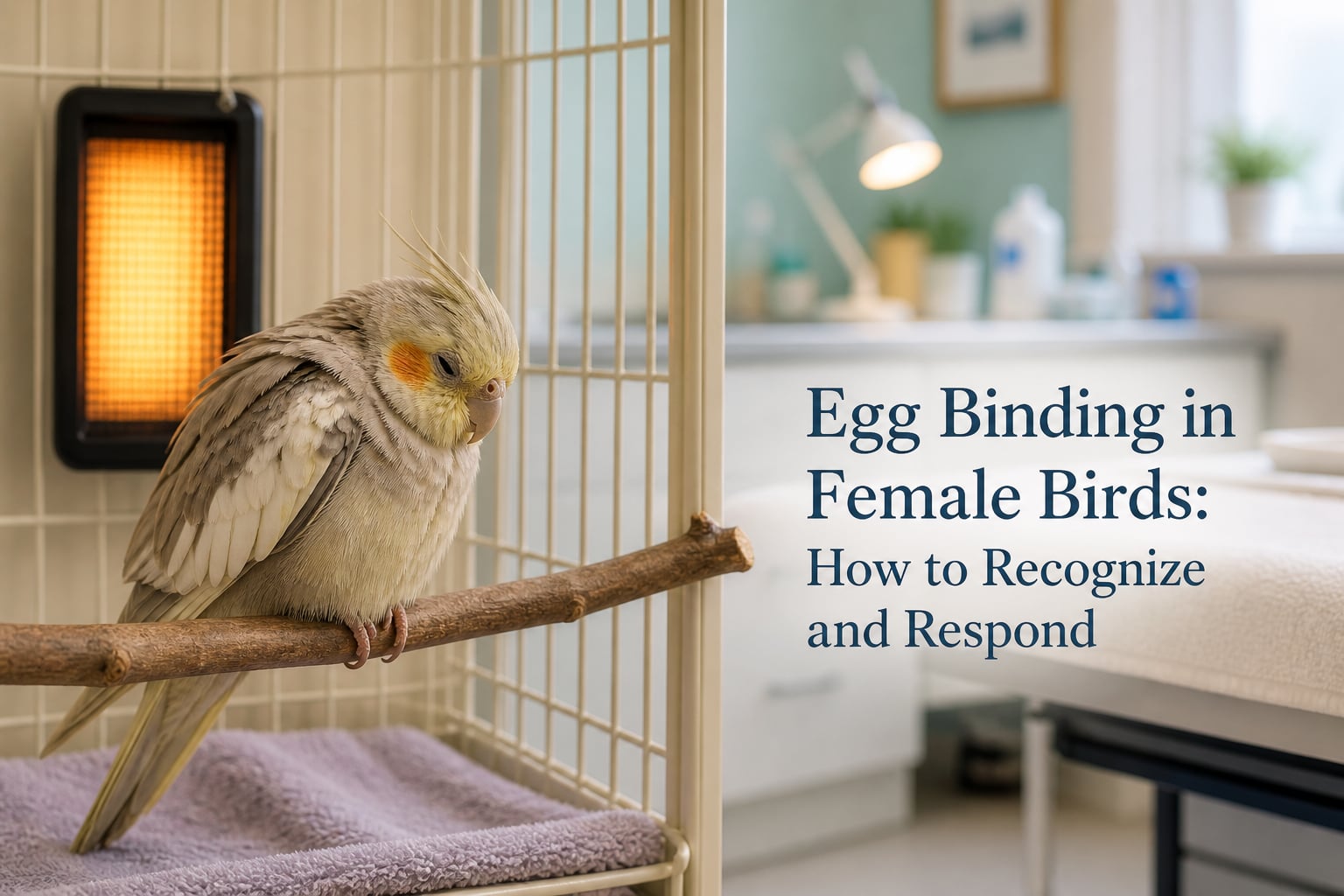
Egg binding in female birds is one of those emergencies that leaves no time to second-guess yourself. I have talked with cockatiel owners who lost hens within 36 hours, and with budgie owners whose birds pulled through after IV fluids and an oxytocin injection. The common thread is always speed. This guide walks through what egg binding actually is, the early warning signs you should never ignore, and exactly what to do if you suspect your hen is in trouble.
Whether you keep budgies, cockatiels, lovebirds, canaries, or finches, this is information worth bookmarking before you ever need it. A clear plan turns panic into action, and action is what saves lives.
Table of Contents
What Is Egg Binding in Female Birds?
Egg binding, also called dystocia, happens when a female bird cannot pass a fully formed egg through her oviduct and out through her cloaca. The egg becomes stuck somewhere along the reproductive tract, often in the lower oviduct or vagina, and it blocks more than just egg laying. It also compresses nearby organs and air sacs.
This is why egg binding in female birds is treated as a critical emergency. Within hours, the hen can become hypothermic, dehydrated, and unable to breathe comfortably. Untreated, egg binding kills most birds within 24 to 48 hours.
The good news is that birds treated quickly by an avian veterinarian have genuinely good survival rates. Catching the problem early is everything.
Which Female Birds Are Most at Risk for Egg Binding?
Egg binding can technically happen to any female bird, but vets consistently see it most often in smaller species. The list mirrors what I hear from avian clinics and what owners report on bird-keeping forums like r/cockatiel and r/budgies.
Budgies (parakeets) — the single most commonly affected species in companion bird practice.
Cockatiels — prone to chronic egg-laying, which compounds the risk.
Lovebirds — frequent and enthusiastic layers.
Canaries — tiny body size makes even one stuck egg dangerous.
Finches — often missed until the bird is already in crisis.
First-time layers and obese hens of any species face extra risk. So do birds on all-seed diets lacking calcium and vitamin D3.
What Causes Egg Binding in Birds?
Egg binding rarely has a single cause. It usually shows up when several risk factors stack up at once. The most common causes I see referenced in veterinary literature and breeder reports are listed below.
Calcium deficiency is the headline cause. Calcium drives the muscle contractions of the oviduct, and a hen running low simply cannot push the egg out. Seed-only diets are the usual culprit, since seeds are calcium-poor and phosphorus-rich.
Oversized or misshapen eggs can also cause egg binding. This is more common in young hens laying for the first time, and in hens whose egg production has been ramped up by artificial lighting or warm temperatures.
Obesity reduces muscle tone and fat deposits crowd the coelomic cavity. The egg physically has less room to move.
Soft-shell or shell-less eggs sometimes get stuck because the soft membrane folds and grips the oviduct walls. Underlying calcium or vitamin D3 deficiency is usually part of the picture here too.
Chronic egg-laying exhausts the hen’s reserves. A bird laying back-to-back clutches, month after month, eventually runs out of the calcium and energy needed for smooth laying.
Infection, tumors, or previous reproductive tract injury can mechanically block the oviduct. These are less common but they do happen, especially in older hens.
Early Warning Signs of Egg Binding in Female Birds
The signs of egg binding in female birds range from subtle to dramatic. Watch for any combination of the symptoms below, especially if your hen is a small species of reproductive age.
Sitting low on the perch or on the cage floor. A hen who usually perches high but suddenly stays low is signaling weakness.
Tail pumping or visible straining. Repetitive up-and-down tail bobbing is the classic “trying to pass an egg” motion.
Swollen abdomen or a visible bulge near the vent. You may even see the outline of the egg through the skin on a small bird.
Fluffed-up feathers and shivering. Egg-bound hens often become hypothermic because they stop eating and burning energy to push.
Labored breathing or a wide-legged stance. The stuck egg presses against air sacs, making every breath harder.
Droppings that look different or stop entirely. The egg can block the cloaca, preventing normal waste elimination.
Lameness or favoring one leg. Pressure on pelvic nerves causes one foot to grip poorly or tremble.
Sudden loss of appetite and lethargy. A normally active hen sitting puffed up and quiet is in real trouble.
One cockatiel owner I read about on a forum noticed her hen sit on the bottom of the cage and assumed she was sleepy. By the next morning the bird was barely responsive. Speed is the lesson owners repeat over and over.
Egg Binding vs Normal Egg Laying: How to Tell the Difference
This is one of the most common questions from new bird owners, and it shows up constantly on bird-keeping forums. How do you know when straining is normal and when it is an emergency?
Normal egg laying can involve several hours of visible effort, tail bobbing, and time spent in the cage bottom or nest box. The hen should still be alert, responsive, eating, and capable of perching between contractions. The egg typically passes within a few hours.
Egg binding is different because the bird gets worse over time instead of better. If the hen has been straining for more than a few hours with no egg, is visibly puffed up, has stopped eating, or shows any labored breathing, you are no longer looking at normal laying. You are looking at a true emergency.
Other conditions that get mistaken for egg binding include egg yolk peritonitis, tumors, cloacal prolapse, and severe constipation. A vet visit is the only way to know for sure, and as a general rule, it is far better to make an unnecessary trip than to lose a bird by waiting.
Emergency Action: What to Do If You Suspect Egg Binding
If you suspect egg binding in female birds, you have a short window. Here is the exact sequence our team recommends based on what avian vets and experienced owners have published.
Step 1: Call an avian vet immediately. Regular dog-and-cat vets often cannot treat egg binding. Search for an avian-certified vet or an emergency exotics clinic before you need one. Keep that number saved in your phone.
Step 2: Warm up the travel carrier. Egg-bound hens lose body heat fast. Aim for 85 to 90°F (29 to 32°C) in the carrier. Use a low heating pad under one side only, a warm (not hot) water bottle wrapped in a towel, or a microwaved sock of rice. Leave half the carrier unheated so the bird can move away if she gets too warm.
Step 3: Keep the environment calm and dim. Cover the carrier with a light cloth and skip loud music, kids, or other pets. Stress tanks blood pressure and oxygen levels already strained by the stuck egg.
Step 4: Do not try to massage the egg out. This is one of the most repeated pieces of advice from avian vets. Internal pressure from squeezing can rupture the oviduct, push the egg back up the tract, or shatter a soft shell inside the bird. Leave extraction to the professionals.
Step 5: Do not give home remedies without vet guidance. Lubricants, calcium gel, and warm baths are circulating online. Some of them help in narrow situations, but in others they delay real treatment. Always call the vet first.
Step 6: Get to the clinic as fast as safely possible. Aim to be seen within hours, not the next day. Egg binding is one of the rare conditions where delays directly cost lives.
How Veterinarians Diagnose and Treat Egg Binding
Knowing what happens at the clinic often lowers owner anxiety, so here is the typical sequence an avian vet runs through.
Physical exam. The vet gently palpates the abdomen to feel for the egg and checks heart rate, breathing, hydration, and crop contents. With small birds, the egg can sometimes be felt through the body wall.
Radiograph (X-ray). A quick lateral view confirms the egg’s size, position, and shell density, and rules out other causes like masses or peritonitis. This is where you would also see the classic “compare a normal bone density” image some clinics share for educational purposes.
Stabilization. Before any egg removal, the vet addresses shock. This usually includes subcutaneous or intraosseous fluids for dehydration, external heat for hypothermia, and a calcium gluconate injection to restore muscle function. Many hens perk up noticeably after calcium alone.
Medical treatment. If the hen is stable and the egg is well-positioned, the vet may give oxytocin or prostaglandins to stimulate oviduct contractions. Combined with warmth and fluids, this works for many cases.
Manual or surgical removal. If the egg will not pass, the vet may collapse a soft-shelled egg by aspiration (drawing out the contents through a needle), or perform an ovocentesis to gently collapse a hard-shelled egg so it can be passed. In severe or recurrent cases, a salpingohysterectomy (removal of the oviduct) may be recommended.
One budgie owner shared that her bird made it through two days of treatment involving IV fluids, calcium injections, and eventually an oxytocin dose that did the job. That kind of timeline is normal and not a sign the treatment is failing.
Recovery and Aftercare Following Egg Binding Treatment
Once the egg is out, your hen still needs careful monitoring for several days. The oviduct is stretched and inflamed, calcium reserves are depleted, and the bird’s immune system is under stress.
Keep her in a quiet, warm space for at least 48 hours, with easy access to food and water. Offer favorite soft foods like millet spray, scrambled egg, or warm pellets to coax eating. Watch droppings closely for signs of infection or continued straining.
Follow-up vet checks typically happen within a week, with another radiograph if there is any concern about retained shell fragments. Calcium and vitamin D3 supplementation usually continues for a month or longer to rebuild reserves.
How to Prevent Egg Binding in Female Birds?
Prevention is far less expensive and traumatic than treatment. The most effective prevention strategies target the underlying causes directly.
Feed a calcium-rich, balanced diet. Convert seed-only diets to pellets or a seed-pellet mix, and add dark leafy greens, chopped broccoli, and a quality cuttlebone or mineral block. Many vets recommend a calcium supplement during the laying season.
Manage light cycles carefully. Long daylight hours trigger hormones that drive egg laying. Aim for 10 to 12 hours of darkness every night, mimicking natural seasonal cycles. Cover the cage or move the bird to a dark room if needed.
Remove nest-like areas. Hut toys, shadowy tents, drawers, and any enclosed space the hen can burrow into can switch her reproductive drive on. Rearrange or remove these whenever a laying cycle starts.
Maintain a healthy weight. Trim-seed diets, encourage exercise with flight time, and ask your vet for a body-condition assessment. Obese hens lay harder eggs and struggle more with passing them.
Limit breeding triggers. Petting on the back or under the wings, prolonged physical closeness, and constant access to a mate or mirror all stimulate hormone production. Keep interactions on the head and neck only.
Consider hormone therapy for chronic layers. In extreme cases, an implant such as deslorelin can pause egg production for months. It is worth asking your avian vet about if your hen cycles back into laying the moment you correct one trigger.
Managing Chronic Egg-Laying in Female Birds
Some hens lay egg after egg regardless of how careful their owners are. Cockatiels in particular are notorious for this. Chronic egg-laying drains calcium, weakens bones, and stacks the deck against each successive egg.
Long-term management combines all the prevention steps above with veterinary oversight. Some hens benefit from hormone implants, while others eventually need a salpingohysterectomy to permanently stop the cycle. Surgery is a last resort, but for birds laying 6, 8, even 10 eggs in a row with no break, it can be life-saving.
The key is to track how often your hen lays, share that log with your vet, and act early when a pattern of over-laying shows up.
Frequently Asked Questions About Egg Binding in Female Birds
Can birds survive egg binding?
Yes, many birds survive egg binding when they receive veterinary care quickly. Survival rates drop sharply when treatment is delayed past 24 to 48 hours. With fluids, calcium, warmth, and either hormonal support or careful extraction, even very sick hens often make a full recovery. The single biggest predictor of survival is how fast the owner gets the bird to an avian vet.
How do you resolve egg binding in birds?
Most cases are resolved in a veterinary clinic, not at home. Treatment typically includes warmth, subcutaneous or intraosseous fluids, a calcium gluconate injection, and a dose of oxytocin or prostaglandin to stimulate contractions. If medical treatment fails, the vet may aspirate the egg contents or perform ovocentesis to gently collapse the egg so it can pass. In severe or recurring cases, surgery to remove the oviduct (salpingohysterectomy) may be recommended.
What can be mistaken for egg binding in birds?
Several conditions look similar to egg binding. Egg yolk peritonitis causes a swollen abdomen and labored breathing without a stuck egg. Cloacal prolapse looks like a bulge near the vent but comes from tissue, not an egg. Internal tumors, severe constipation, and infections can also mimic the fluffed-up, lethargic appearance. A radiograph is the fastest way for a vet to confirm or rule out egg binding.
What are the early signs of egg binding in female birds?
Early signs include sitting low on the perch or on the cage floor, repeated tail pumping, a swollen abdomen, labored breathing, fluffed-up feathers, shivering, sudden lethargy, droppings that change or stop, and sometimes favoring one leg. The single most reliable warning is a hen of a high-risk species (budgie, cockatiel, lovebird, canary, finch) staying on the cage floor when she would normally perch up high.
Final Thoughts on Egg Binding in Female Birds
Egg binding in female birds is one of the few true “drop everything” emergencies in companion bird ownership. The condition moves fast, the symptoms overlap with several other illnesses, and the difference between life and death is usually measured in hours rather than days.
The best thing you can do right now is save an avian vet number in your phone and stock your carrier with a heat source. The second-best thing is to look at your hen’s diet, light cycle, and access to nest-like hiding spots, and tighten each one of those areas. Most cases of egg binding are preventable with steady, simple husbandry changes.
Whenever in doubt, treat the situation as the emergency it might be, and let your vet tell you otherwise.