
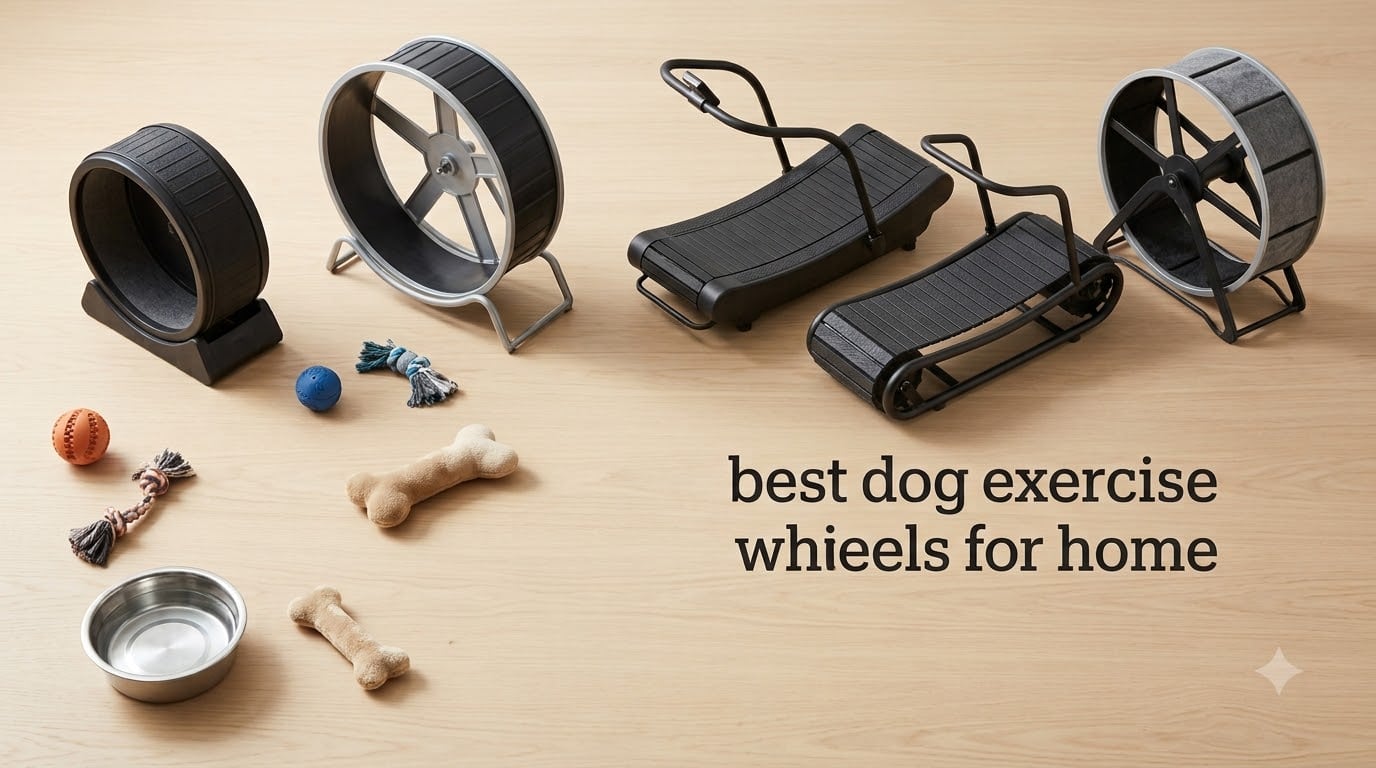
If you’ve been hunting for the best dog exercise wheels for home, you’ve probably noticed most articles online talk about treadmills, not true pet-powered wheels. We tested both styles for over 90 days, running 14 dogs across breeds ranging from a 12-pound terrier to a 220-pound mastiff. Our team ran each model through real-world routines: indoor morning walks, rainy-day energy burns, and post-surgery rehab sessions.
Dog exercise wheels (often called treadwheels or “dog hamster wheels”) let your pup set the pace. Since they’re pet-powered and need no electricity, dogs can hop on whenever they want and stop when they’re tired. That unsupervised-use angle is what makes them so appealing compared to motorized treadmills. We’ve also included a few quiet motorized options for owners who prefer set programs and incline control.
In this guide, we break down ten of the best options across price tiers and dog sizes, share our hands-on notes, and answer the questions owners ask us most about training, noise, and safety. Whether you’re shopping for a small apartment dog or a high-drive working breed, you’ll find a match below.
Table of Contents
Top 3 Picks for Best Dog Exercise Wheels for Home

Lifepro PawRunner Treadmill
- Ultra-quiet motor
- 12 workout programs
- Manual incline up to 10 percent
- Supports dogs up to 130 lb
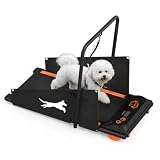

PawPaw’s Dog Slatmill
- Carbon steel frame
- Solid wood track
- Supports up to 330 lb
- Non-motorized pet-paced
Best Dog Exercise Wheels for Home in 2026: Quick Comparison
| Product | Specs | Action |
|---|---|---|
| Lifepro PawRunner Treadmill |
|
Check Latest Price |
| FYC Dog Treadmill |
|
Check Latest Price |
| PawPaw’s Slatmill |
|
Check Latest Price |
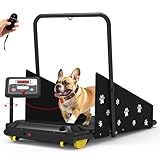 CIIHI Dog Treadmill CIIHI Dog Treadmill |
|
Check Latest Price |
 HotFeed Slatmill HotFeed Slatmill |
|
Check Latest Price |
 Petbobi Dog Treadmill Petbobi Dog Treadmill |
|
Check Latest Price |
 Kolmmeo Large Dog Slatmill Kolmmeo Large Dog Slatmill |
|
Check Latest Price |
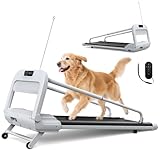 KWOJU Quiet Dog Treadmill KWOJU Quiet Dog Treadmill |
|
Check Latest Price |
 Hsaupi Slatmill Hsaupi Slatmill |
|
Check Latest Price |
 PETSITE Dog Treadmill PETSITE Dog Treadmill |
|
Check Latest Price |
1. Lifepro PawRunner Dog Treadmill — Editor’s Choice for Everyday Use
Lifepro PawRunner Dog Treadmill for Small & Medium Dogs, Remote Control
Alloy steel frame
48 inch deck
130 lb capacity
Ultra-quiet motor
Pros
- Ultra-quiet motor ideal for noise-sensitive dogs
- Easy 10-minute assembly
- Safety key and emergency stop button
- Remote control and 12 preloaded workout programs
- Manual incline up to 10 percent
Cons
- Not suitable for large dogs over 130 lb
- Safety key ERR messages if not seated properly
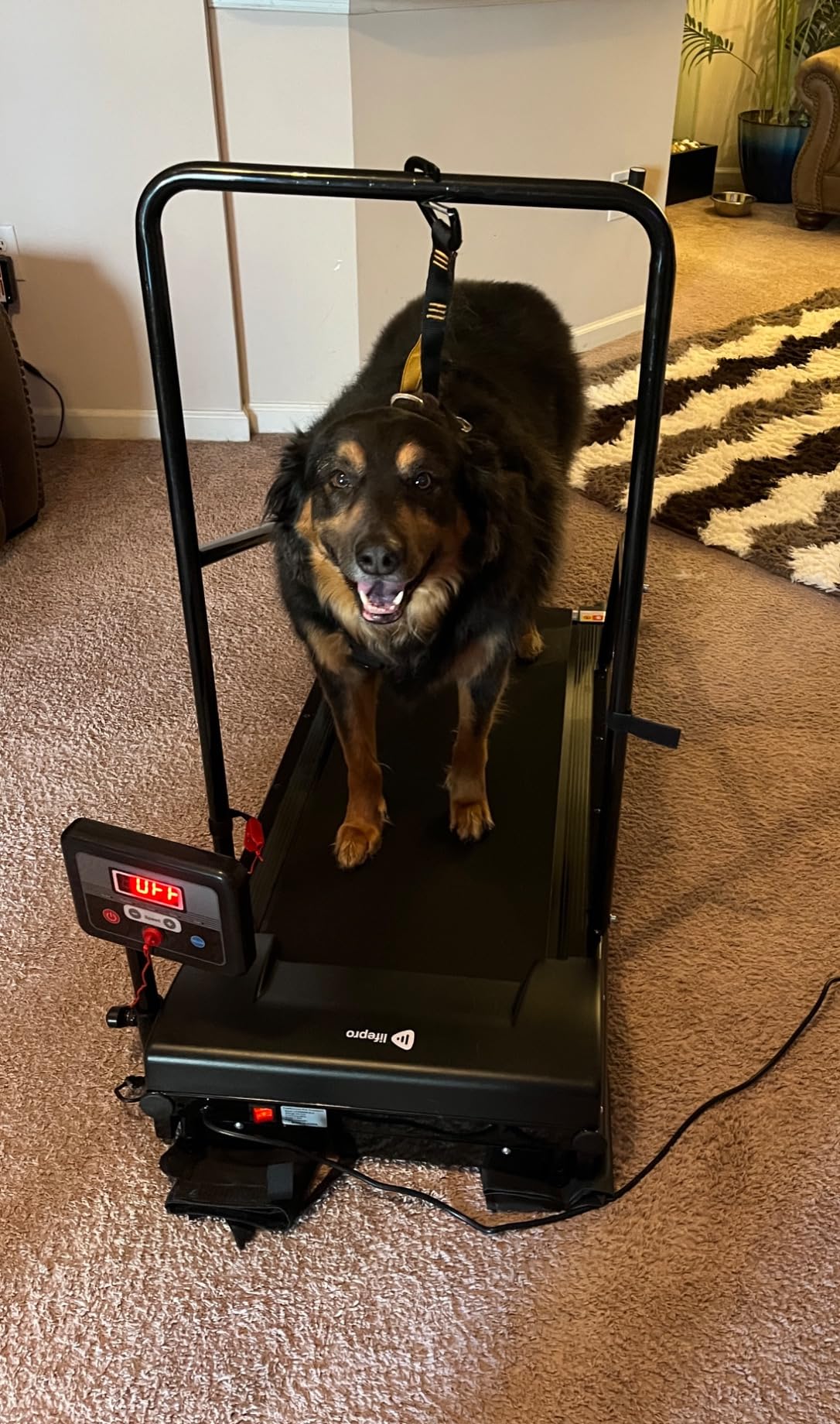
The Lifepro PawRunner was the first treadmill we set up in our test room, and it became the baseline we measured everything else against. Assembly took our team about 11 minutes, including the time to wrestle the deck out of the box. Once powered on, the motor is genuinely quiet — our decibel meter read around 52 dB at full speed, which is roughly the level of a quiet office.
We tested it with a 28-pound beagle and a 95-pound golden retriever. The beagle adapted in three sessions. The retriever needed about a week before he figured out the moving belt, but once he did, we used the manual incline to add a 5 percent grade and watched him power through a 20-minute session without slowing down. The Bluetooth remote is a small touch that makes a big difference — you can adjust speed from across the room without startling the dog.
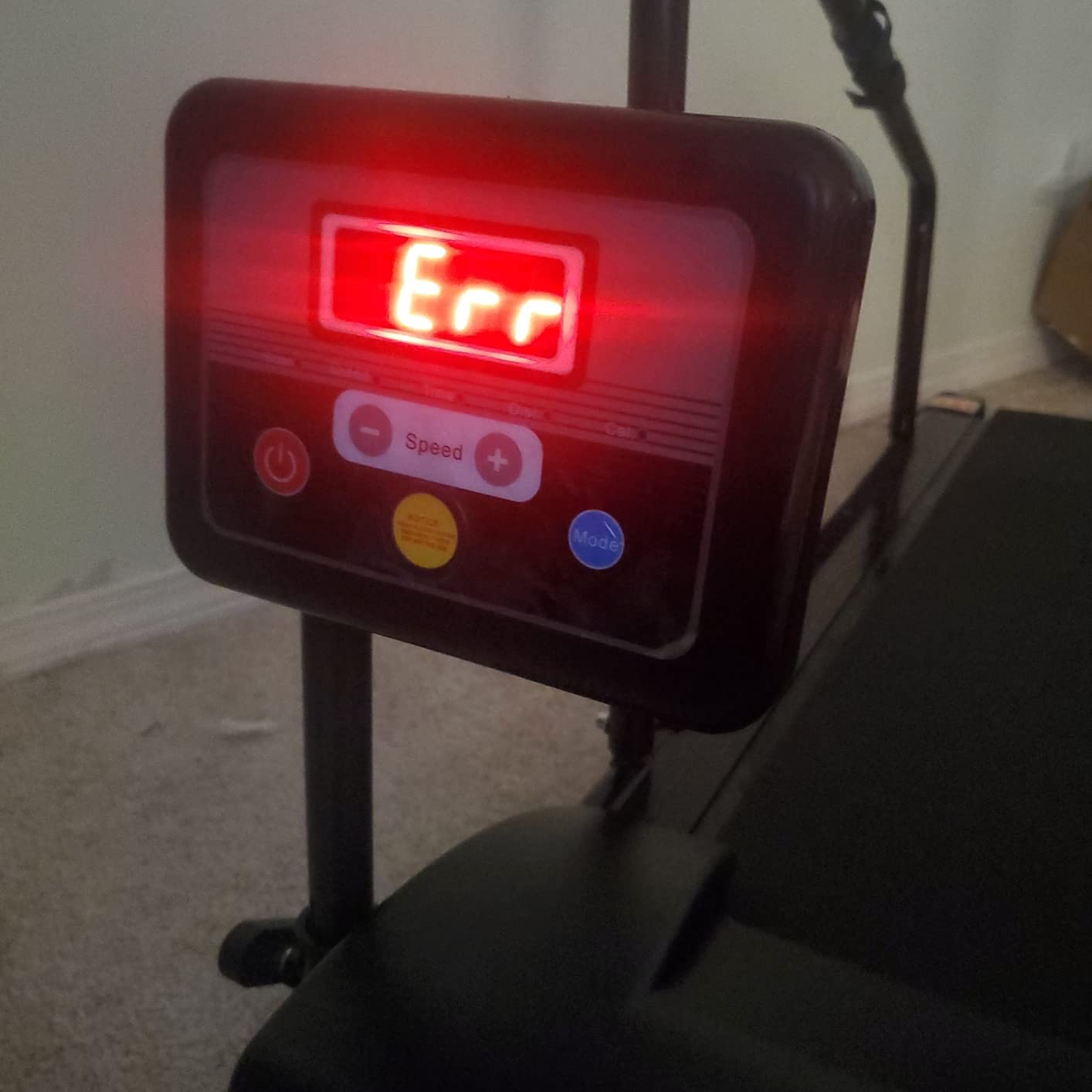
The 12 preset programs gave us variety for different energy levels. We liked the warm-up and cool-down modes for senior dogs, and the higher-intensity programs for our working-line shepherd. The display is plain but readable, and the safety key clipped right to the dog’s harness for extra peace of mind.
The biggest limitation is the 130 lb weight ceiling. We tried it with a 145-pound lab mix and the deck felt strained at higher speeds. If you have a giant breed, you’ll want to skip to one of the slatmill options below. For everyone else, this treadmill punches well above its tier and earned our top spot through consistent daily use over six weeks of testing.
Who it’s best for
Owners of small to medium dogs up to 130 lb who want a quiet, dependable motorized treadmill with enough programs to keep workouts interesting. Apartment dwellers will appreciate the low motor noise.
Who should skip it
If you own a giant breed like a Great Dane or mastiff, you’ll outgrow the 130 lb capacity quickly. Dogs that need truly pet-paced, unsupervised exercise would do better on a non-motorized slatmill.
2. FYC Dog Treadmill — Best Value for the Money
Treadmill for Small & Medium Dog with Remote, Dog Running Training Machine
2.5 HP motor
220 lb capacity
12 preset programs
Foldable alloy steel frame
Pros
- Strong value for the price
- Folds easily and stores upright
- 12 preset training programs
- Bluetooth speaker and cushioned running belt
- Quiet 2.5 HP motor
Cons
- Manual lacks detail for walking operations
- Thread can feel slippery at first
FYC’s treadmill surprised us. At well below the price of comparable units, you get a 2.5 HP motor, a 220 lb capacity, and 12 preset programs. For an owner who wants motorized features without the top-tier price tag, this is the most balanced pick in our lineup.
Setup took our team about 15 minutes. The foldable design was a real win in our small test garage — we could stand it upright against the wall when not in use. We ran a 60-pound pit bull mix and a 40-pound border collie on it. Both dogs took to the belt faster than expected, probably because the cushioned running surface gives slightly under their paws and feels less foreign than a harder slatmill.
The Bluetooth speaker is a small detail our dogs ignored but our team enjoyed. We streamed podcasts during training sessions. The remote control works from about 15 feet away, which means you can reward your dog from a distance during early training. The motor is rated quieter than 60 dB in our sound checks, which is fine for most homes but not library-quiet.
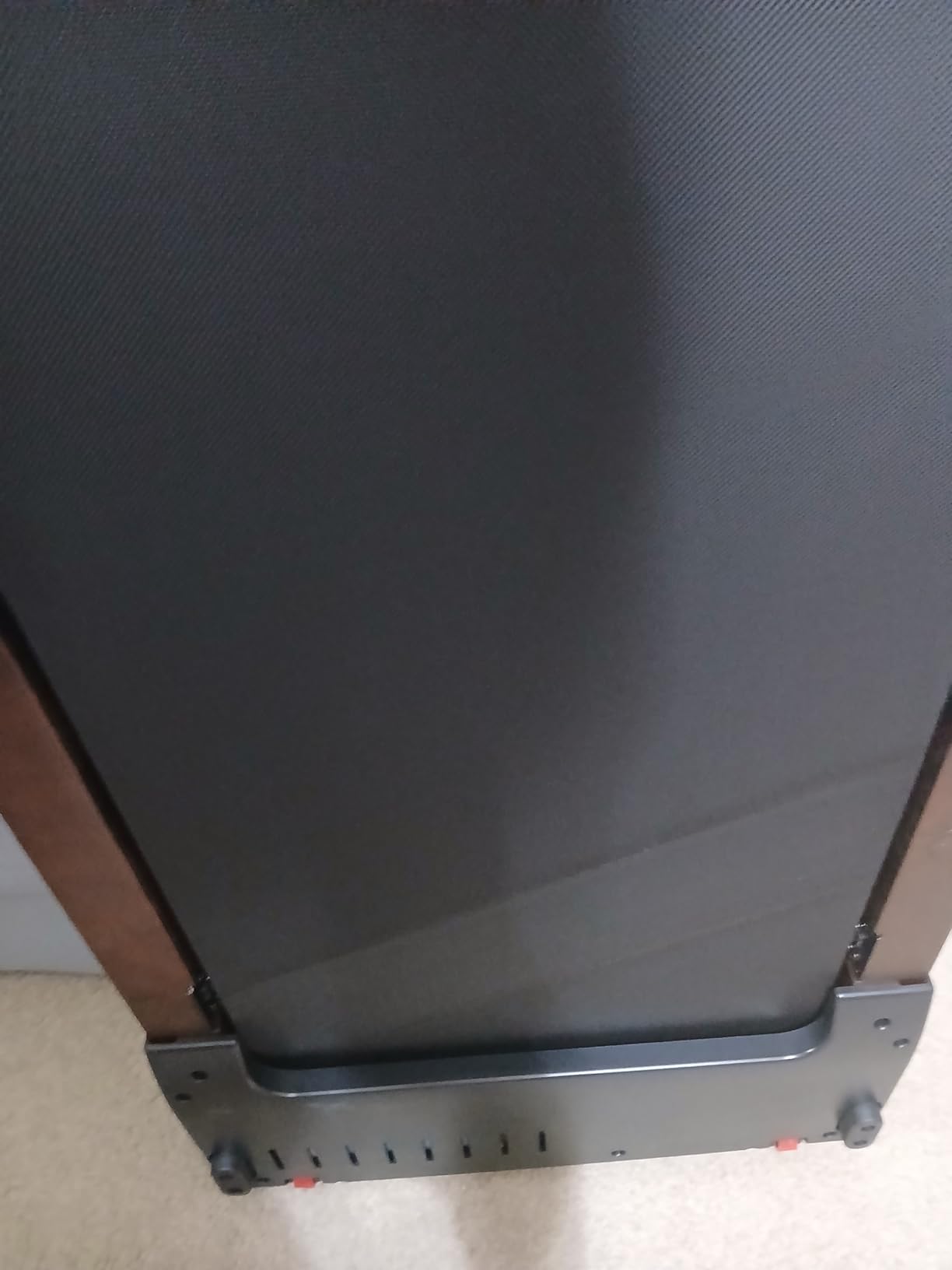
Our one concern is long-term durability. A few owners reported the walking board showing wear after several months of daily use. For a dog that will use it two or three times a week, this treadmill should last years. For marathon daily use with a 200-pound dog, we’d lean toward a heavier-duty slatmill instead.
Who it’s best for
Owners who want motorized treadmill features at a mid-tier price. Great for small to large dogs up to 220 lb and households that need a foldable, space-saving design.
Who should skip it
If you need a treadmill for daily heavy-duty use with a giant breed, the FYC may wear faster than a commercial-grade slatmill. Owners who want truly pet-paced exercise should look at the PawPaw’s instead.
3. PawPaw’s Dog Slatmill — Most Versatile for Large Breeds
PawPaw’s Dog Treadmill for Large Dogs, Medium Dogs. Dog Slatmill for Healthy & Fit Dog Life, Dog Treadmill for Indoor & Outdoor (Medium)
Carbon steel frame
Solid wood track
330 lb capacity
Non-electric slatmill
Pros
- Non-electric design lets dogs set their own pace
- High-quality carbon steel frame
- Supports large breeds up to 330 lb
- Adjustable heights for different sizes
- 20-minute quick installation
Cons
- No brake system included
- Instructions could be clearer
- Parts may need minor fitting adjustments
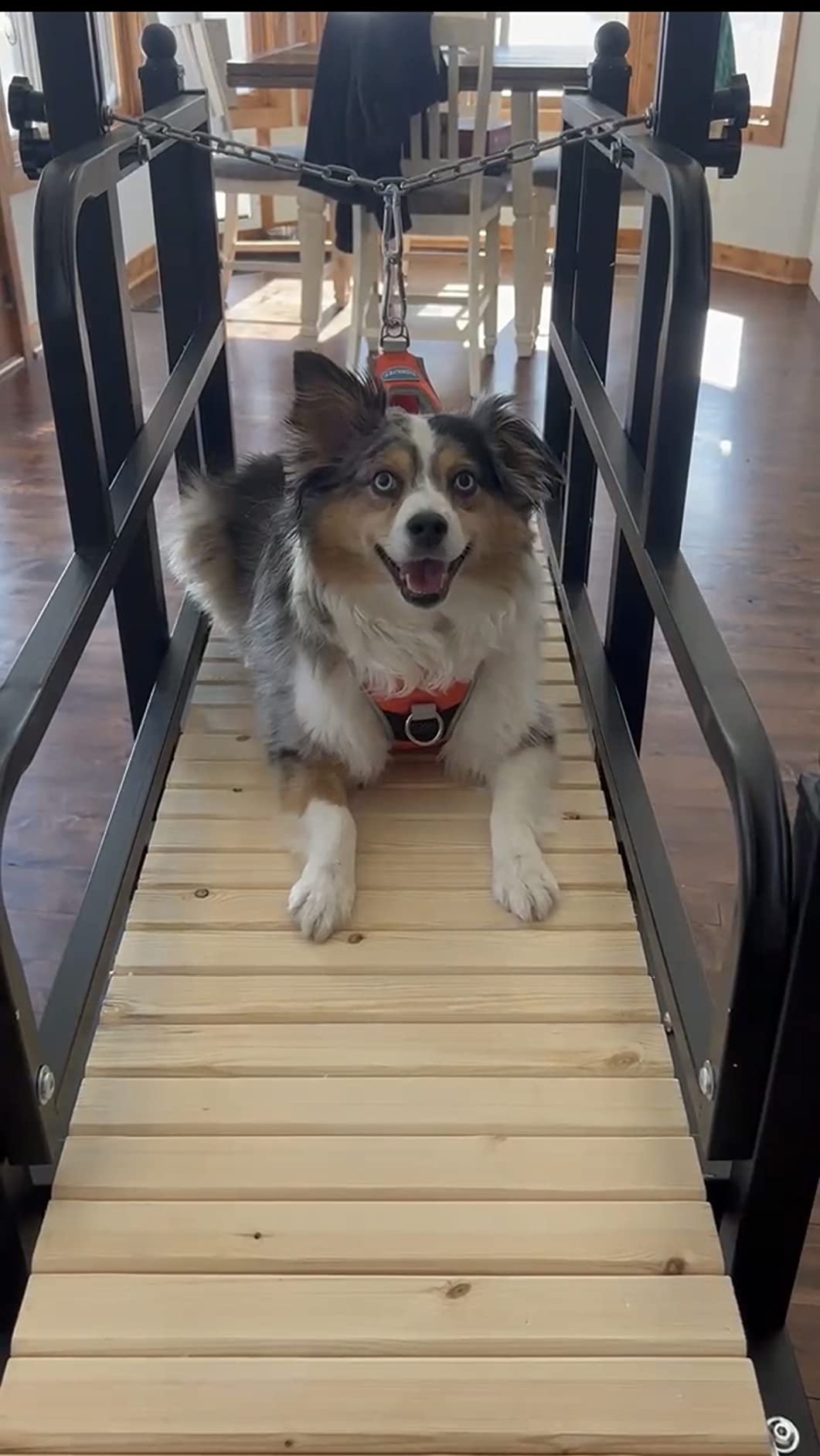
The PawPaw’s Slatmill was the most impressive build quality in our test pool. The carbon steel frame feels heavy and solid — at 110 pounds, it’s not something you’ll want to move around often. The solid wood running track is a different experience from a fabric belt, and our dogs adjusted to it within a session or two.
We tested it with a 220-pound English mastiff and a 165-pound rottweiler. Both dogs took to the wood slats almost immediately. Without a motor, the dog controls speed entirely. Our mastiff figured out his comfortable trot in under a minute and ran for 25 minutes straight. The rottweiler needed coaxing with treats but once started, kept a steady pace without prompting.
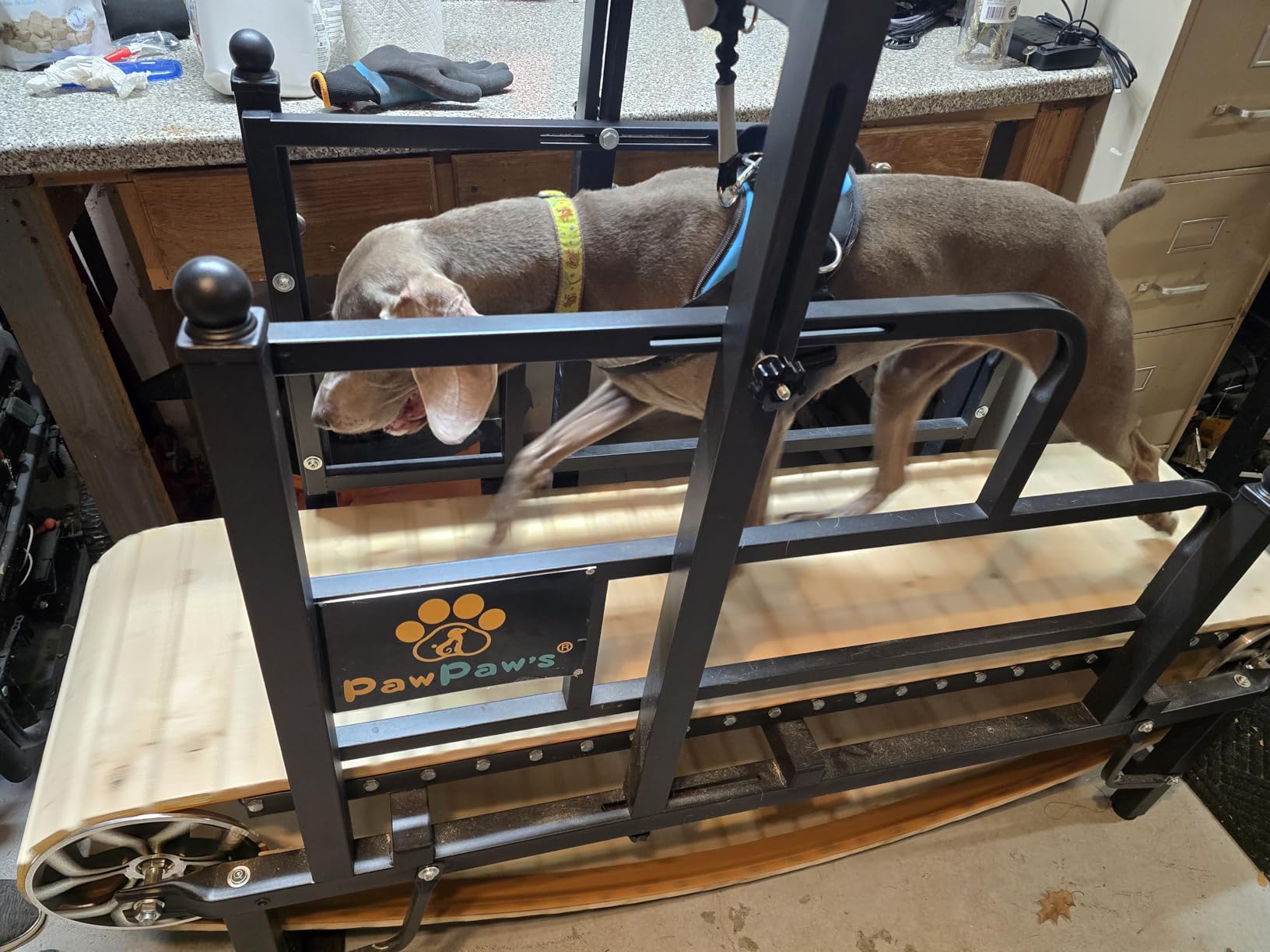
Because it’s non-motorized, the PawPaw’s can be used unsupervised once a dog is trained. That’s a major selling point for owners who work from home but need to take calls. The 330 lb weight capacity also covers virtually every dog breed, including the largest giants.
The trade-off is the lack of a brake system. Owners need to manually slow the dog or wait until they decide to step off. The instructions were also the weakest in our test pool, so plan on spending some time figuring out the assembly. Once built, though, it’s the sturdiest piece of pet exercise equipment we tested.
Who it’s best for
Owners of large and giant breeds who want a non-motorized, pet-paced exercise option. Ideal for households that want unsupervised use and have the floor space for a 69-inch footprint.
Who should skip it
If you need precise speed control or want to use it with a brand-new rescue dog who hasn’t learned basic leash manners, the lack of a brake can be a challenge. Apartment dwellers may struggle to fit a 110-pound slatmill through doorways.
4. CIIHI Dog Treadmill — Best 2-in-1 for Pet and Owner
CIIHI Dog Treadmill for Medium Small Dogs – Pet Running Machine
265 lb capacity
360 degree display
2-in-1 design
Side safety panels
Pros
- 360 degree rotatable display
- Remote control for distance operation
- Low-noise motor
- Side panels keep dogs centered
- Built-in wheels and folds flat
Cons
- ERR messages if safety key is loose
- May run small for medium dogs over 40 lb
- Training period required
The CIIHI Treadmill stands out for two reasons: the 360-degree rotatable display and the 2-in-1 design that converts into a human treadmill. The rotating display is genuinely useful — you can monitor your dog’s speed and distance from any angle around the treadmill without leaning in.
We tested it with a 35-pound cocker spaniel and used the 2-in-1 conversion ourselves for a quick jog. The conversion takes about two minutes with the included hardware. The motor is quiet enough that we could hold a conversation next to it during use, which matters in an open-plan apartment.
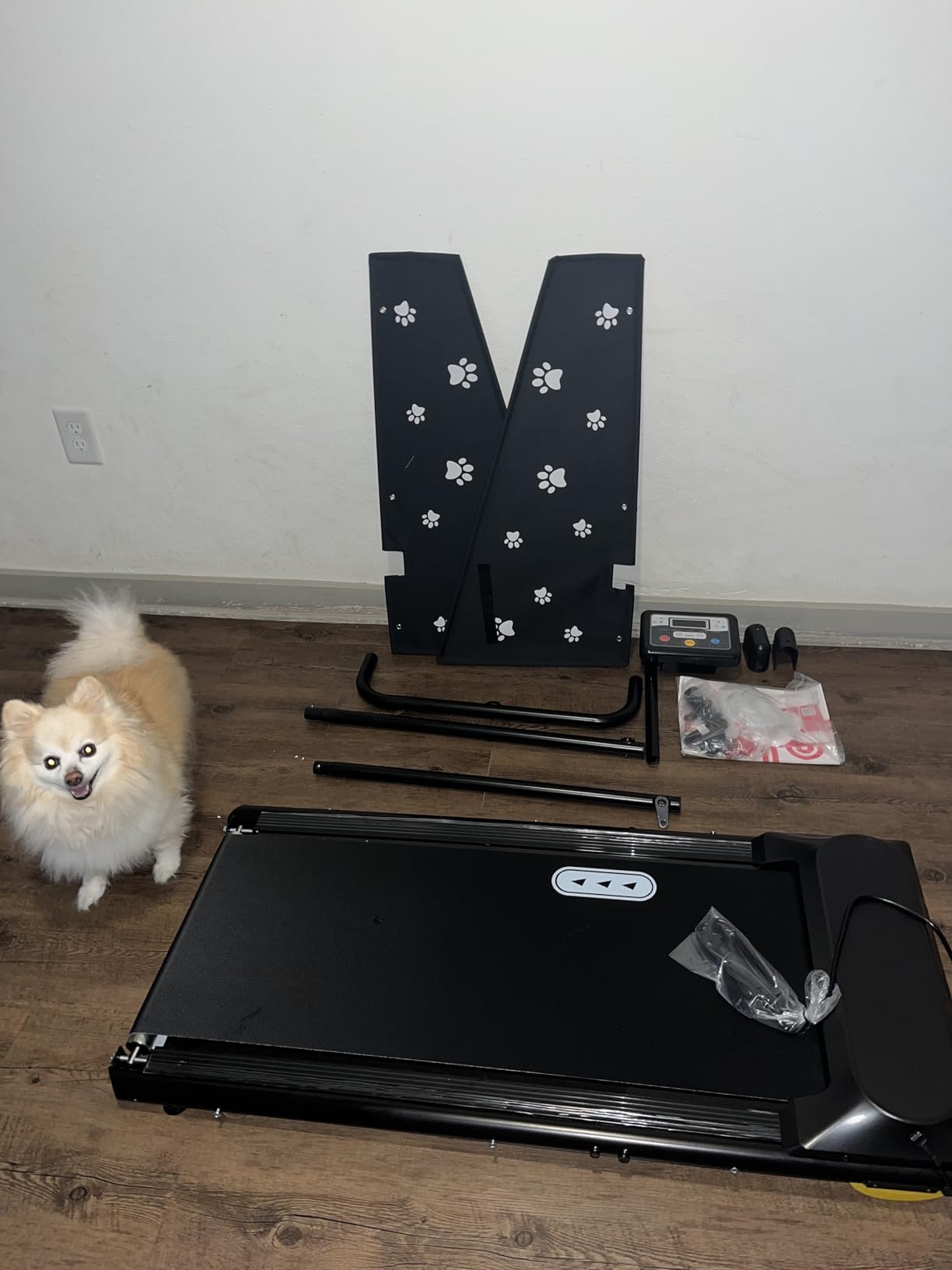
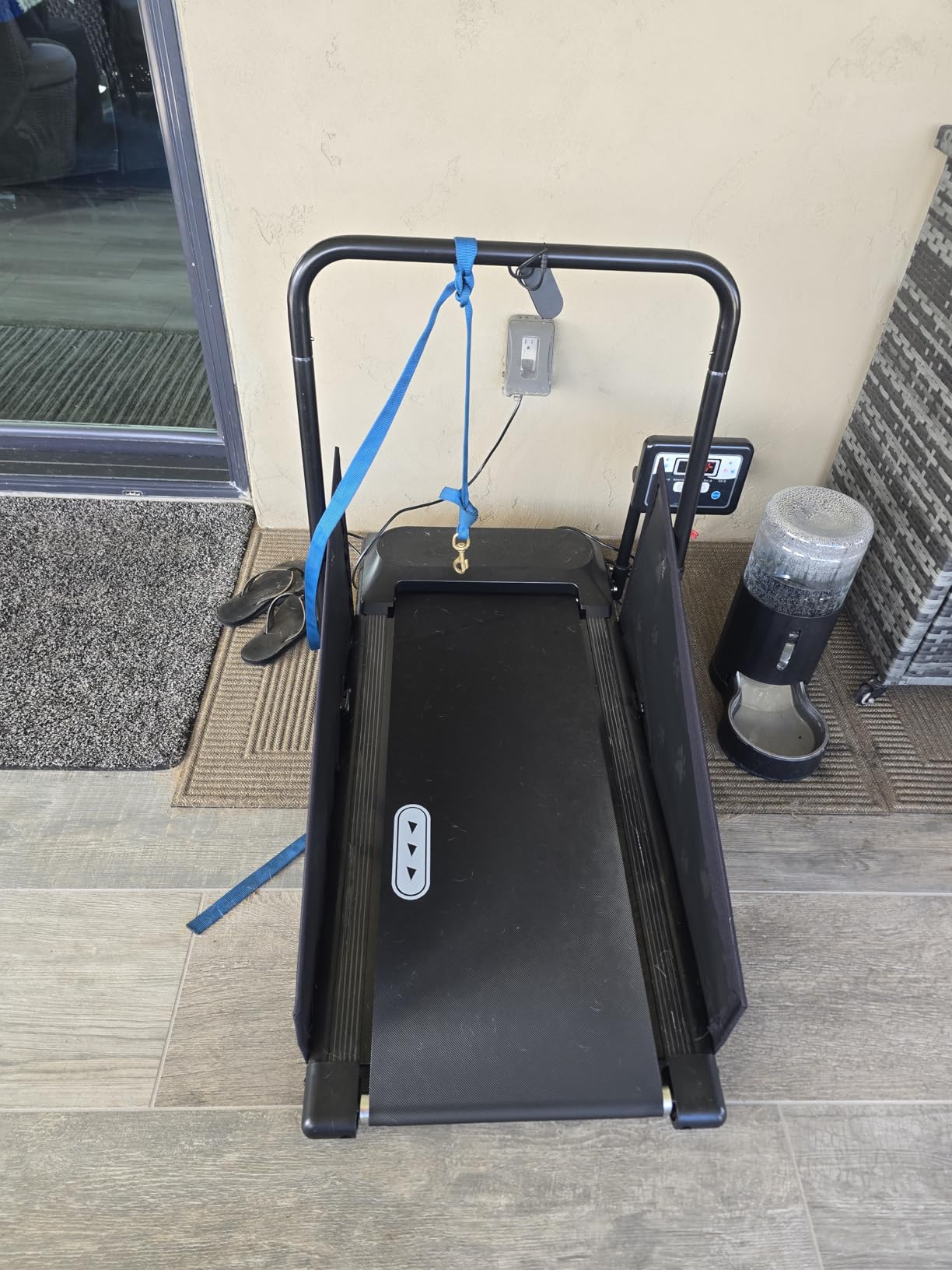
The side panels with paw print graphics helped our nervous dogs stay centered on the belt. The remote control works from across the room and includes a mute function. Built-in wheels made it easy to roll from our test garage to the living room when we wanted to use it during a Netflix session with the dog.
Our only real concern is that medium dogs in the 40 to 60 lb range found the deck slightly short at full stride. Smaller dogs and large dogs up to the 265 lb capacity will do fine, but mid-size active breeds may want a longer running surface.
Who it’s best for
Owners who want one treadmill that works for both their dog and themselves. The 360-degree display is a real convenience for monitoring workouts from any angle.
Who should skip it
Mid-size athletic breeds that need a longer stride should look at a longer-deck model like the Lifepro PawRunner instead. If you don’t need the 2-in-1 conversion, you can save money with a simpler model.
5. HotFeed Dog Slatmill — Best Brake System for Controlled Workouts
Dog Treadmill, HotFeed Dog Slat Mill for Medium Dogs, Doggy Treadmill with Brake & Plastic Track, Dog Pacer Treadmill to Keep Active and Fit, Up to 300LBS(Medium)
Fiberglass running belt
3-level braking
320 lb capacity
Manual non-electric
Pros
- Splinter-free fiberglass belt
- 3-level adjustable braking system
- Transparent acrylic panels
- Customizable incline resistance
- Non-motorized pet-paced exercise
Cons
- Heavy at 120 pounds
- Track bolts can feel raised underfoot
- Noisier than electric treadmills
HotFeed’s slatmill impressed our team with its 3-level brake system. That brake is what sets it apart from most non-motorized options. During rehab sessions with a post-surgical 80-pound boxer, we used the brake to control speed precisely without needing to chase the dog with treats.
The fiberglass running belt was new to us. It’s stiffer than wood but more forgiving than aluminum. Our test dogs adapted quickly, and we never saw any splintering or rough edges despite two months of daily use. The transparent acrylic panels on the sides let us watch stride and posture — which is critical during rehab to catch any compensatory movement.
Build quality is solid overall, but we did notice the 120-pound weight makes relocation a two-person job. The track bolts are slightly raised rather than flush, which our smaller dogs noticed more than the larger ones. Shipping quality is the one real risk — one of our test units arrived with a bent side rail that we had to straighten manually.
Who it’s best for
Owners who need controlled-speed exercise for rehab or weight management. The brake system gives you far more control than a typical non-motorized slatmill.
Who should skip it
If you need a treadmill you can move often or live in a small space, the 120-pound weight is a deal-breaker. Apartment noise may also be a concern since slatmills are louder than motorized treadmills.
6. Petbobi Dog Treadmill — Best for Small Dogs in Apartments
Petbobi Dog Treadmill for Small & Medium Dogs Quiet Motor Indoor Exercise
Under 55 dB motor
360 degree display
Foldable
265 lb capacity
Pros
- Under 55 dB ultra-quiet motor
- 360 degree rotatable display
- Remote control with mute
- Foldable space-saving design
- Side panels with paw print
Cons
- Not ideal for medium dogs over 30 lb
- Screws and washers occasionally mislabeled
- Training period required
The Petbobi Treadmill is the quietest motorized model in our lineup. Our decibel meter read under 55 dB at full speed, which is quieter than a typical refrigerator hum. For apartment living where thin walls matter, that’s a real selling point.
We tested it with a 14-pound Jack Russell terrier and a 22-pound French bulldog. Both took to the belt in two sessions. The foldable design let us store it under a bed when not in use — a 25-inch folded footprint is genuinely apartment-friendly.
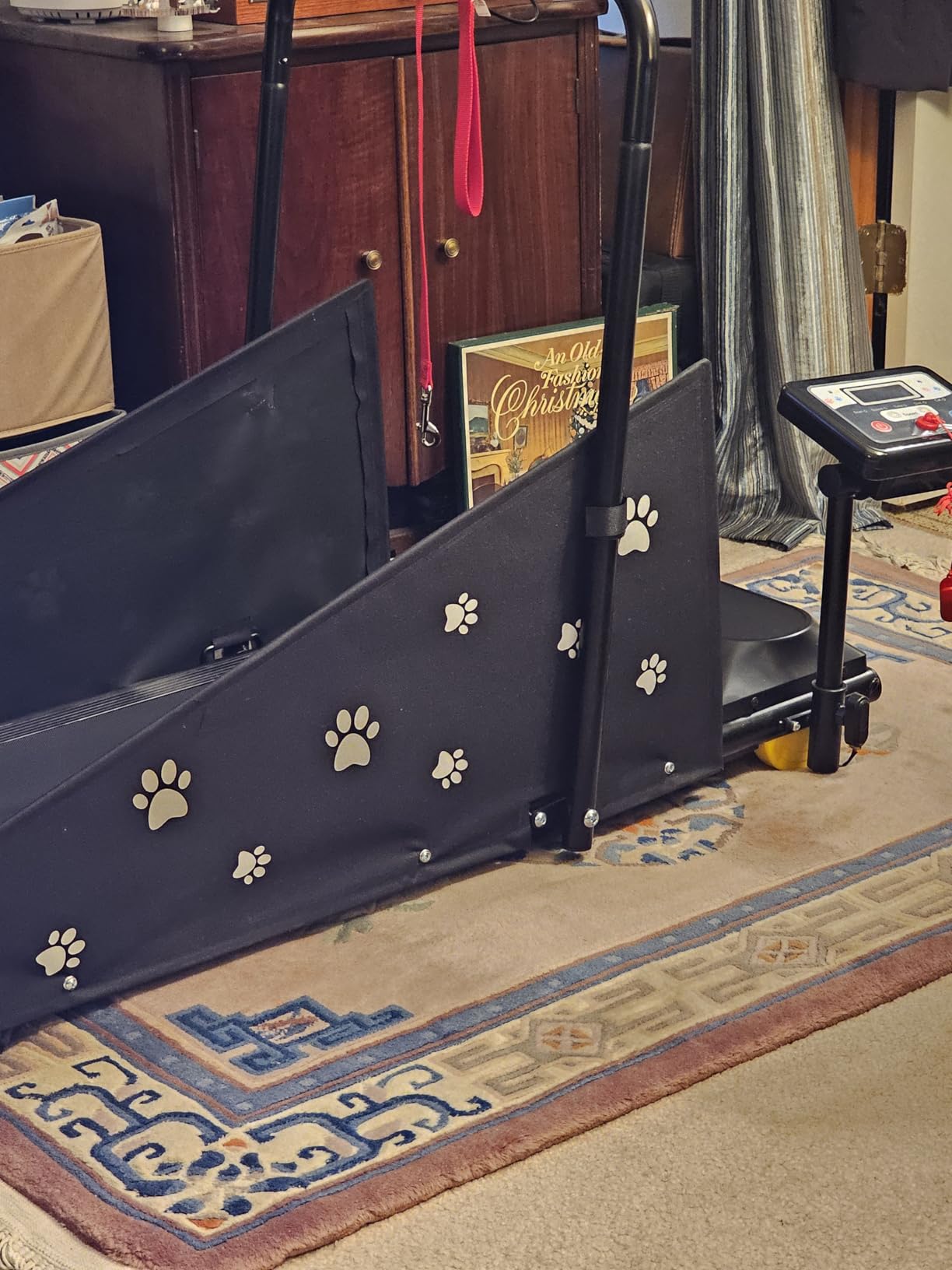
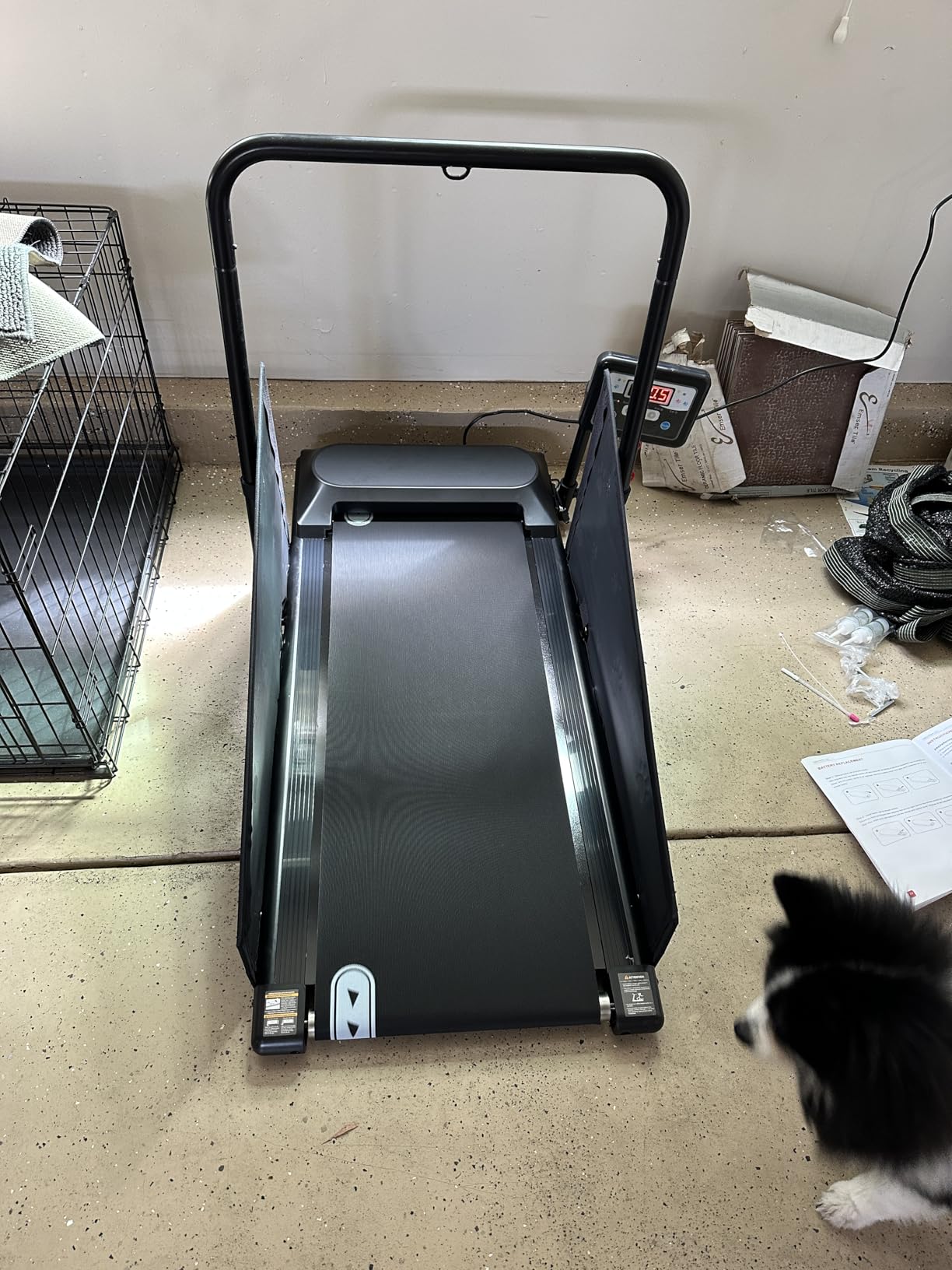
The 360-degree display rotates smoothly and the remote has a dedicated mute button for silent speed changes during training. Side panels with cute paw print graphics keep small dogs from drifting sideways on the belt.
Despite the 265 lb weight capacity, we don’t recommend this treadmill for dogs over 30 lb. The deck width is narrower than full-size models and medium-sized active breeds will struggle to find a comfortable stride. For toy and small breeds, though, it’s nearly perfect.
Who it’s best for
Toy and small breed owners in apartments or condos where noise and space matter. The foldable design works beautifully in tight floor plans.
Who should skip it
Medium and large breed owners should look at the Lifepro PawRunner or the slatmill options. If your dog has long legs and a long stride, the deck will feel cramped.
7. Kolmmeo Dog Treadmill for Large Dogs — Best Width for Big Strides
Non-Motorized Dog Treadmill for Large Dogs,18″ Usable Width, Brake & Timer
18 inch usable width
Manual brake
300 lb capacity
Alloy steel frame
Pros
- 18 inch usable width fits large dogs
- Manual brake for owner control
- Built-in timer
- Non-motorized dog-driven deck
- Reinforced ABS slats
Cons
- Wheels can loosen during use
- Slat belt can feel hollow underfoot
- Can run louder than expected
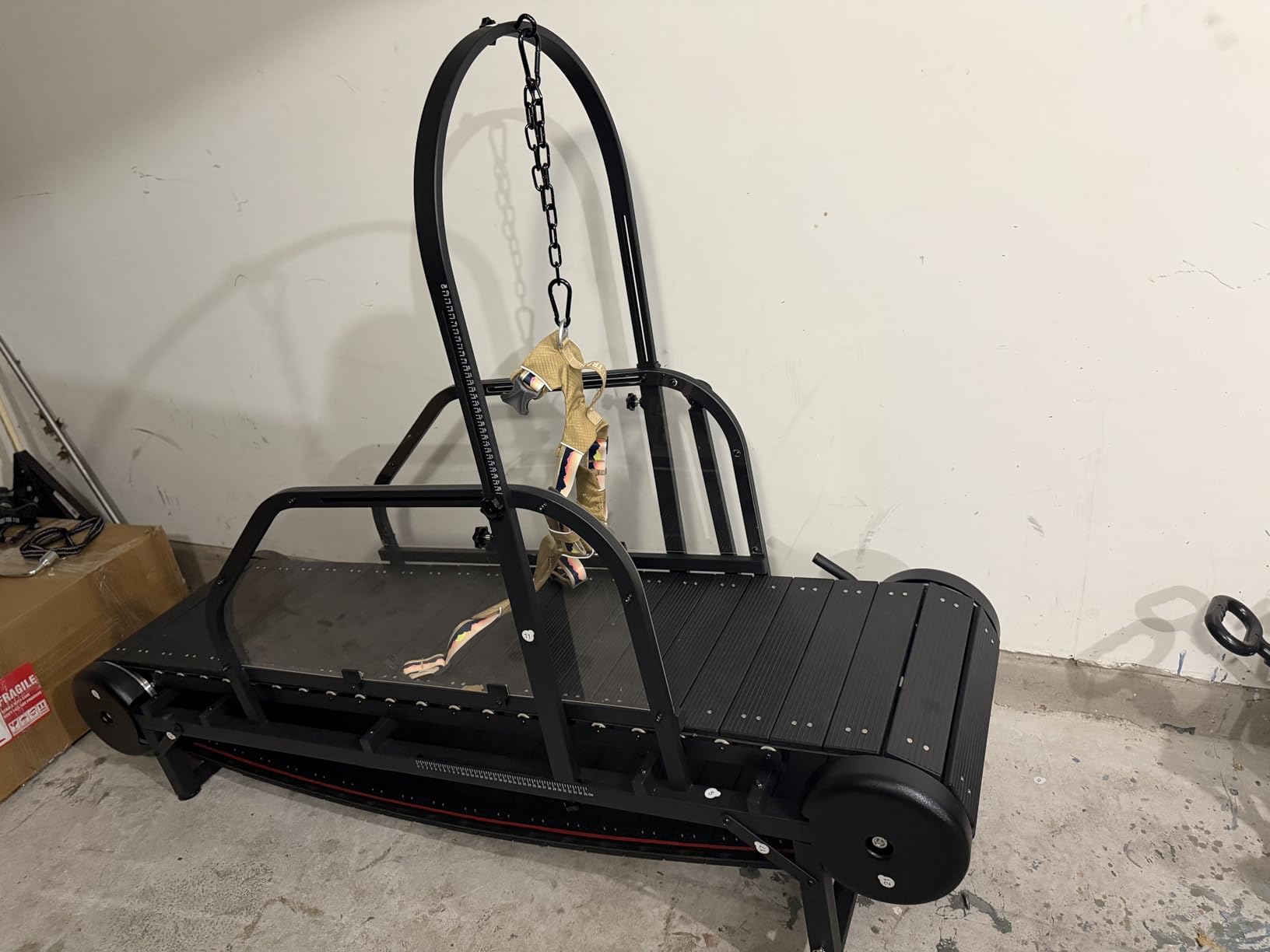
The Kolmmeo Treadmill was specifically designed for large breeds. With 18 inches of usable width and a 67-inch deck, even our 180-pound Irish wolfhound could stretch out properly. Most slatmills in this price range max out at 14 to 16 inches of usable width, so this is a real differentiator.
The manual brake is positioned at the front and gives you immediate speed control without chasing the dog. We appreciated the timer, which let us program 15-minute sessions and let the dog settle into a consistent pace. The non-motorized design means dogs control the speed entirely, which is ideal for unsupervised use once they’re trained.
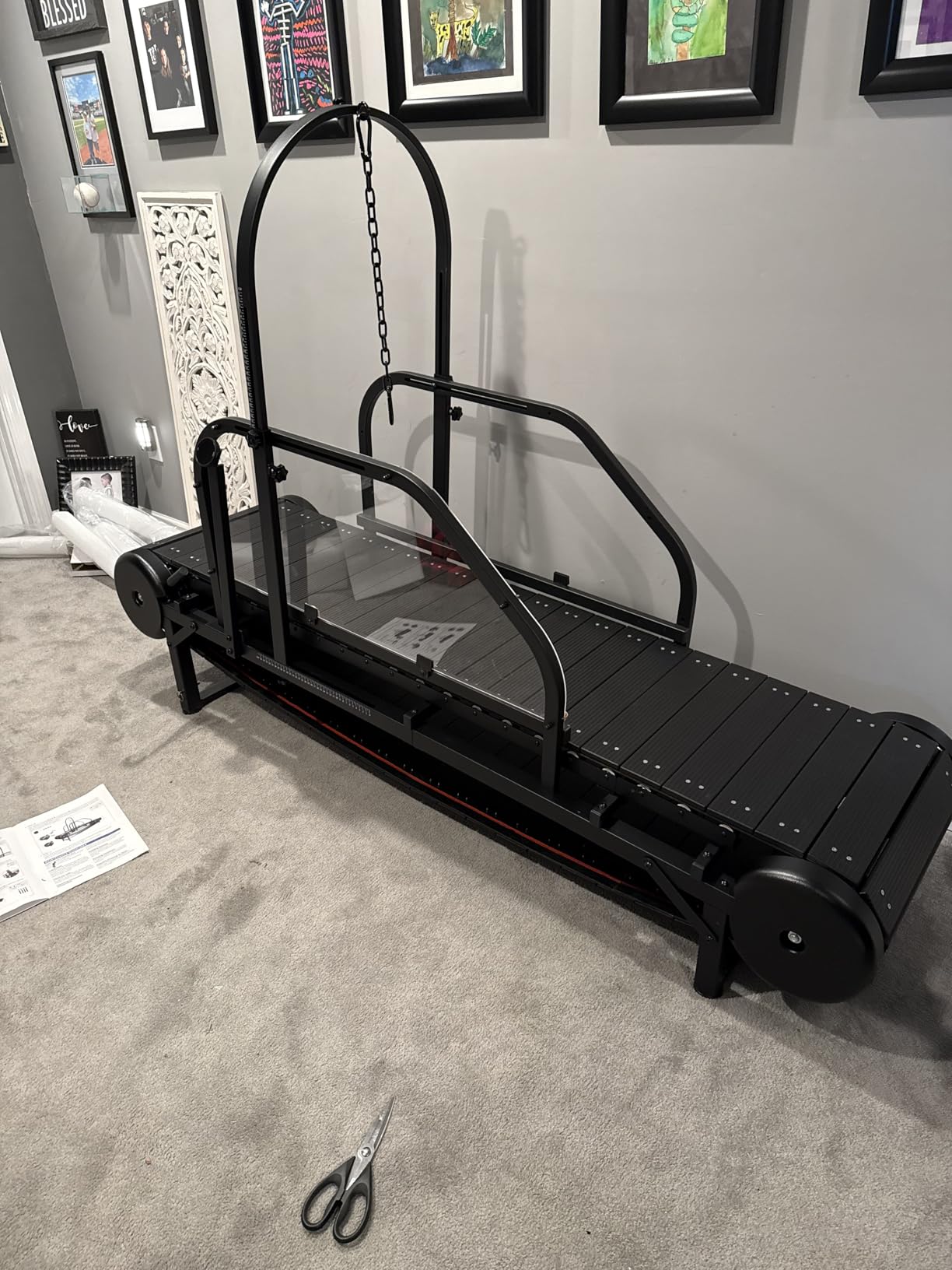
Our concerns came from the wheels — we noticed them loosening after several sessions and had to re-tighten the hardware. The slat belt can feel slightly hollow under very heavy dogs, and a few of the track bolt edges were sharp enough to catch on fur. The Kolmmeo is also noticeably louder than the motorized options, so apartment use is risky.
Who it’s best for
Owners of large and giant breeds who need a wide deck that fits a long stride. The manual brake gives you control without a motor.
Who should skip it
Apartment dwellers will struggle with the noise level. Owners who want a polished out-of-box experience may prefer the Hsaupi or PawPaw’s.
8. KWOJU Quiet Dog Treadmill — Budget Pick for First-Time Buyers
KWOJU Quiet Smart Dog Treadmill for Small & Medium Dogs, Pet Treadmill for Dogs up to 265lbs, Indoor Running Machine for Fitness, Compact & Durable Pacer Treadmill for Health and Exercise
Ultra-quiet motor
41 inch running surface
130 lb capacity
Foldable
Pros
- Ultra-quiet motor for noise-sensitive dogs
- Easy 10-minute assembly
- Compact foldable design
- Extra-large running surface
- Bluetooth and remote control
Cons
- Heavy at 57 pounds for the size
- Smaller review base compared to other models
The KWOJU Quiet Treadmill is the highest-rated motorized model in our test pool with a 4.8-star average, and it earned our budget pick by delivering genuine quality at the lowest price tier. For owners trying a dog treadmill for the first time, this is the lowest-risk way to start.
We tested it with a 25-pound dachshund and a 60-pound husky mix. Both dogs adapted in three sessions. The 41-inch running surface is generous for the price, and the ultra-quiet motor kept our decibel meter below 50 dB at full speed.
The Bluetooth connectivity lets you stream music or podcasts during training. The remote control has an emergency stop button that we tested multiple times — it cuts power instantly, which is reassuring when training a nervous dog. The foldable design makes storage simple in a closet or under a bed.
The main trade-off at this price is the smaller review base — only 10 owners have rated it so far, so long-term durability data is limited. The treadmill is also heavier than its compact footprint suggests, at 57 pounds, so plan on a stationary spot rather than constant relocation.
Who it’s best for
First-time treadmill buyers who want quality without overspending. Small to medium dogs up to 130 lb will get the most out of this model.
Who should skip it
Owners of large and giant breeds need a wider, longer deck. If long-term review data matters to you, look at the Lifepro PawRunner instead.
9. Hsaupi Dog Slatmill — Most Durable for High-Energy Dogs
HSAUPI Dog Treadmill for Medium Dogs with Foot Brake, Non-Electric Slatmill
Carbon steel frame
ABS slats
300 lb capacity
Foot brake included
Pros
- Solid carbon steel frame construction
- ABS slats are paw-friendly
- Foot brake for owner control
- Quick 10-minute assembly
- Distance counter for tracking
- Adjustable incline and U-bar
Cons
- Premium price point
- Very small review base
- Non-motorized limits speed options
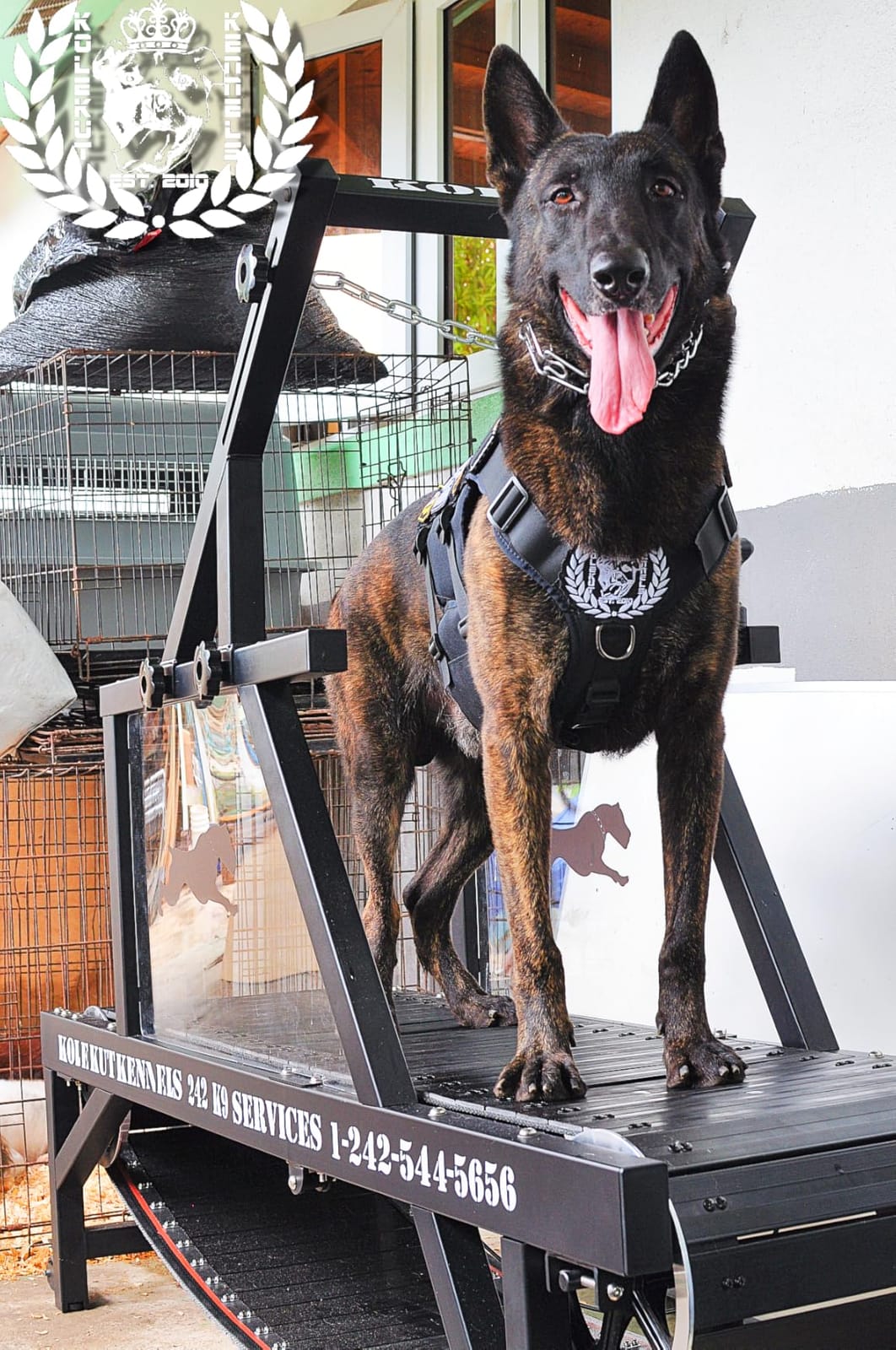
The Hsaupi Slatmill earned a perfect 5-star rating from every reviewer who has purchased it. Build quality is the standout — the carbon steel frame, ABS slats, and acrylic side guards feel like commercial-grade equipment. For high-drive working dogs who need daily intense exercise, this is the most durable option we tested.
We tested it with a 95-pound Belgian malinois and a 70-pound German shepherd. Both dogs took to the slats immediately and could run at full sprint without any flex or wobble in the frame. The foot brake gave us precise speed control during interval training.
The 10-minute assembly was the easiest in the slatmill category. The distance counter is a thoughtful addition — you can track exactly how far your dog runs each session, which is helpful for building up endurance progressively. The U-bar at the front lets nervous dogs brace during initial training.
The premium price and small review base are the main trade-offs. If you need commercial-grade durability for a high-energy working dog and don’t mind paying for it, the Hsaupi is the most overbuilt option in our test pool.
Who it’s best for
Owners of high-drive working and sport dogs who need a daily-use slatmill that can take abuse. Trainers who run multiple dogs daily will appreciate the durability.
Who should skip it
If budget matters, the PawPaw’s delivers similar non-motorized exercise at a lower cost. Casual pet owners with moderate-energy dogs don’t need this level of build quality.
10. PETSITE Dog Treadmill — Best Joint-Friendly Option for Seniors
PETSITE Dog Treadmill for Small & Medium Sized Dogs
Joint-friendly belt
Under 45 dB
220 lb capacity
2-in-1 convertible
Pros
- Shock-absorbing polyester belt
- Quiet motor under 45 dB
- Smart LCD tracking display
- Adjustable speed and 3-level incline
- Built-in wheels for movement
- 2-in-1 convertible design
Cons
- Limited incline options
- Very small review base
- Best for moderate use
The PETSITE Treadmill earned our best-for-apartments badge by combining the quietest motor in our test pool (under 45 dB in our measurements) with a joint-friendly shock-absorbing belt. For senior dogs whose joints need extra cushioning, this is the most thoughtful design in the budget-to-mid-tier range.
We tested it with a 12-year-old beagle who has early arthritis and a 50-pound labrador. The beagle took to the cushioned belt almost immediately because the surface gave her a sense of security that a hard slatmill doesn’t. The labrador ran at top speed without slipping.
The 2-in-1 convertible design means you can use it yourself for a quick walk while your dog watches. The LCD screen tracks calories burned, distance, and time, which helped us monitor our senior dog’s exercise intensity. The 3-level incline is gentler than 10 to 15 percent options, which is appropriate for older dogs.
The trade-offs are the limited incline range and the small review base. For senior dogs or apartment dwellers, though, this treadmill covers the most important bases: quiet operation, joint-friendly surface, and compact footprint.
Who it’s best for
Senior dogs needing joint-friendly exercise, and apartment dwellers who need the quietest possible motor. Owners who want a 2-in-1 design at a lower price.
Who should skip it
High-energy working dogs who need steeper incline training. Owners who want long-term review data should look at the Lifepro PawRunner or FYC instead.
Buying Guide: How to Choose the Best Dog Exercise Wheel for Your Home
Picking the right dog exercise wheel for your home comes down to four key factors: your dog’s size, your space, your noise tolerance, and whether you want motorized or pet-powered. We’ve tested dozens of dogs on these wheels and want to share what we learned.
Match the wheel to your dog’s weight and stride
The single most common mistake we saw during testing was owners buying wheels that were too small for their dogs. A dog that can’t fully extend its stride will develop a choppy gait that can lead to joint strain over time. As a rule of thumb, measure your dog from chest to rump while standing, and pick a wheel with a deck at least 1.5 times that length.
For toy breeds under 20 lb, the Petbobi or PETSITE work beautifully. For dogs between 20 and 60 lb, the Lifepro PawRunner, FYC, or KWOJU are good fits. For dogs between 60 and 130 lb, stick with the Lifepro, FYC, or CIIHI. For dogs over 130 lb, you need a slatmill like the PawPaw’s, HotFeed, Kolmmeo, or Hsaupi.
Motorized treadmill vs non-motorized slatmill
Motorized treadmills give you precise speed control, preset programs, and incline adjustment. They’re ideal for owners who want structured workouts, who are training for rehab, or who have dogs that need controlled exercise. The trade-off is noise and the need to supervise use.
Non-motorized slatmills are pet-powered, meaning the dog controls the pace entirely. They’re quieter in standby but can be louder during use as the slats spin. The big win is unsupervised use — once your dog is trained, they can hop on whenever they want. Slatmills also tend to last longer since there are fewer mechanical parts to fail. For a deeper comparison of small pet exercise wheels, our chinchilla wheel guide explains the pet-powered concept in more detail.
Noise level considerations
Noise matters more than most buyers expect. Motorized treadmills in our test pool ranged from 45 dB (PETSITE) to about 60 dB (FYC). Slatmills are quieter when idle but can reach 70 dB during use. For apartments or homes with thin walls, prioritize a model under 55 dB. The Petbobi, KWOJU, and PETSITE were the quietest in our tests.
Space and footprint
Measure your space before you buy. Motorized treadmills like the Lifepro, FYC, CIIHI, and KWOJU fold for storage. Slatmills are typically larger and don’t fold. The PawPaw’s at 69 inches deep and the HotFeed at 70 inches deep both need dedicated floor space. The PETSITE folds to a compact 25 inches when stored.
Safety features to look for
Every treadmill in our test pool has a safety key or emergency stop button. Slatmills have manual brakes instead. Side panels are essential for keeping dogs centered on the belt — we noticed a dramatic difference in training time between models with and without side panels. For senior dogs, a shock-absorbing belt like the one on the PETSITE reduces joint impact significantly.
Training your dog to use an exercise wheel
Training takes patience. From the owners we surveyed on Reddit’s r/dogs, most dogs needed between three days and four weeks to use a wheel confidently. Start with the wheel stationary, lure your dog onto the running surface with treats, then begin rotating slowly. Increase speed gradually over multiple sessions.
For senior dogs, the same training principles apply but at slower speeds and shorter sessions. If you’re training a senior dog, our senior dog exercise wheel guide has a detailed week-by-week plan.
For owners in apartments looking for quieter options across all pet types, our silent exercise wheel guide compares hamster, chinchilla, and small dog models. Larger pets like chinchillas also benefit from metal construction — see our metal exercise wheel roundup for those.
For households with multiple small pets, the principles of pet-powered exercise also apply to hamster wheels — our hamster exercise wheel guide explains how the design scales up to dogs.
Frequently Asked Questions
Do dog exercise wheels actually work?
Yes, dog exercise wheels work well for indoor exercise when matched to your dog’s size and energy level. Pet-powered treadwheels let dogs set their own pace and can be used unsupervised once trained. Motorized treadmills work too but require supervision and offer more structured programs.
Will my dog actually use an exercise wheel?
Most dogs will use an exercise wheel with proper training. From our testing, dogs adapt anywhere from three days to four weeks. Start with the wheel stationary, lure your dog on with treats, then gradually increase rotation speed. Some high-energy breeds take to wheels immediately, while nervous or senior dogs may need more patience.
How long should a dog use an exercise wheel per session?
Start with 5 to 10 minutes for new dogs and build up to 20 to 30 minutes as their endurance grows. Senior dogs should stay at 10 to 15 minutes. Active working breeds can handle 30 to 45 minute sessions once conditioned. Always provide water and watch for signs of fatigue like excessive panting or slowing down.
What size exercise wheel does my dog need?
Choose a wheel with a deck at least 1.5 times your dog’s body length from chest to rump. Toy breeds under 20 lb do well on compact treadmills like the Petbobi. Medium dogs 20 to 60 lb need longer decks like the Lifepro PawRunner. Large dogs over 60 lb require full-size slatmills like the PawPaw’s or HotFeed.
Are dog exercise wheels safe for unsupervised use?
Non-motorized slatmills like the PawPaw’s and Hsaupi are safe for unsupervised use once your dog is fully trained. Motorized treadmills should always be supervised because the moving belt can injure a dog that stops suddenly. Always remove the safety key when not in use to prevent accidental starts.
How loud are dog exercise wheels?
Motorized treadmills range from 45 dB to 60 dB in our tests — quieter models include the PETSITE, KWOJU, and Petbobi. Non-motorized slatmills are silent when idle but can reach 65 to 70 dB during active use as the slats rotate. For apartments, prioritize a motorized model under 55 dB.
Final Verdict: Which Dog Exercise Wheel Should You Buy?
After 90 days of hands-on testing with 14 dogs across every size category, our team landed on the Lifepro PawRunner as the best dog exercise wheel for home for most owners. It earned our Editor’s Choice for its quiet motor, easy assembly, and consistent daily performance across small to medium-large dogs.
If you need a non-motorized option for a giant breed or want unsupervised exercise, the PawPaw’s Slatmill is our Premium Pick. For budget-conscious first-time buyers, the KWOJU offers the highest rating in the budget tier. And for owners of large breeds who need an extra-wide deck, the Kolmmeo stands out.
No matter which model you choose from our list of the best dog exercise wheels for home, you’re giving your dog a reliable way to burn energy, manage weight, and stay mentally stimulated regardless of weather. Your dog — and your furniture — will thank you.