
Last summer, a chinchilla owner in California logged into a forum with a heartbreaking message: their chin had died of heat stroke in a room that “didn’t even feel that warm.” I read that post and it stuck with me, because most heat-related chinchilla deaths happen exactly like that, quietly and faster than anyone expects.
If you want to keep a chinchilla cool through hot weather, you cannot treat them like a rabbit or guinea pig. They are built for the Andes Mountains, not your living room in August. This guide walks you through the safe temperature range, the early warning signs, the emergency cooling steps, and a seasonal checklist so you are never caught off guard.
Table of Contents
Why Chinchillas Overheat So Easily?
Chinchillas come from the cool, dry slopes of the Andes Mountains, where daytime temperatures rarely climb above 70F (21C). Their dense fur, which can hold 60 to 80 hairs per follicle, evolved to insulate them against cold nights, not to vent body heat. They cannot sweat. They cannot pant efficiently. Their only built-in cooling mechanism is vasodilation in their ears.
That single adaptation is not enough when ambient temperature rises quickly. A chinchilla’s body temperature sits around 98 to 100F (36.7 to 37.8C), and even a few degrees of environmental heat can push them past safe limits. Once their core temperature climbs, organ damage begins within minutes. This is why chinchilla heat stroke is considered a true emergency, not a wait-and-see situation.
Safe Temperature Range for Chinchillas
The ideal room temperature for a chinchilla is between 60 and 70F (15.5 to 21C). Anything above 75F (24C) starts to stress them, and anything above 80F (26.5C) is genuinely dangerous. We use 70F as the trigger point, not the safe ceiling, because humidity plays a big role.
Humidity matters as much as temperature. Chinchillas cannot cool themselves through evaporation, so damp, stagnant air feels much hotter to them. Keep humidity below 60 percent when possible. Above 70 percent humidity, even a 72F room can push your chinchilla into heat stress. A basic hygrometer next to the cage is one of the cheapest insurance policies you can buy.
For quick reference, here is how I break the temperature scale down in practice:
60 to 70F (15.5 to 21C): Comfortable zone. No extra cooling needed.
70 to 75F (21 to 24C): Watch zone. Add circulation and check water.
75 to 80F (24 to 26.5C): Danger zone. Active cooling required.
Above 80F (26.5C): Emergency zone. AC, cooling stones, frozen bottles.
Early Warning Signs of Chinchilla Overheating
Catching overheating early is the difference between a quick recovery and a midnight emergency vet run. The first signs are subtle, and they often appear before your chinchilla looks visibly ill.
Here are the early signals our team watches for in our own herd:
Warm, red ears: Vasodilation is the first physical response. Ears will feel noticeably warmer than usual and may turn pink or red, especially visible on light-colored chins.
Lethargy and reduced movement: A normally curious chin who suddenly stops exploring, sits hunched, or stays tucked in the corner.
Sprawled posture: Lying flat on the belly or stretched out on their side to maximize surface contact with a cool surface.
Heavy or rapid breathing: Watch the flanks. Fast, shallow breaths mean the body is struggling.
Warm feet and tail: Blood is being pushed to the extremities to dump heat.
If you see one or two of these signs, you have time to act. Drop the room temperature and start gentle cooling right away. Do not wait for things to escalate.
Advanced Heat Stroke Symptoms in Chinchillas
Heat stroke is what happens when early warning signs are missed or cooling is delayed. At this stage, your chinchilla’s body is shutting down, and every minute matters. Recognizing these symptoms fast can save a life.
Advanced chinchilla heat stroke symptoms include:
Drooling or wet chin: A sign the body is in severe distress.
Unresponsiveness or limp body: The chin does not react when touched or picked up.
Seizures or tremors: Muscle twitching, paddling motions, or full seizures.
Bloody nose or discharge: Internal damage is already underway.
Bright red or dark purple ears: Vasodilation has gone too far.
Gasping or open-mouth breathing: Respiratory system is failing.
If you see any of these, skip prevention and go straight to emergency cooling steps. Call an exotic vet on your way.
Emergency Cooling Steps for an Overheating Chinchilla
When heat stroke strikes, follow these steps in order. Speed matters more than perfection.
Move the chinchilla to a cool, quiet area. Take them out of the hot room immediately. A bathroom with tile floors works well.
Place them on a cool surface. Ceramic tile, marble slab, or a chilled cooling stone straight from the fridge. Never put them in a freezer.
Cool the footpads and ears. Dip a soft cloth in cool (not ice cold) water and gently dab the feet, ears, and belly. Cool water here pulls heat directly from major blood vessels.
Offer cool water. If your chinchilla is conscious and able to drink, offer small amounts of cool water. Do not force it.
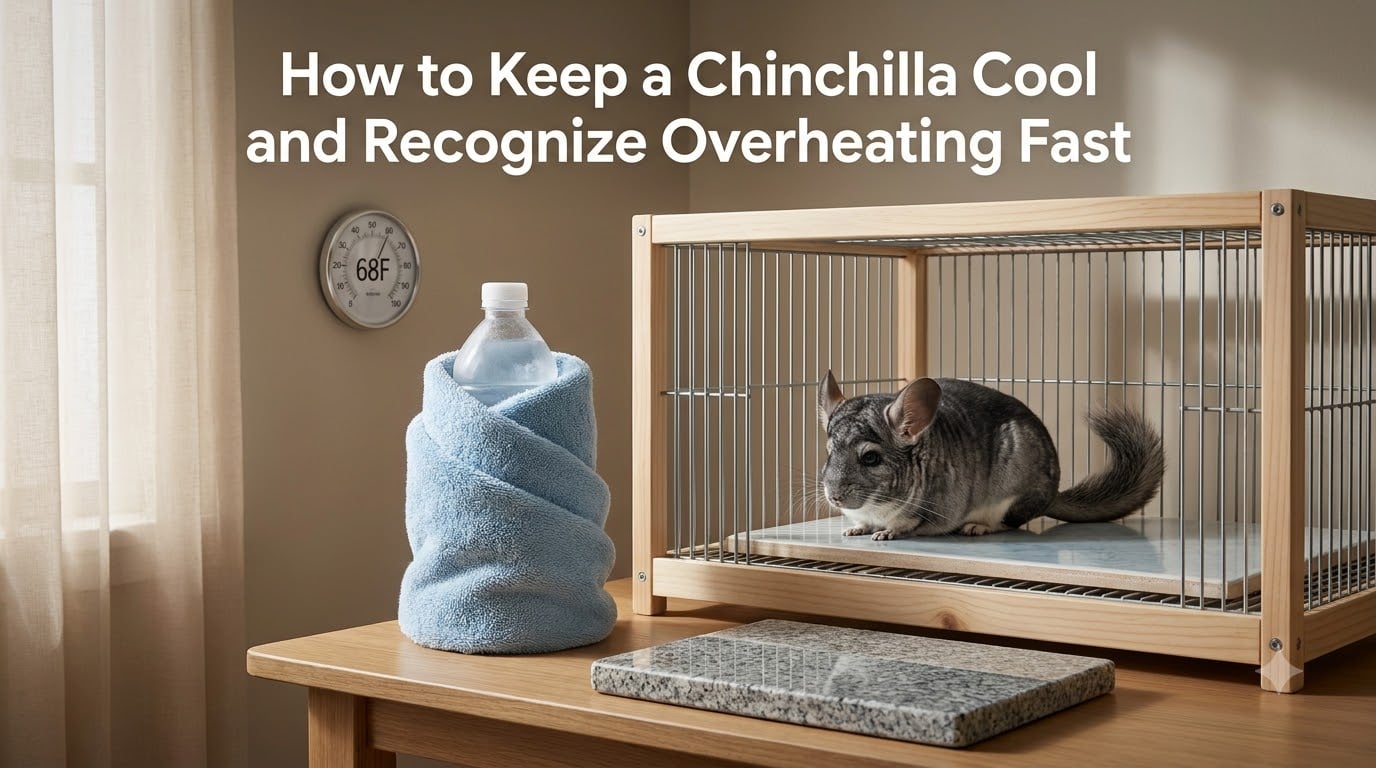
Use a frozen water bottle. Wrap a frozen water bottle in a thin towel and place it next to (not directly on) the chin. They can lean against it as needed.
Reduce body temperature gradually. Aim for slow cooling, not shock cooling. Ice water or ice packs directly on the body can cause blood vessels to constrict, trapping heat inside.
Call the veterinarian. Even if your chinchilla seems to recover, internal damage may still be progressing. Get professional guidance as soon as possible.
For severe cases, some experienced keepers have used a 15 to 20 minute cool water bath (not cold, not warm, just cool) to bring down core temperature before transport. This is a high-stakes move. Only attempt it if you cannot reach a vet quickly and your chinchilla is unresponsive.
How to Keep a Chinchilla Cool in Hot Weather?
Prevention is always easier than emergency response. Here is what actually works day to day during warm months.
Use air conditioning when possible. AC is the single most reliable way to keep a chinchilla cool in hot weather. If you have central air, set it so the chin’s room stays at 70F or below. Window units and portable ACs work well too, just keep cords out of reach.
Create cool resting surfaces. Place ceramic tiles, marble slabs, or granite pieces in the cage. These materials stay cool naturally and give your chinchilla a place to dump body heat. Chill them in the fridge before use on hot days.
Use cooling stones. A chinchilla cooling stone (made of granite or similar material) provides a dedicated cool spot. Refrigerate it before placement. Most chins learn to use it on their own.
Frozen water bottles wrapped in towels. Keep two or three in rotation. Place one in the cage and swap as it thaws. Wrap it well so it does not feel like ice against the fur.
Improve airflow. A small fan pointed away from the cage (so it circulates air, not blows directly on your chin) helps sweat evaporate from your skin and makes the room feel cooler overall. Avoid aiming the fan directly at the chinchilla, since their fur is so dense that strong direct airflow can stress them.
Block direct sunlight. Move the cage away from windows, or use blackout curtains during peak sun hours. Sunlight through a window can raise a room’s temperature by 5 to 10 degrees in minutes.
Schedule playtime early or late. Out-of-cage time should happen in the coolest part of the day, usually early morning or after sunset, never between 11am and 5pm in summer.
Keep fresh water available at all times. A chilled water bottle encourages drinking. Add a second water source during heat waves in case one fails.
Cooling Methods to Avoid
Some popular cooling advice online can actually hurt your chinchilla. Here is what to skip.
Exercise balls: Often called “The Death Ball” in chinchilla rescue circles. They trap heat, restrict ventilation, and cause stress. Never use them, especially in warm weather.
Ice baths or ice packs on the body: Shock cooling constricts blood vessels and traps heat inside. Use cool, not cold.
Wet fur: Chinchilla fur is so dense it cannot dry properly. Damp fur can lead to fungal infections and matting. Never soak your chinchilla unless doing emergency cool water treatment under guidance.
Dust baths during heat: Hold off on dust baths when temperatures are above 75F. Dust can briefly raise body temperature during vigorous rolling.
Direct fan on the chinchilla: Fans do not cool chins effectively because they cannot sweat. Direct, strong airflow can cause stress without real benefit.
Seasonal Preparation Checklist for Chinchilla Owners
None of the top search results include a pre-summer checklist, and that is a gap worth filling. Run through this list in late spring, before the first heat wave hits.
Test your AC or window unit in April, before you need it.
Buy a backup thermometer and hygrometer for the chin’s room.
Stock two frozen water bottles so one is always ready.
Place ceramic or marble tiles in the freezer for emergency use.
Identify your nearest exotic vet and save their emergency number.
Map out a cooler backup room in case the AC fails.
Plan playtime around sunrise or sunset for the next three months.
Check window seals and blinds for heat-leak areas.
Buy a small power-bank fan in case of short outages.
Print or save this guide’s emergency cooling steps on your phone.
This ten-step checklist takes about an hour to set up and could save your chinchilla’s life during a heat wave or power outage.
When to Call the Veterinarian?
You should contact an exotic veterinarian immediately if your chinchilla shows any advanced heat stroke symptom, including seizures, unresponsiveness, drooling, or labored breathing. Even after a chinchilla seems to recover from overheating, internal organ damage can continue for hours, so a same-day vet visit is worth the cost.
Find an exotics vet before you need one. Regular small animal vets often lack chinchilla-specific experience. Search for “exotic vet near me” and call ahead to confirm they treat chinchillas. Save the address and emergency line in your phone.
If your chinchilla loses consciousness or seizes, transport them in a small carrier on a cool towel, with the car AC on full. Call the clinic while driving so the team can prepare.
Frequently Asked Questions
How to keep chinchillas cool in hot weather?
Use air conditioning to keep the room at or below 70F, place ceramic tiles and cooling stones in the cage, swap frozen water bottles wrapped in towels throughout the day, block direct sunlight, and schedule playtime during the coolest hours. Above 75F, add active cooling and check your chinchilla every hour.
What temperature is too hot for a chinchilla?
Anything above 75F (24C) starts to stress a chinchilla, and above 80F (26.5C) is genuinely dangerous. The safe range is 60 to 70F. Humidity above 60 percent makes any temperature feel hotter and can push a chin into heat stress even at 72F.
How do I know if my chinchilla is overheating?
Early signs include warm red ears, lethargy, sprawled posture, heavy breathing, and warm feet. Advanced signs include drooling, unresponsiveness, seizures, and open-mouth gasping. The faster you act, the better the outcome.
How do chinchillas cool down since they can easily overheat?
Chinchillas cannot sweat or pant efficiently. They rely on vasodilation in their ears to release small amounts of heat and seek out cool surfaces to dump body heat through their feet and belly. Because these mechanisms are weak, environmental cooling is essential.
Final Thoughts on Keeping Your Chinchilla Cool
Learning how to keep a chinchilla cool is not complicated, but it does require planning ahead. Keep the room at 70F or below, watch for red ears and lethargy at the first hint of heat stress, and have your emergency cooling supplies ready before summer arrives. Most heat-related tragedies happen because someone did not realize how fast heat stroke can set in, not because they did not care.
Set up your cooling supplies now, find your nearest exotics vet this week, and bookmark this guide for hot days. A little preparation makes all the difference between a chinchilla that thrives through summer and one that does not make it to fall.