
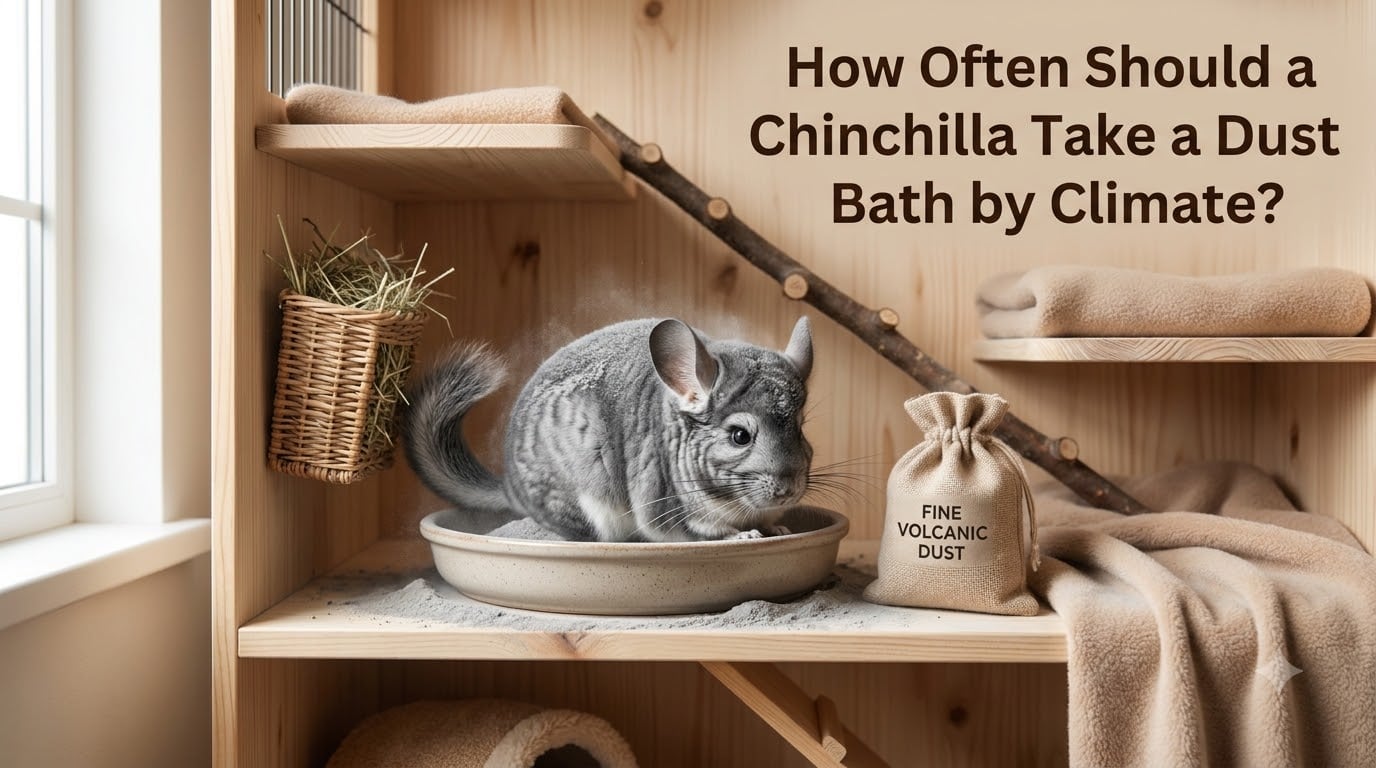
If you own a chinchilla, you already know these little furballs are obsessive groomers. But figuring out the right chinchilla dust bath frequency for your specific climate can feel like guesswork. Give too few baths and their coat turns greasy and matted. Give too many and you risk dry, irritated skin.
I have spent years working with chinchilla owners across different regions, from bone-dry desert homes to sticky coastal apartments. The answer is never one-size-fits-all. Climate plays a massive role in how often your chinchilla needs to roll in the dust.
In this guide, I will walk you through exactly how often a chinchilla should take a dust bath based on your climate, humidity, and season. You will also learn how long each session should last, what dust to use, and the warning signs that tell you to adjust your routine.
Table of Contents
Why Chinchillas Need Dust Baths Instead of Water?
Chinchillas have the densest fur of any land mammal. Each hair follicle produces between 60 and 80 hairs, which creates an incredibly thick coat that traps moisture, oils, and debris. Water cannot penetrate or evaporate from this fur properly.
If a chinchilla gets wet, the fur stays damp for hours. That trapped moisture becomes a breeding ground for bacteria and fungus. Skin infections like pyoderma and fungal dermatitis can develop quickly and are difficult to treat.
Instead of water, chinchillas clean themselves by rolling in fine volcanic ash dust. The dust particles are small enough to penetrate deep into their dense coat. As they roll and flip, the dust absorbs excess sebum (skin oils), pulls out trapped dirt, and distributes natural oils evenly across the fur.
In the wild, chinchillas native to the Andes Mountains bathe in volcanic ash and fine sand. This self-cleaning behavior is also mentally enriching. Most owners notice their chinchilla gets visibly excited when the dust bath container appears. It is instinctive, satisfying, and essential for coat health.
How Often Should a Chinchilla Take a Dust Bath by Climate?
The general rule is 2 to 4 times per week, but your local climate shifts that number significantly. Here is the breakdown I recommend based on humidity and temperature.
Dry climates (under 40% humidity): Two dust baths per week is usually enough. The air is already pulling moisture from the fur, so excessive bathing leads to dry, flaky skin. If your chinchilla lives in an arid region like the American Southwest, stick to twice weekly.
Moderate climates (40-60% humidity): Aim for three baths per week. This covers most temperate zones and standard indoor environments with normal HVAC operation. Watch the coat for oil buildup between baths.
Humid climates (over 60% humidity): Your chinchilla likely needs four baths per week. High humidity means moisture lingers in the dense fur longer, and oils accumulate faster. If you live in a coastal, tropical, or subtropical area, lean toward the higher end.
Hot and humid summer months: Even in normally dry regions, summer humidity spikes can push your chinchilla’s needs up temporarily. During sticky weather, add an extra bath per week and remove the dust container promptly after each session so it does not absorb ambient moisture.
Cold winter months with indoor heating: Central heating dries indoor air dramatically. You may need to reduce frequency to twice weekly even if your region is normally moderate. Watch for dry skin signs like dandruff or excessive scratching.
How Long Each Dust Bath Should Last?
Each dust bath should last between 5 and 10 minutes. That is enough time for your chinchilla to roll thoroughly, flip, and work the dust through their entire coat.
I set a timer when I put the dust container in. Some chinchillas will happily roll for 20 minutes if you let them, but extended sessions dry out the skin and waste dust. After 10 minutes, remove the container from the cage.
Evening is the ideal time. Chinchillas are crepuscular, meaning they are most active at dawn and dusk. They are more likely to engage enthusiastically with the dust bath during these hours.
Signs You Need to Adjust Dust Bath Frequency
Your chinchilla’s coat tells you everything. Here are the signs I watch for when fine-tuning bath frequency.
Signs you need more baths:
Fur looks greasy, clumped, or parted unusually
The coat feels oily when you gently stroke your chinchilla
Fur near the tail or belly appears matted
You notice a slight musky odor
The fur has lost its usual soft, plush texture
Signs you need fewer baths:
White flakes or dandruff visible in the fur
Excessive scratching or skin irritation
The coat looks dull and brittle rather than soft
Redness on ears or feet, suggesting dry skin
Your chinchilla avoids the dust bath entirely
Adjust one bath at a time. Add or remove a single session per week, then observe the coat for 7 to 10 days before making further changes.
Choosing the Right Dust for Your Chinchilla
Not all dust is created equal. The quality of the dust directly affects how well it cleans and how safe it is for your chinchilla’s respiratory system.
Look for dust made from fine volcanic ash or pumice. These natural materials have the right particle size to penetrate the dense coat without causing respiratory irritation. The texture should feel like powder, not sand. Gritty or coarse particles fail to reach deep into the fur and can scratch the skin.
Avoid sand, cat litter, and cornstarch-based powders. These do not absorb oils effectively and some can cause serious health problems if inhaled or ingested. Fuller’s earth and diatomaceous earth are sometimes mentioned, but stick to products specifically formulated and labeled for chinchillas.
You can tell a good dust by how your chinchilla responds. Quality dust will produce visible clouds as they roll, and the coat looks immediately fluffier and more matte after a session. Poor-quality dust leaves the coat looking unchanged.
Step-by-Step: Giving Your Chinchilla a Dust Bath
Here is the exact process I follow every time. It minimizes mess and maximizes cleaning effectiveness.
Step 1: Choose an enclosed container. A dedicated chinchilla bath house or a deep, enclosed dust bath container works best. Open bowls scatter dust everywhere. Enclosed containers also help chinchillas who feel nervous bathing in open spaces.
Step 2: Pour dust to a depth of about 1 to 2 inches. Your chinchilla needs enough depth to actually roll and bury into it, but filling it higher just wastes dust and creates more mess.
Step 3: Place the container in the cage during the evening. Let your chinchilla approach it on their own terms. Most will jump in immediately and start flipping.
Step 4: Set a timer for 10 minutes. Leave the room or sit quietly so your chinchilla feels comfortable. Some are shy bathers and will not perform if they feel watched.
Step 5: Remove the container promptly after 10 minutes. Never leave the dust bath in the cage permanently. Chinchillas will use it as a litter box, and the dust absorbs ambient humidity, reducing its effectiveness.
Step 6: Sift the used dust to remove droppings and debris. You can reuse clean dust 2 to 3 times if you store it in an airtight container between sessions. Discard dust that looks clumpy, dark, or damp.
Common Mistakes to Avoid
The most frequent mistake I see is over-bathing. Daily dust baths strip the coat of natural oils, causing dry, itchy skin and a brittle coat. Some owners bathe daily thinking more is better, but it actively harms the chinchilla.
Leaving the dust bath in the cage is another common error. The dust becomes a toilet, absorbs humidity, and loses its cleaning power. Always remove it after each session.
Using the wrong dust type is dangerous. Play sand, building sand, and cat litter can cause respiratory damage or intestinal blockages. Only use dust labeled specifically for chinchillas.
Finally, never bathe a chinchilla in water. Even a small amount of water on their fur can lead to fungal infections and serious illness. If your chinchilla gets something sticky or wet on their fur, consult an exotic vet rather than reaching for the sink.
Frequently Asked Questions
Do chinchillas need dust baths every day?
No, chinchillas should not take dust baths every day. Daily bathing strips natural oils from the coat and causes dry, irritated skin. The ideal frequency is 2 to 4 times per week, adjusted based on your climate and humidity levels.
What are signs of a good chinchilla dust?
Quality chinchilla dust is made from fine volcanic ash or pumice and has a powder-like texture, not gritty or sandy. It should produce visible dust clouds when your chinchilla rolls, and the coat should look noticeably fluffier and more matte after each session.
How many times can you reuse chinchilla dust?
You can reuse chinchilla dust 2 to 3 times if you sift out droppings and debris after each session and store it in an airtight container. Discard any dust that looks clumpy, dark, damp, or has a strong odor.
What happens if a chinchilla doesn’t get a dust bath?
Without regular dust baths, oils and moisture build up in the dense fur. The coat becomes greasy, matted, and smelly. Over time, trapped moisture can lead to bacterial skin infections, fungal growth like pyoderma, and serious dermatitis that requires veterinary treatment.
Conclusion
Finding the right chinchilla dust bath frequency for your climate is about reading the signs your chinchilla gives you. Start with 2 to 4 baths per week based on your humidity zone, adjust one session at a time, and always keep each bath to 10 minutes maximum.
Use quality volcanic ash dust, never leave the bath in the cage, and trust your eyes. A healthy chinchilla coat is soft, plush, and matte. If it looks greasy, bathe more. If you see flakes, bathe less.