
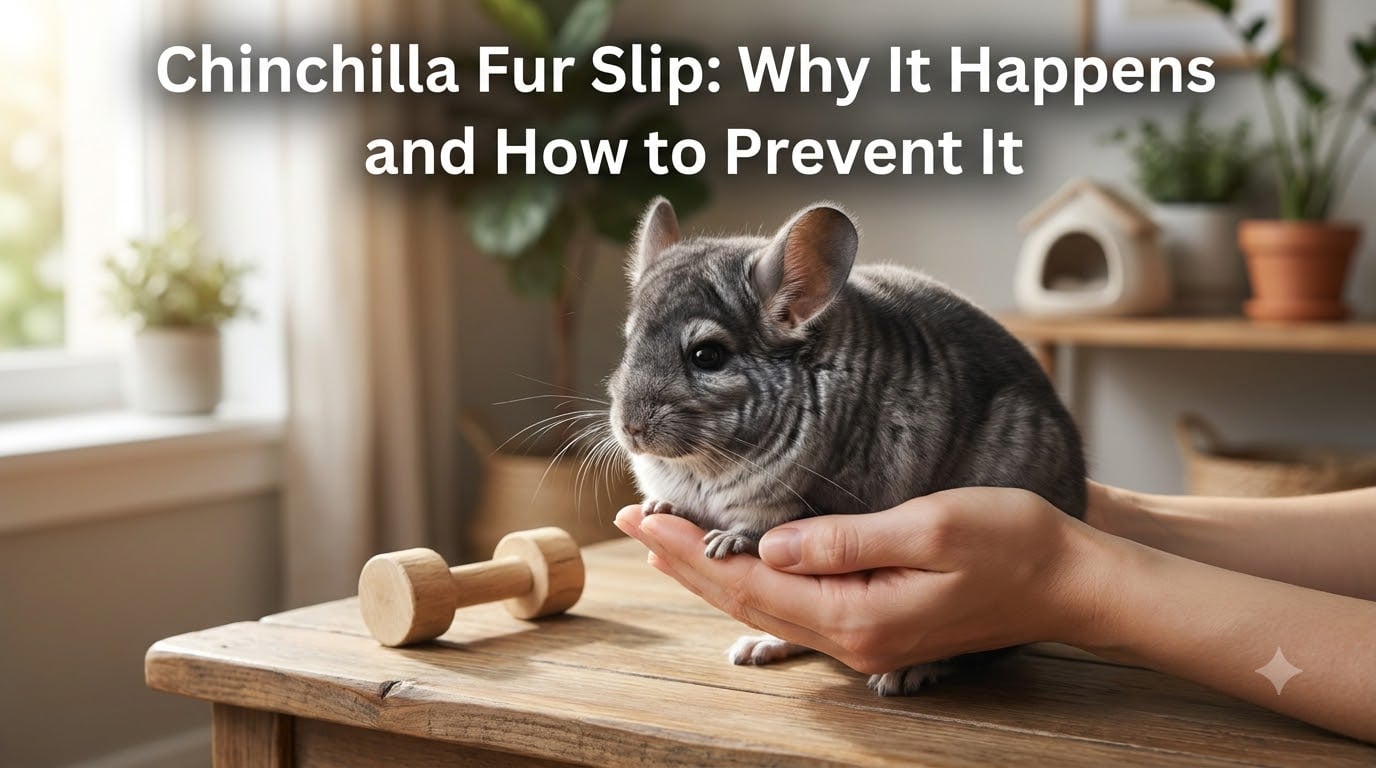
Chinchilla fur slip is a natural defense mechanism where a chinchilla releases a clean patch of fur from its body when grabbed, restrained, or frightened. This instinctive response helps wild chinchillas escape predators by leaving behind a mouthful of fur while the animal slips away.
I remember the first time I saw a patch of fur floating in my hand after picking up my new chinchilla. My heart sank, and I panicked thinking I had hurt her. That moment sent me down a research rabbit hole, and what I learned changed how I handle every chinchilla I meet. If you have just witnessed fur slip on your pet, take a breath. You are not a bad owner. This guide explains what fur slip is, why it happens, and how I prevent it in my own herd.
Table of Contents
What Is Chinchilla Fur Slip?
Chinchilla fur slip is the term for when a chinchilla releases a chunk of fur from a defined area on its body, usually leaving a smooth bald patch underneath. The fur comes away cleanly from the skin without bleeding or pain because chinchillas have a unique hair follicle structure that allows fur to detach on demand.
Chinchillas have between 60 and 90 hairs growing from each follicle, far denser than almost any other mammal. This dense coat is actually a survival trait. In the wild, a predator grabbing a chinchilla would get a mouthful of fur while the prey scurries away. The detached area usually appears around the shoulders, sides, or tail base where a predator or rough hand would grab.
The exposed skin underneath looks healthy and pink, not raw or irritated. This is one of the clearest signs you are dealing with fur slip rather than a medical condition. Fur slip is not shedding. Chinchillas do not seasonally shed the way dogs or cats do. A sudden bald patch always has a cause, and most often that cause is stress, fear, or rough handling.
Why Does Chinchilla Fur Slip Happen?
Fur slip happens when a chinchilla feels threatened and triggers its escape response. Several common situations lead to this reaction, and I have personally experienced each one over the years.
Rough or Improper Handling
The most common trigger is being grabbed by the fur or scruff. If you have ever tried to catch a wiggly chinchilla by the body, you have likely triggered fur slip. Chinchillas should never be picked up by their fur. Always scoop from underneath with one hand supporting the chest and the other cradling the rear.
Fear and Stress Responses
Sudden loud noises, other pets like cats or dogs lunging at the cage, or being cornered can all cause fur slip. One chinchilla owner on a chinchilla forum shared how her chin slipped fur when she dropped a heavy book next to the cage. The chinchilla was unharmed, but a small patch came off from the stress alone.
New Environment and Bonding
Newly adopted chinchillas are especially prone to fur slip. They have not yet learned to trust you, and even small movements feel threatening. During introductions between two chinchillas, fur slip is also common because the meeting can be tense. One chinchilla may slip fur when the other gets too close or makes a sudden move.
Fighting Between Cage Mates
Chinchillas are territorial, and even bonded pairs sometimes argue. A short scuffle can result in fur slip on one or both animals. This is more common during puberty or when introducing a new chinchilla into an established territory.
Accidental Triggers
Sometimes fur slip happens by accident. I once caught my chinchilla’s fur on the cage door while closing it. A small patch came off instantly. Things like brush bristle snags, harness clips, or getting caught on toys can also cause fur slip without any rough handling at all.
Quick Recap: Key Points About Fur Slip
Here is the short version if you are scanning for the essentials:
Chinchilla fur slip is a natural defense, not an injury.
It happens when a chinchilla is grabbed, frightened, or stressed.
The fur detaches cleanly and the skin underneath is healthy.
Fur slip is not painful and does not bleed.
Full fur regrowth takes around 3 to 6 months.
Never pick up a chinchilla by its fur or scruff.
Always scoop from underneath with both hands.
How to Prevent Chinchilla Fur Slip?
Prevention comes down to two things: gentle handling and a calm environment. After working with chinchillas for several years, I have narrowed prevention down to a few reliable steps.
Step 1: Learn Proper Holding Technique
The number one rule is to never grab a chinchilla by the fur. When you pick up your chinchilla, slide one hand under the chest behind the front legs and use your other hand to support the hindquarters. Hold the chinchilla close to your body so it feels secure. A properly held chinchilla will usually relax rather than struggle.
Step 2: Approach Slowly and Predictably
Always announce yourself before reaching into the cage. Speak softly, move slowly, and let the chinchilla see your hand coming. Sudden movements trigger the same fear response as a predator striking. I keep a small routine before every handling session. I tap the cage door, offer a treat, and wait until my chin comes to me.
Step 3: Build Trust Over Time
Trust building is the most powerful prevention tool. Spend time sitting near the cage, offering treats from your hand, and letting the chinchilla sniff you. After a few weeks of consistent interaction, most chinchillas become much more comfortable being touched and held. A chinchilla that trusts you is far less likely to slip fur.
Step 4: Reduce Environmental Stressors
Keep the cage in a quiet area away from direct sunlight, drafts, and barking dogs. Chinchillas have sensitive hearing, so loud music or shouting near the cage can cause real fear. Stable temperatures between 60 and 70 degrees Fahrenheit also reduce stress and keep the coat healthy.
Step 5: Supervise Bonding Sessions
When introducing new chinchillas, use the slow introduction method. Start with cages side by side, then allow supervised playtime in a neutral space. Watch for signs of tension like chattering teeth, raised fur on the tail, or posturing. Separate them quickly if you see these signs to prevent fur slip from a sudden scuffle.
Step 6: Use the Right Equipment
Avoid harnesses with rough clips that can snag fur. Use a dust bath two to three times per week to keep the coat healthy, but never force a chinchilla into one. Smooth-sided cages without sharp edges also reduce accidental fur slip from snagging.
Fur Slip vs Fur Chewing and Other Conditions
Not every patch of missing fur is fur slip. Knowing the difference helps you decide whether to change your handling or visit the vet.
Fur Slip
Fur slip appears suddenly as a clean, defined bald patch with healthy pink skin. It usually shows up in areas you would naturally grab, like the sides, shoulders, or tail base. There is no itching, scratching, or skin irritation. The patch is created in a single moment.
Fur Chewing
Fur chewing is a behavioral condition where the chinchilla chews its own fur, often in symmetrical patterns on both sides of the body. The fur looks uneven and short rather than absent. Fur chewing is usually caused by boredom, stress, or dietary issues, not handling. Adding more chew toys, enrichment, and time outside the cage can help.
Fungal Infections and Ringworm
Ringworm and fungal infections cause circular bald patches with scaly, crusty, or inflamed skin. Unlike fur slip, the skin looks irritated and may have flakes or sores. A vet visit is essential because these conditions are contagious to other pets and humans.
Heat Stress or Hormonal Hair Loss
Sometimes chinchillas lose fur from overheating or hormonal changes. This fur loss tends to be more gradual and spread across the body rather than appearing in a single clean patch. If you cannot identify a clear trigger, consult an exotic vet.
Fur Slip Recovery and Regrowth Timeline
The good news about fur slip is that it is not permanent. Chinchilla fur regrows fully in most cases, though it takes patience.
How Long Does Fur Regrowth Take?
Most bald patches from fur slip begin showing fuzz within 4 to 6 weeks. Full regrowth to match the surrounding coat typically takes 3 to 6 months depending on the chinchilla’s age, health, and the size of the patch. Young chinchillas usually regrow fur faster than older ones.
Is Fur Slip Painful?
No. Fur slip is not painful for the chinchilla. The fur detaches at the follicle level without breaking the skin, similar to how a lizard drops its tail. Your chinchilla will act normally right after fur slip, which is one of the easiest ways to confirm it was fur slip rather than an injury.
Caring for the Bald Patch
You do not need to apply creams or cover the patch. Just keep the cage clean and let the fur grow back naturally. Avoid handling the bald area roughly, and make sure no cage mates are grooming or nibbling at the exposed skin.
When to See a Vet
Most fur slip cases do not require a vet visit, but schedule one if you notice any of the following:
Redness, swelling, or scabbing on the bald patch
The chinchilla scratches or seems itchy
Fur loss spreads or new patches appear over time
Behavior changes like lethargy or loss of appetite
Skin looks flaky, crusty, or inflamed
These signs suggest a different condition like ringworm, mites, or a hormonal issue rather than simple fur slip.
Frequently Asked Questions About Chinchilla Fur Slip
What causes fur slip in chinchillas?
Chinchilla fur slip is caused by rough handling, sudden fear, stress from a new environment, or fighting with cage mates. It is a natural defense mechanism where the chinchilla releases a patch of fur to escape a perceived threat.
Which animal is prone to fur slip?
Chinchillas are the most well-known animal prone to fur slip. Their dense coat and unique hair follicle structure allow them to release fur on demand as a predator escape response.
Can chinchillas grow their fur back after fur slip?
Yes, chinchillas can grow their fur back after fur slip. Initial fuzz appears within 4 to 6 weeks, and full regrowth typically takes 3 to 6 months depending on age and health.
Is chinchilla fur slip painful?
No, chinchilla fur slip is not painful. The fur detaches cleanly at the follicle without breaking the skin, so the chinchilla feels no discomfort during or after the slip.
How do I tell fur slip apart from fur chewing?
Fur slip appears as a sudden clean bald patch, often on the sides or shoulders. Fur chewing looks uneven and symmetrical, caused by the chinchilla chewing its own fur due to stress, boredom, or diet issues.
Final Thoughts on Chinchilla Fur Slip
Chinchilla fur slip looks alarming the first time you see it, but it is one of the most natural behaviors these prey animals have. It tells you your chinchilla felt threatened in that moment and did what its DNA programmed it to do. The fix is not panic, but prevention through gentle handling, slow trust building, and a calm environment.
If you take away one thing from this guide, let it be this. Always scoop your chinchilla from underneath, give it time to learn that you are safe, and keep its world quiet and predictable. I have watched my own chinchillas go from slipping fur at every hand movement to voluntarily hopping onto my palm for treats. With patience, your chinchilla fur slip concerns will fade into the past, and you will have a calm, trusting companion to show for it in 2026 and beyond.