
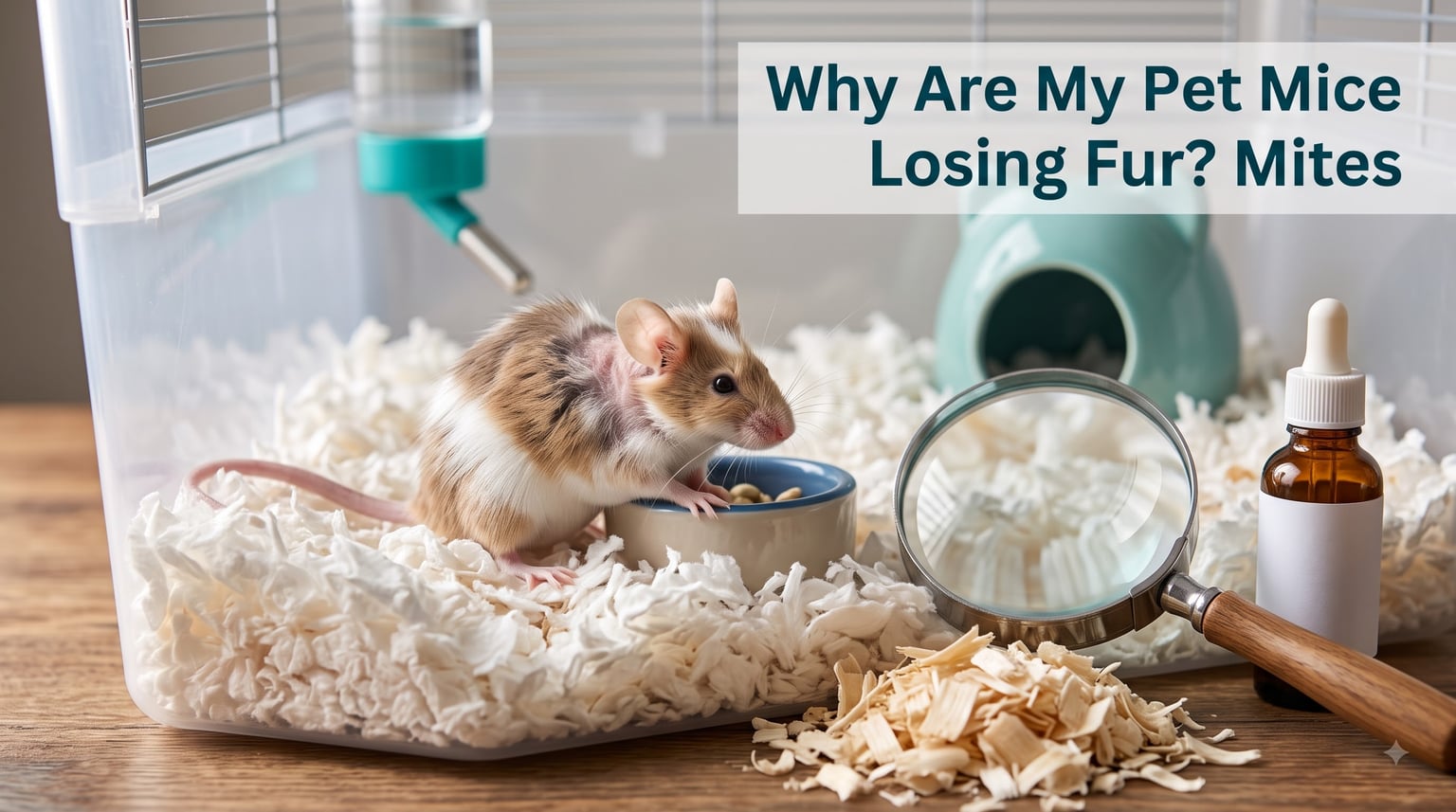
Noticing bald patches or thinning fur on your pet mouse can be alarming, and the question every owner asks is the same: why are my pet mice losing fur? Mites are the most common culprit, but fur loss in mice can also stem from barbering behavior, natural aging, stress, or underlying skin conditions. The good news is that most causes are treatable once you identify them correctly.
I have kept and cared for pet mice for over a decade, and fur loss is one of the most frequent concerns I see in mouse-keeping communities. Our team has compiled research from veterinary sources, pet owner forums, and scientific literature to create a clear diagnostic guide. In this article, you will learn how to identify whether mites, barbering, or aging is behind your mouse’s fur loss, how to treat each cause, and when to involve an exotic vet.
The three main causes of fur loss in pet mice are external parasites (fur mites), social barbering behavior, and age-related thinning. Mites require medical treatment, barbering requires environmental changes, and age-related loss is typically harmless. Getting the diagnosis right matters because untreated mite infestations can lead to skin infections, open wounds, and serious discomfort for your pet.
Table of Contents
Fur Mites: The Most Common Cause of Fur Loss in Mice
Fur mites are tiny external parasites that live on the skin of mice and feed on skin oils and debris. They are the single most common cause of fur loss in pet mice, and three specific mite species are responsible for most infestations.
The three main fur mite species that affect pet mice are Myobia musculi, Myocoptes musculinus, and Radfordia affinis. Myobia musculi is the most problematic of the three because it causes intense itching and can trigger severe allergic skin reactions. Myocoptes musculinus tends to cause more visible scaling and crusting on the skin. Radfordia affinis is less common but produces similar symptoms to the other two species.
One of the most common questions I hear from mouse owners is how their pet got mites in the first place. Mice can pick up mites from contaminated bedding, especially hay or straw that was not heat-treated. New cage mates introduced without a quarantine period can also bring mites into an established colony. In some cases, mites are already present on a mouse in small numbers but only become a visible problem when the mouse’s immune system is weakened by stress or illness.
Recognizing the symptoms of a mite infestation early can make treatment faster and more effective. Here are the key signs to watch for:
Excessive scratching and grooming – the mouse scratches far more than normal, sometimes to the point of creating raw spots
Bald patches – fur loss typically appears behind the ears, around the neck, and on the shoulders first
Red, irritated skin – the skin beneath the thinning fur looks inflamed or pink
Dandruff or flaky skin – white flakes appear on the skin surface and on the bedding
Scabs or small wounds – caused by the mouse scratching itself repeatedly
Restlessness at night – the mouse seems unable to settle and constantly moves or scratches
If you notice several of these symptoms together, a mite infestation is the most likely explanation. The scratching and irritation are what differentiate mites from other causes of fur loss. A mouse with mites will visibly discomfort itself, while a mouse losing fur from barbering or aging will not typically scratch obsessively.
It is worth noting that stressed mice are significantly more prone to mite infestations. When a mouse experiences stress from overcrowding, a sick cage mate, or environmental changes, its immune system weakens. This allows mite populations that were previously kept in check to multiply rapidly and cause visible symptoms.
Barbering in Mice: When Cage Mates Pluck Fur?
Barbering is a behavior where one mouse chews or plucks the fur off another mouse, or sometimes grooms itself excessively to the point of creating bald spots. It is one of the most common non-medical causes of fur loss in group-housed mice. The name comes from the way the barbering mouse trims the fur so closely that the affected mouse appears shaved.
Barbering is driven by social hierarchy and stress. In a group of mice, one dominant mouse will often barber subordinate cage mates as a display of dominance. The dominant mouse may also barber itself, leaving a clean bald strip on its own face or chest. This behavior is not necessarily aggressive in a way that causes injury, but it does leave the recipient with noticeable bald patches.
I have seen many cases in mouse-keeping forums where barbering started after a change in the cage dynamic. One owner reported that barbering began when one of their mice got sick, which stressed the dominant mouse and triggered the behavior. Another common scenario is introducing a new mouse to the cage without proper quarantine and slow introductions, which disrupts the social order.
Telling barbering apart from mites is critical because the treatments are completely different. With barbering, you will notice these distinctive patterns:
Fur loss appears in clean, even patches with no skin irritation underneath
The bald skin looks healthy and normal, not red or scabby
The affected mouse shows no signs of itching or discomfort
Only certain mice in the cage are affected, usually the most submissive ones
The dominant mouse in the cage remains fully furred
Hair stubble is visible where the fur has been chewed short rather than falling out from the root
Barbering does not require medication. Instead, it requires addressing the underlying social stress. Providing more enrichment, offering multiple food and water sources to reduce competition, and in severe cases separating the barbering mouse from its targets can resolve the problem over time as the fur regrows.
Age-Related Fur Loss in Older Pet Mice
As mice enter their senior years, some degree of fur thinning is completely normal. Understanding what constitutes normal aging versus a health problem can save you unnecessary worry while ensuring you do not miss a genuine medical issue.
The average life expectancy of a pet mouse is between 1.5 and 3 years, with most mice living to about 2 years. Mice are generally considered seniors at around 12 to 15 months of age. By this stage, their fur may begin to thin naturally, particularly along the back, sides, and around the base of the tail.
Age-related fur loss happens for several reasons. Older mice groom themselves less thoroughly as their mobility and flexibility decline, which can lead to a duller, thinner coat. Hormonal changes in aging mice can also contribute to gradual hair thinning, similar to pattern baldness in other mammals. Additionally, older mice may have reduced nutrient absorption, which affects coat quality.
Here is how to tell if age-related fur loss is normal or if something else is going on:
Normal aging: gradual, even thinning over the body with no bald spots, no scratching, and healthy skin underneath
Possible problem: sudden fur loss, patchy baldness, scratching, red skin, or scabs in a mouse of any age
Normal aging: the mouse is eating, drinking, and behaving normally otherwise
Possible problem: the mouse shows lethargy, weight loss, or changes in eating habits alongside fur loss
If your older mouse is otherwise healthy and active, mild fur thinning is likely just a sign of getting older. However, if the fur loss is sudden, accompanied by scratching, or the skin looks irritated, you should investigate mites or other medical causes regardless of the mouse’s age.
Mites vs Barbering vs Aging: How to Tell the Difference
Distinguishing between mites, barbering, and age-related fur loss is the single most important step in resolving the issue. Each cause requires a completely different approach, and treating the wrong condition wastes time and money while your mouse continues to suffer.
I have created this diagnostic breakdown based on the symptom patterns that veterinary sources and experienced mouse owners consistently report. Use these questions to narrow down the most likely cause of your mouse’s fur loss.
Step 1: Is the affected mouse scratching or itching?
If the answer is yes, and the scratching is excessive or constant, mites are the most likely cause. Mites cause intense pruritus (itching) that drives the mouse to scratch repeatedly. Barbering and age-related fur loss do not cause itching.
Step 2: Are the skin and fur in the bald area healthy looking?
If the skin under the bald patch is clean, smooth, and not irritated, barbering is likely. Barbered skin looks normal because the fur is being physically removed rather than falling out due to a skin condition. If the skin is red, scaly, scabbed, or flaky, mites or a skin infection are more probable.
Step 3: Is only one mouse in the cage affected, or several?
If only the most submissive mice in a group have bald patches while the dominant mouse looks perfectly groomed, barbering is almost certainly the cause. If multiple mice are scratching and losing fur, or if the dominant mouse is also affected, mites are more likely since parasites spread between cage mates.
Step 4: How old is the mouse, and is the fur loss gradual or sudden?
If your mouse is over 15 months old and the thinning has been gradual and spread evenly across the body, age-related loss is a reasonable explanation. Sudden fur loss or patchy baldness in any age group points toward mites or barbering.
Step 5: Where is the fur loss located?
Behind the ears and on the neck: classic mite territory, or sometimes barbering in dominant-submissive pairs
Face and muzzle of one mouse: often self-barbering by the dominant mouse
Evenly across the back and sides: typically age-related thinning
Patchy with scabs and irritation: mites or secondary skin infection
How to Treat Fur Mites on Pet Mice
Treating fur mites requires anti-parasitic medication. Home remedies alone are rarely effective against established mite infestations, and delaying proper treatment allows the mites to multiply and the skin damage to worsen. The most effective treatments are prescription anti-parasitics administered by or under the guidance of an exotic veterinarian.
Ivermectin is the most widely used and effective treatment for fur mites in mice. It kills Myobia musculi, Myocoptes musculinus, and Radfordia affinis by paralyzing the mites’ nervous systems. A veterinarian can administer ivermectin as a topical solution or an injection, and they will calculate the dosage based on your mouse’s exact body weight. This is critical because mice are very small animals and incorrect dosing can be dangerous.
Multiple owners in pet mouse communities report success with vet-administered ivermectin, with fur beginning to regrow within a few weeks of treatment. Treatment is typically repeated after 10 to 14 days to kill any mites that hatched after the initial dose, since mite eggs survive the first treatment.
Selamectin is another anti-parasitic option that some exotic vets prefer. It is applied topically between the shoulder blades and absorbs through the skin to kill mites. Selamectin is sometimes chosen for very small or fragile mice because it has a wide safety margin.
It is important to know that ivermectin does not kill all parasites. Tapeworms, pinworms, and some protozoan parasites are not affected by ivermectin, which targets external parasites and certain roundworms. If your mouse has a different type of parasitic infection, your vet will prescribe a different medication.
While medication treats the mouse, you must also treat the environment to prevent reinfection. Here is the treatment protocol our team recommends:
Administer the prescribed anti-parasitic medication exactly as your vet directs, including any follow-up doses
Deep clean the cage completely – remove all bedding, wash the cage with hot soapy water, and disinfect with a pet-safe cleaner
Replace all bedding with fresh, high-quality paper-based or aspen bedding (never cedar or pine, which can irritate the skin)
Wash or replace all toys, hideouts, and fabric items in the cage that could harbor mites or eggs
Treat all mice in the cage, not just the one showing symptoms, since mites spread easily between cage mates
Repeat the cage cleaning after the second treatment dose to break the mite life cycle completely
Quarantine any new mice for 2 to 3 weeks before introducing them to the cage to prevent future outbreaks
Ivermectin does not cause fur loss. In fact, it is used to treat the conditions that cause fur loss. Some owners worry that the medication itself is making their mouse lose more fur, but any initial increase in scratching or skin irritation is typically a reaction to dying mites rather than a side effect of the drug.
Preventing Fur Loss: Cage Hygiene and Stress Reduction
Preventing fur loss is far easier than treating it. Most mite infestations and barbering episodes can be avoided with good cage hygiene, proper bedding choices, and careful management of your mice’s social environment. A clean, low-stress habitat keeps the immune system strong and reduces the behaviors that lead to fur damage.
Establish a regular cleaning schedule for your mouse cage. A full deep clean every 7 to 10 days prevents the buildup of waste, bacteria, and potential parasite habitats. Between deep cleans, spot-clean soiled areas daily to keep the environment fresh. Always use pet-safe disinfectants and rinse thoroughly before returning your mice to the cage.
Bedding choice matters more than most owners realize. Avoid cedar and pine shavings, which contain volatile oils that irritate the respiratory system and skin. Paper-based bedding like Carefresh, aspen shavings, or hemp bedding are safer alternatives. If you use hay for nesting, make sure it is dust-extracted and from a reputable source to minimize the risk of introducing mites.
Quarantine every new mouse for at least 2 to 3 weeks before introducing it to your existing group. This gives you time to observe any signs of mites, illness, or behavioral issues before they can spread to your other mice. Introductions should be done gradually in neutral territory to minimize stress and reduce the chance of barbering triggered by disrupted social hierarchies.
For group-housed mice, reduce social stress by providing plenty of space, multiple hideouts, and several food and water stations. Overcrowding is a major trigger for both barbering and stress-weakened immunity that invites mite infestations. A good rule of thumb is at least one hideout and one food source per mouse.
When to See an Exotic Vet for Mouse Fur Loss
Some cases of fur loss can be managed at home, but others require professional veterinary care. Knowing when to make the trip to an exotic vet can prevent minor issues from becoming serious health problems.
You should see a vet promptly if your mouse shows any of the following red flag symptoms: open wounds or bleeding from scratching, scabs that are spreading or becoming infected, lethargy or lack of activity, weight loss or reduced appetite, fur loss that is worsening rapidly despite home treatment, or any signs of respiratory distress such as wheezing or clicking sounds when breathing.
Finding a mouse-savvy vet can be challenging depending on where you live. Not all veterinarians have experience with small rodents, so look specifically for an exotic pet vet or a small mammal specialist. Call ahead and ask about their experience treating mice before booking an appointment.
A common concern among mouse owners is whether mouse fur mites can spread to humans or other household pets. The good news is that the mite species that affect mice (Myobia, Myocoptes, and Radfordia) are species-specific and do not infest humans. They may cause mild, temporary skin irritation if you handle an affected mouse extensively, but they cannot complete their life cycle on human skin and will die off quickly. Other household pets like dogs and cats are also not at risk from mouse fur mites.
Frequently Asked Questions
How to get rid of fur mites on mice?
To get rid of fur mites on mice, take your pet to an exotic veterinarian for anti-parasitic medication such as ivermectin or selamectin. The vet will calculate the correct dosage based on your mouse’s body weight. Treatment is typically repeated after 10 to 14 days to kill newly hatched mites. You must also deep clean the cage, replace all bedding, wash all cage accessories, and treat every mouse in the cage to prevent reinfection.
What is the average life expectancy of a pet mouse?
The average life expectancy of a pet mouse is between 1.5 and 3 years, with most pet mice living to approximately 2 years. Mice are considered seniors at around 12 to 15 months of age, and some gradual fur thinning is normal in older mice.
How did my mouse get mites?
Pet mice can get fur mites from contaminated bedding (especially untreated hay or straw), from new cage mates that were not quarantined, or from mites that were already present in small numbers but multiplied when the mouse’s immune system was weakened by stress or illness. Mites can also hitchhike on bedding or supplies that were stored in areas with wild rodent activity.
Why is my mouse losing fur?
Fur loss in pet mice is most commonly caused by fur mites (external parasites that cause itching and scratching), barbering behavior (when one mouse plucks the fur of another due to dominance or stress), or age-related thinning in older mice. Less common causes include ringworm, bacterial skin infections, hormonal imbalances, and allergic reactions to bedding.
Can you use ivermectin on mice?
Yes, ivermectin is the most common and effective treatment for fur mites in mice. It kills the three main mite species that affect mice: Myobia musculi, Myocoptes musculinus, and Radfordia affinis. A veterinarian should determine the correct dosage based on the mouse’s body weight, as mice are very small and overdosing can be dangerous. Ivermectin is given as a topical solution or injection and is typically repeated after 10 to 14 days.
What parasites are not killed by ivermectin?
Ivermectin does not kill tapeworms, most pinworms in some cases, or protozoan parasites like Giardia. It primarily targets external parasites like fur mites and lice, plus certain roundworms. If your mouse has a different type of parasitic infection, your vet will prescribe a different medication such as praziquantel for tapeworms.
How long does it take ivermectin to get rid of mites?
Ivermectin begins killing mites within hours of administration, but a full course of treatment typically takes 2 to 3 weeks because the medication does not kill mite eggs. A second dose is given after 10 to 14 days to kill any mites that hatched after the first treatment. Fur usually begins regrowing within a few weeks after the mites are eliminated.
Does ivermectin cause hair loss?
No, ivermectin does not cause hair loss. It is used to treat the conditions that cause fur loss in mice. If your mouse appears to lose more fur shortly after starting treatment, this is typically a reaction to dying mites or existing skin damage healing, not a side effect of the medication itself.
Taking Action on Your Mouse’s Fur Loss
Fur loss in pet mice almost always traces back to one of three causes: fur mites that require anti-parasitic medication, barbering behavior that needs environmental and social management, or natural age-related thinning that is harmless. By checking for scratching, examining the skin condition, observing cage dynamics, and considering your mouse’s age, you can usually identify the cause with confidence.
If you suspect mites, do not wait to seek treatment. Mite infestations worsen quickly and can lead to skin infections and open wounds if left untreated. Contact an exotic vet for proper diagnosis and prescription medication. For barbering, focus on reducing cage stress, providing enrichment, and monitoring the social hierarchy. For older mice, keep an eye out for additional symptoms but do not panic over gradual thinning.
Understanding why your pet mice are losing fur, whether from mites or another cause, puts you in a position to help them effectively. Most mice recover fully from fur mites with proper treatment, and barbering can be managed with the right environmental adjustments. The key is acting early and choosing the correct approach for the specific cause.