
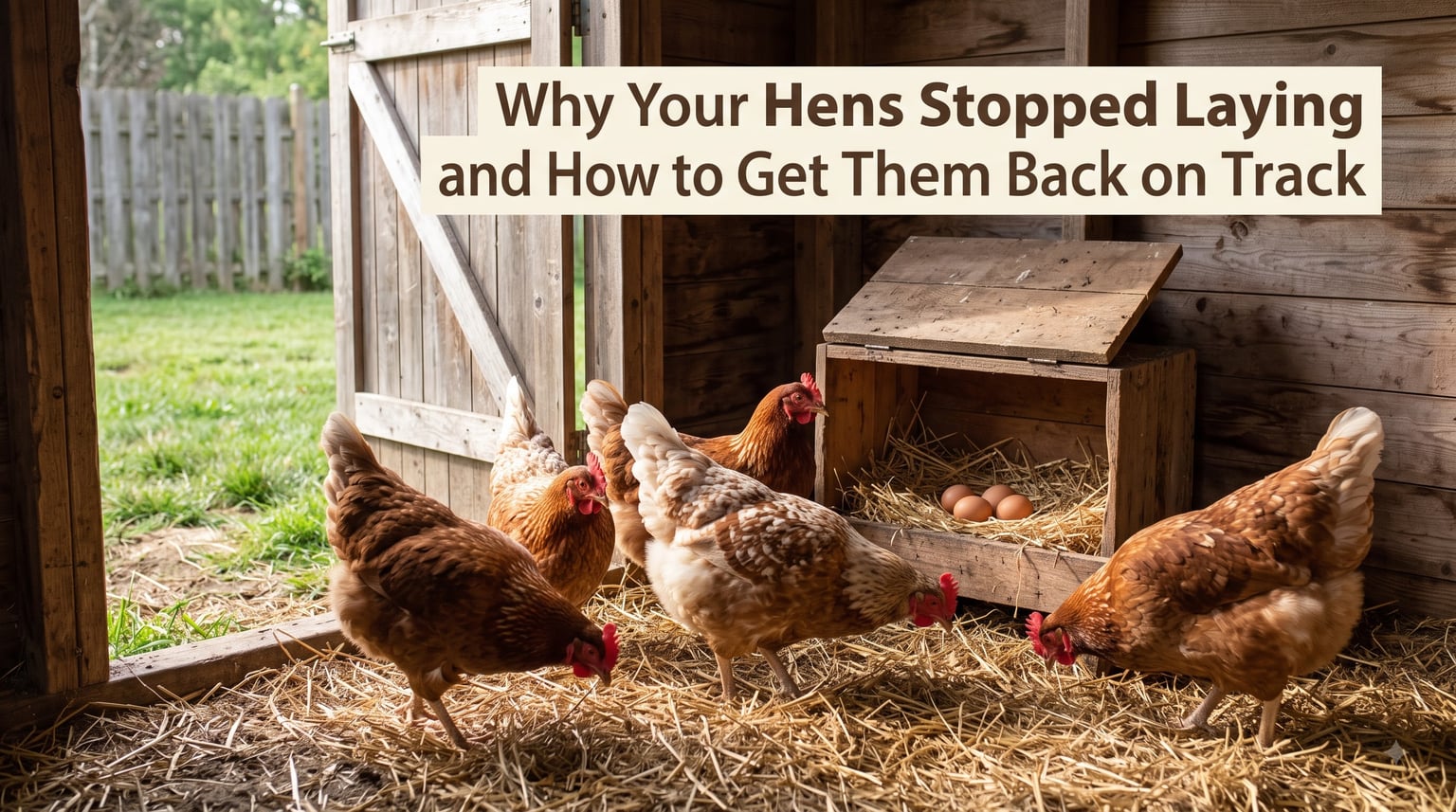
Last spring, I walked out to my coop expecting the usual four warm eggs and came back with an empty basket. Three days passed. Then a week. I had six healthy hens who looked fine, ate well, and acted normal, yet my egg count had crashed to zero. That panic is what most backyard chicken keepers feel when they ask, “Why did my hens stop laying eggs?”
If you are staring at an empty nesting box right now, take a breath. Hens rarely stop laying without a reason, and the fix is usually simple once you know what to look for. We have spent years raising backyard chickens, comparing notes with other keepers, and walking through this exact problem dozens of times. This guide covers the eight most common reasons hens stopped laying, practical tests you can run today, and a recovery timeline so you know when to expect eggs back.
Table of Contents
Why Did My Hens Suddenly Stop Laying Eggs?
Egg production is a hormonal response triggered mostly by daylight, nutrition, and the hen’s overall health. When something disrupts that system, the hen’s body pauses ovulation until conditions improve. The most common causes are changes in daylight hours, stress, nutritional gaps, molting, age, broodiness, illness, or hidden nests outside the coop.
Here is the quick answer in case you are skimming: most backyard hens need 14 to 16 hours of light per day, a balanced layer feed with at least 16% protein, a calm environment, and good health to lay consistently. If any of those are off, production drops fast. Below, we walk through each cause in detail so you can pinpoint yours.
Daylight and Seasonal Changes
Daylight is the single biggest driver of egg production. Your hen’s reproductive system responds to light entering her eye, which triggers the hypothalamus to release hormones that start ovulation. When daylight drops below about 14 hours, most hens slow down or stop completely.
How many hours of light do hens need to lay
Hens lay best when they get 14 to 16 hours of light per day. In summer, natural sunlight does the job. In late fall and winter, daylight often drops to 9 or 10 hours in northern climates, and that is when you will see a slowdown. The drop is gradual, but production can fall from 6 eggs a week down to zero quickly.
If your hens stopped laying in October or November, daylight is the most likely culprit.
Should you add supplemental lighting in winter
You can add a low-wattage bulb on a timer to extend the day to 14 hours. There is debate about whether this is humane, but in our experience, a single warm-white LED bulb on a timer set to turn on before dawn works well. The goal is steady light, not bright light. About 25 to 40 watts for a small coop is plenty.
One tip: do not suddenly add light in the middle of a dark winter. Hens need a gradual transition or their hormonal system cannot catch up. Set the timer to add 15 to 30 minutes per week until you reach 14 total hours.
Nutrition and Feeding Problems
Even with perfect daylight, hens cannot lay without the right fuel. Egg production is protein and calcium intensive, and a small gap in nutrition can shut things down within days.
Layer feed basics and the 90/10 rule
A quality layer feed should make up about 90% of your hen’s diet. That feed already contains 16% protein and the calcium she needs. The remaining 10% can be treats, scratch, kitchen scraps, or free-range forage. If treats exceed 10%, your hens will fill up on lower-nutrition food and stop laying.
I learned this the hard way when I gave my flock too many watermelon rinds during a hot summer. Egg production dropped for a week until I cut back the treats and got them back on layer feed.
Calcium and protein requirements
Each eggshell uses about 2 grams of calcium. If your hen cannot pull that from her feed, her body will pull it from her bones, and she will stop laying entirely. Always offer a separate dish of crushed oyster shell or limestone grit so hens can self-regulate.
For protein, look for layer feed with 16% to 18% protein. During a molt, you can boost this to 20% with a temporary switch to a higher-protein feed or by adding cooked eggs, mealworms, or soybean meal to the diet.
Molting and Feather Loss
Molting is the natural process where hens shed old feathers and grow new ones. This happens once a year, usually in late summer or fall, and lasts 6 to 16 weeks. During this time, hens pour protein and energy into feather regrowth and halt egg production.
You will notice feathers everywhere and patchy, scraggly-looking hens. Their combs may look pale and dry. This is normal. Do not panic. Do not crank up the heat. Just give them time and extra protein.
Recovery timeline and protein boost
Most hens finish molting in 8 to 12 weeks. To speed feather regrowth, switch to a feed with 20% protein or add a handful of high-protein snacks like black oil sunflower seeds, scrambled eggs, or dried mealworms. Once feathers are back in, laying resumes within 2 to 3 weeks.
If your hens stopped laying in October and look like they exploded out of a feather pillow, molt is almost certainly the cause.
Hen Age and the Laying Cycle
Hens lay the most eggs in their first two years. A pullet (a hen under one year old) typically starts laying between 18 and 24 weeks, peaks at 30 weeks, and holds high production for the first 12 months. After that, production drops by about 10% to 15% each year.
When do hens peak and decline
Most hybrid breeds like ISA Browns or Red Sex Links lay 5 to 6 eggs a week in their first year. By year two, that drops to 4 to 5. By year three, 3 to 4. Heritage breeds often lay fewer eggs, but they lay for more years overall.
How long chickens live after they stop laying
Chickens can live 8 to 10 years, even after they stop laying. Many backyard keepers keep retired hens as pets, and they still contribute to the flock by eating bugs, providing nitrogen-rich manure, and keeping the social structure stable. A hen past her laying prime is not a problem to solve, just a member of the family to care for.
Stress, Predators, and Coop Problems
Stress is one of the most overlooked causes of a sudden drop in egg production. Anything that spooks the flock or disrupts their routine can trigger a temporary halt to laying. Stress-induced pauses usually last 7 to 14 days after the trigger is removed.
Common stress triggers
Here are the usual culprits we see in backyard flocks:
- Predator visits at night (raccoons, opossums, foxes, owls)
- Overcrowding in the coop (less than 4 square feet per bird)
- A coop move or new flock introduction
- Rooster changes or aggressive flock members
- Loud noises, construction, or frequent coop disturbances
- Broody hens taking over nesting boxes
When we added four new pullets to our existing flock, the older hens stopped laying for nearly six weeks until the pecking order settled. That timeline is normal. Give new birds time and the production will recover.
Hidden nests and free-ranging hens
If your hens free-range and you have noticed a sudden drop, check the whole property. Hens love to lay in hidden spots under bushes, in tall grass, in woodpiles, or in old barn corners. Mice, rats, and snakes also steal eggs. Walk the yard slowly during peak laying hours. Look for an undisturbed nest with multiple eggs or signs of disturbance.
Broodiness and Hormonal Changes
A broody hen is one whose hormones have flipped to “motherhood mode.” She sits in the nesting box all day, fluffs up, growls when you approach, and stops laying. Broodiness is most common in spring and early summer.
Broody hens do not lay because their body is focused on hatching eggs, even if those eggs are not fertilized. Most breeds go broody for 3 to 4 weeks before hormones reset.
How to break broodiness
The fastest way is to remove the hen from the nesting box and place her in a wire-bottomed crate or pen with food and water, raised off the ground. This cools her underside and breaks the hormonal cycle. Usually 3 to 5 days is enough. Once she rejoins the flock, laying resumes within 1 to 2 weeks.
Disease, Parasites, and Water Quality
Illness is the cause nobody wants to find, but it is important to rule out. Hens with mites, lice, worms, or respiratory infections will slow or stop laying as their body fights the problem.
Warning signs of illness
Watch for pale combs, watery eyes, sneezing, lethargy, weight loss, dirty vent feathers, or a sudden drop in feed intake. Check for mites by inspecting feather shafts near the vent at night, since that is when they are most active. Treat infestations with permethrin dust, diatomaceous earth in dust baths, or a vet-recommended dewormer.
Hidden factor: water quality
This is one most articles miss. Hens drink about twice as much water as they eat in feed. If their water is dirty, frozen, or warm, they drink less, and egg production drops within 24 to 48 hours. I once lost a week of eggs because my automatic waterer had algae buildup in summer. Clean water, refreshed daily, is non-negotiable.
Practical Tests to Diagnose Your Flock
When you cannot tell what is wrong, these two hands-on tests help you figure out whether your hen is laying, close to laying, or far off.
Pelvic bone examination
Pick up the hen and feel the two pointed bones just below the vent. In a laying hen, these pelvic bones are flexible and spread at least two finger-widths apart. In a non-laying hen, they are rigid and close together. This is the single most reliable physical test. It takes 10 seconds and works on any breed.
Vent and comb check
A laying hen has a moist, pale pink vent that is larger and looser. A non-laying hen has a dry, tight, yellow vent. The comb also tells a story. Bright red and full means she is in production. Pale, scaly, and shrunken means she is off lay or has a health issue.
Troubleshooting Checklist and Recovery Timelines
Use this quick checklist to walk through the most likely causes. Check each one in order, and most keepers find their answer within five minutes.
- Check daylight hours. Is the flock getting 14 or more hours of light?
- Inspect feed. Is it a quality layer feed making up 90% of the diet?
- Look for oyster shell. Is free-choice calcium available?
- Check for molt. Are feathers everywhere and birds patchy?
- Search for hidden nests. Walk the yard during laying hours.
- Check the water. Is it clean, cool, and unfrozen?
- Inspect for parasites. Look at vent feathers and comb color.
- Consider age. Is the hen past her second laying season?
- Test for broodiness. Is the hen refusing to leave the nest and growling?
Expected recovery time per cause
Knowledge is power, but knowing when eggs will come back is what most keepers really want. Here is a realistic timeline for each cause:
- Daylight drop: 2 to 4 weeks after adding supplemental light
- Nutrition fix: 5 to 10 days after correcting feed
- Molting: 2 to 4 weeks after feathers regrow
- Stress or new flock: 2 to 6 weeks after the trigger is removed
- Broodiness: 1 to 2 weeks after breaking the cycle
- Parasites or illness: 2 to 4 weeks after successful treatment
- Age-related decline: ongoing, lower baseline production
If your hens have been off lay for more than 6 weeks with no clear cause, consider reaching out to a local veterinarian or agricultural extension office for a hands-on evaluation.
Frequently Asked Questions
Here are the questions our team gets asked most often about hens that have stopped laying.
How do I make my hens start laying again?
Address the most common cause first: daylight. Add a low-wattage bulb on a timer to reach 14 to 16 hours of total light per day. Then check feed quality (16% protein layer feed), provide free-choice calcium, and confirm water is clean and unfrozen. Most hens resume laying within 2 to 4 weeks after these baseline needs are met.
Why did my hens suddenly stop laying?
Sudden drops usually trace to one of three things: a daylight shift, a stress event, or a nutrition gap. A predator visit, coop move, or hot weather spike can halt production for 1 to 3 weeks. If the drop is gradual, suspect molting, age, or chronic feed issues.
How long do chickens live after they stop laying?
Most hens live 6 to 10 years total, even after laying slows or stops around year 3 or 4. Many backyard keepers keep retired hens as pets and flock members for their full lifespan.
What to give chickens when they stop laying?
Stick with a quality 16% protein layer feed and offer free-choice oyster shell. During a molt, boost protein to 20% with scrambled eggs, mealworms, or sunflower seeds. A small amount of apple cider vinegar in the water (1 tablespoon per gallon) is a popular community remedy that may support gut health.
What causes chickens to suddenly stop laying eggs?
The five most common triggers are: daylight dipping below 14 hours, predator or coop stress, a feed change or treat overload, broody hens taking over nests, and external heat waves above 90 degrees. Hens resume laying once the trigger is gone and the flock has had time to recover.
Why are my hens not laying eggs in summer?
Heat is the most common summer culprit. Above 85 to 90 degrees Fahrenheit, hens eat less, drink more, and reduce laying. Provide shade, cool water, and frozen treats. Some breeds also take a summer break or go broody in late spring, which can carry into early summer.
What month do hens stop laying eggs?
Most hens slow down or stop in late October through February, depending on your latitude and breed. The exact month depends on when daylight drops below 14 hours in your region. In southern climates with mild winters, some hens keep laying year-round.
Final Thoughts on Getting Your Hens Laying Again
If your hens stopped laying, the answer is almost always in this list. Start with daylight, work through nutrition, check for stress and predators, and rule out illness and broodiness. Most backyard chicken keepers see eggs return within 2 to 4 weeks of fixing the underlying cause. Be patient, observe your flock, and resist the urge to make big changes all at once.
Becoming a confident chicken keeper is a long game. The first time you solve a drop in egg production feels like wizardry. The tenth time is just part of the rhythm. Whether you got into this for fresh eggs, the joy of the hobby, or to teach your kids where food comes from, the flock rewards patience and attention. Stick with it, and your hens will reward you with eggs again soon.