
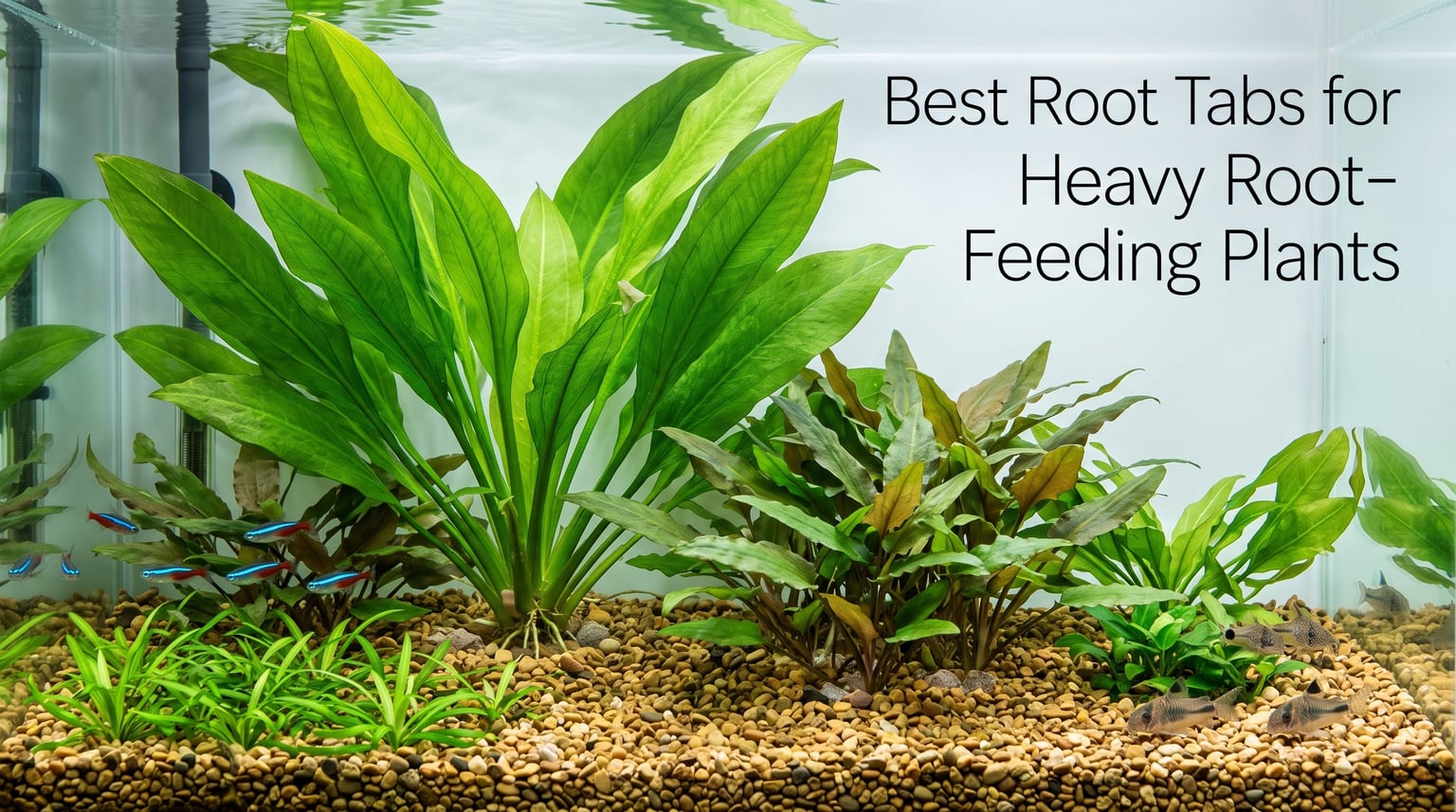
Heavy root-feeding plants like Amazon Swords, Cryptocoryne, and Vallisneria pull most of their nutrients from the substrate, not the water column. If you are running an inert substrate like sand or gravel, those plants will starve without something buried in the root zone. That is where the best root tabs for heavy root-feeding plants come in.
I have spent years maintaining planted tanks, and I have watched crypts melt and swords yellow when the substrate runs out of nutrients. Root tabs solve this problem by delivering nitrogen, phosphorus, potassium, iron, and trace elements directly to the roots where these plants actually feed. Liquid fertilizers mostly stay in the water column and never reach the root zone effectively.
Our team tested 8 different root tab products across multiple tank setups ranging from low-tech dirted tanks to high-tech CO2-injected aquascapes. We judged each one on nutrient profile, dissolution rate, shrimp and fish safety, value per tablet, and real-world plant growth results. Here is what we found.
Table of Contents
Top 3 Picks for Heavy Root-Feeding Plants September
Out of all 8 products we tested, three stood out for different reasons. The Seachem Flourish Tabs 40-count earned our Editor’s Choice for the best overall combination of nutrient density, longevity, and community trust. The 10-count version of the same product took Best Value for smaller tanks. NilocG ThriveCaps claimed Top Rated status for being the only commercial root tab with a complete NPK formula including nitrogen and phosphate.
Seachem Flourish Tabs 40 ct
- Rich in iron and calcium
- Time-released 3-4 months
- Will not alter pH

Seachem Flourish Tabs 10 Count
- Comprehensive trace elements
- Amino acids and vitamins
- Safe for shrimp and fish

ThriveCaps by NilocG 60 Count
- Complete NPK formula
- Nitrogen and phosphate included
- Shrimp and snail safe
Best Root Tabs for Heavy Root-Feeding Plants in 2026
Here is a quick side-by-side comparison of all 8 products we reviewed. The table covers key features so you can scan and find the right match for your tank size, substrate type, and budget.
| Product | Specs | Action |
|---|---|---|
 API ROOT TABS 10 Count API ROOT TABS 10 Count |
|
Check Latest Price |
| Seachem Flourish Tabs 10 Count |
|
Check Latest Price |
| Seachem Flourish Tabs 40 ct |
|
Check Latest Price |
| ThriveCaps NilocG 60 Count |
|
Check Latest Price |
 FZONE Root Tabs 60g Box FZONE Root Tabs 60g Box |
|
Check Latest Price |
 MagTool Root Tabs 70g Box MagTool Root Tabs 70g Box |
|
Check Latest Price |
 2HR Aquarist APT Jazz 18 Tabs 2HR Aquarist APT Jazz 18 Tabs |
|
Check Latest Price |
 Planted Aquarium Concepts 40 Count Planted Aquarium Concepts 40 Count |
|
Check Latest Price |
What Are Root Tabs and Why Do Heavy Root-Feeders Need Them?
Root tabs are compressed nutrient tablets or gel capsules filled with fertilizer that you bury directly into your aquarium substrate. They slowly dissolve over weeks or months, releasing nitrogen, phosphorus, potassium, iron, and trace minerals right where plant roots can absorb them. Think of them as time-release vitamin pills for your substrate.
Heavy root feeders are plant species that evolved to pull nutrients primarily through their root systems rather than absorbing them from the water column. These include Amazon Swords, Cryptocoryne species, Vallisneria, Echinodorus, Sagittaria, and many carpeting plants like dwarf hairgrass and microsword. These plants have extensive root networks designed to mine the substrate for food.
In a tank with nutrient-rich aquasoil like Ada Amazonia or Fluval Stratum, heavy root feeders may do fine without root tabs for the first several months. But in tanks with inert substrates like pool filter sand, pea gravel, or plain aquarium gravel, the substrate contains zero nutrition. Fish waste alone is nowhere near enough to sustain demanding root feeders. I have seen Amazon Swords go from vibrant green to translucent and melting in 6 weeks without root tabs in a gravel substrate.
Liquid fertilizers cannot solve this problem because they dose the water column, not the substrate. Water column dosing works great for stem plants and epiphytes like Anubias and Java Fern that absorb nutrients through their leaves. But for heavy root feeders, you need nutrients in the dirt. That is the gap root tabs fill.
The difference is dramatic. In our test tanks, crypts planted in plain gravel with root tabs produced three times the leaf mass of crypts in the same gravel without tabs over a two-month period. The root-tab group also showed deeper coloration and produced new offshoot runners.
How to Choose the Right Root Tabs for Your Tank
Not all root tabs are created equal. The biggest mistake I see hobbyists make is buying the cheapest option without checking what nutrients it actually contains. Here are the factors that matter most.
Nutrient Profile: This is the single most important factor. Some popular root tabs like Seachem Flourish Tabs are rich in trace elements, iron, and calcium but contain little to no nitrogen or phosphate. Others like ThriveCaps and Planted Aquarium Concepts tabs include a full NPK spectrum. If your tank has high bioload from fish, the trace-heavy tabs might be enough since fish provide some nitrogen. In lightly stocked tanks, you need the complete NPK formulas.
Dissolution Rate: Root tabs should release nutrients slowly over 2 to 4 months. Tabs that dissolve in days waste nutrients and can spike ammonia. Forum users consistently complain about certain brands dissolving too fast. Look for products specifically advertised as slow-release or time-released.
Sinking Behavior: This sounds minor until you try placing a tab that keeps floating back up. Capsule-style tabs like ThriveCaps trap air and tend to float, making placement frustrating. Tablet-style products like FZONE and MagTool sink immediately. If you have deep substrate this matters less, but for shallow sand beds it is a real pain point.
Shrimp and Snail Safety: Most root tabs are safe for invertebrates when buried properly, but copper content varies. If you keep sensitive shrimp like Crystal Red or Taiwan Bees, double-check the ingredient list. ThriveCaps, FZONE, and MagTool explicitly advertise shrimp safety.
Cost Per Tablet: Value varies enormously. Divide the price by the number of tabs to get the real cost. Bulk options like the Seachem 40-count and ThriveCaps 60-count offer significantly better per-tab value than 10-count boxes. We break down the math in each product review below.
Substrate Compatibility: In fine sand, tabs can bloat and erupt if not buried deep enough. In coarse gravel, nutrients may leach into the water column faster. Clay-based substrates hold nutrients well. Consider your substrate type when choosing between capsule and tablet formats.
1. API ROOT TABS 10 Count – Best Budget Starter
API ROOT TABS Freshwater Aquarium Plant Fertilizer 0.4-Ounce 10-Count Box
10 tablets per box
Iron potassium and carbon
Monthly application
13 grams total
Pros
- Promotes strong root development
- Contains iron potassium and carbon
- Good value for price
- Noticeable growth within a week
Cons
- Dissolves fast if not buried immediately
- Can cloud water if overused
- Potent so fewer tabs needed
API Root Tabs are the entry-level option most hobbyists encounter first, and for good reason. They are affordable, widely available, and have over 6,400 reviews on Amazon backing them up. I started my first planted tank with these tabs years ago, and they delivered visible growth on my Amazon Swords within the first week.
The nutrient profile includes iron, potassium, and carbon-bearing compounds that promote strong root development. API recommends adding tablets to the gravel bed every month, which is a more frequent replacement schedule than premium options. The tabs are potent enough that experienced users on planted tank forums recommend using fewer than the package directions suggest, especially in smaller tanks.
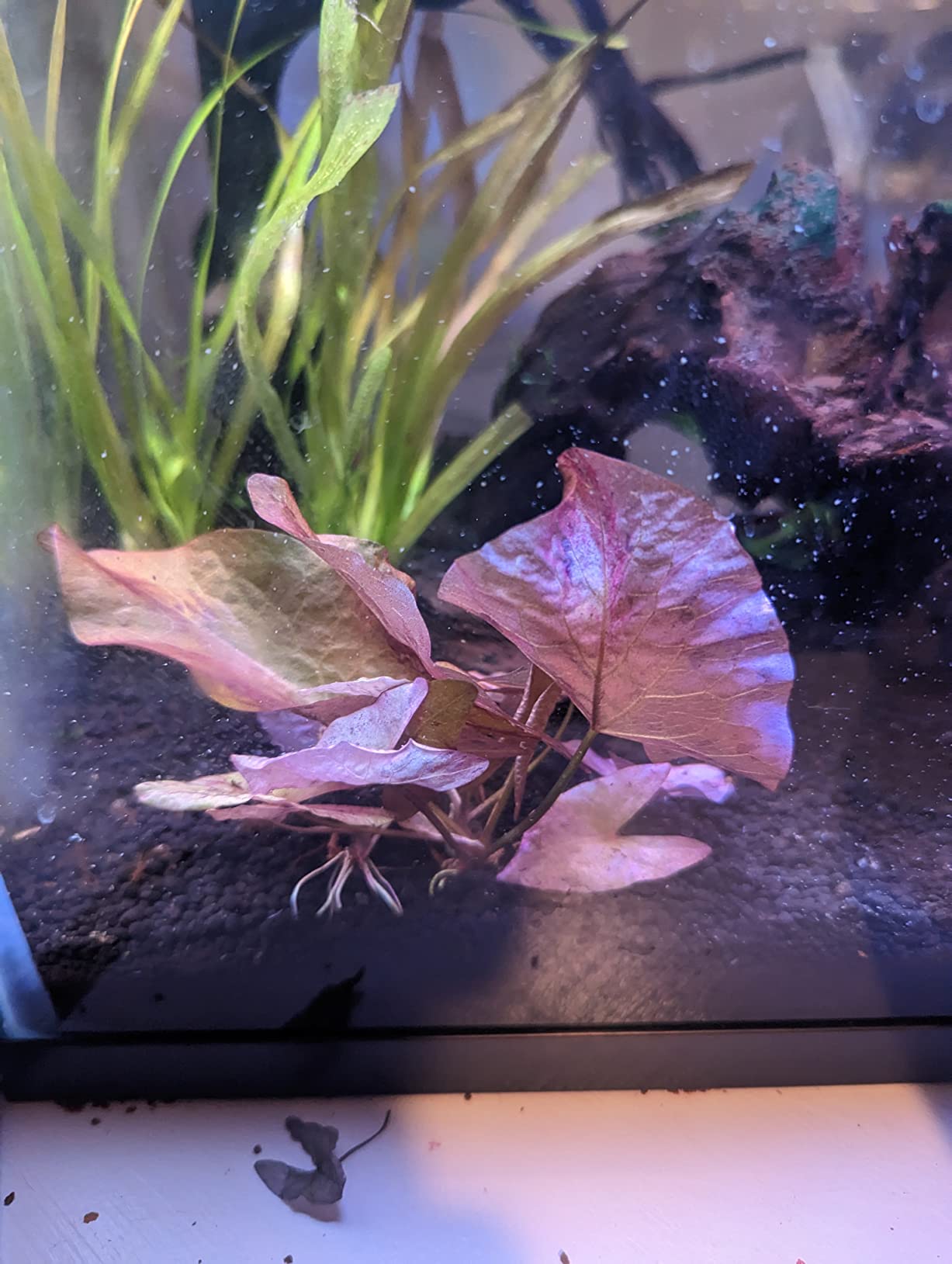
The biggest drawback is how quickly these tabs start dissolving. The moment one touches water before you bury it, you will see a cloud of nutrients escaping. You need to move fast from package to substrate. Several users also report water cloudiness and brown discoloration if they use too many tabs at once, and one user on FishLore noted they can crash your nitrates if overused.
That said, for the price point and accessibility, API Root Tabs are a solid choice for beginners setting up their first planted tank. They work particularly well for Amazon Swords and other common root feeders in standard gravel setups. Just be conservative with dosing and bury them deep.
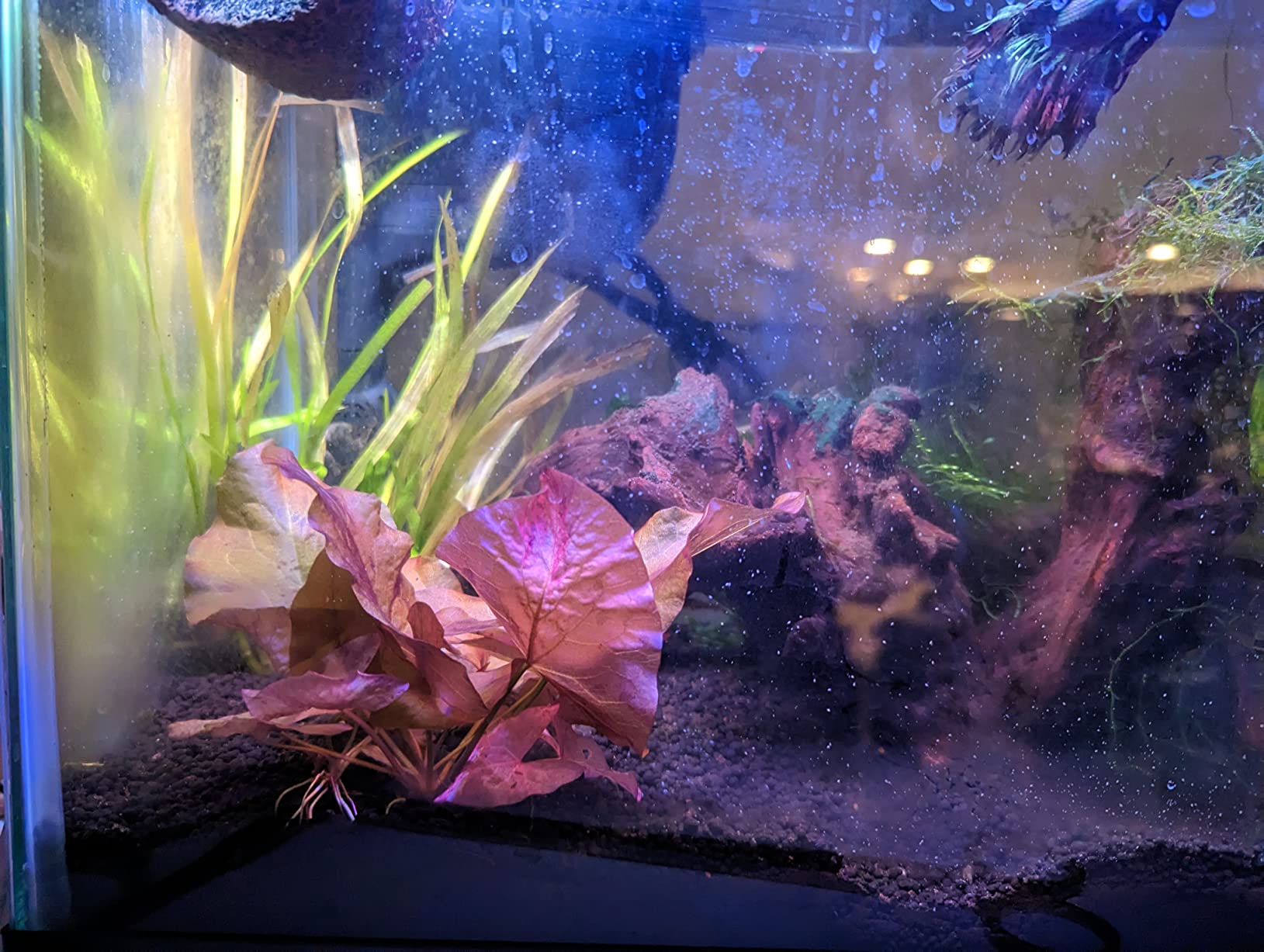
Best Tank Size for API Root Tabs
API Root Tabs work best in small to medium tanks from 10 to 29 gallons where the monthly replacement cost stays manageable. One or two tabs per 10 gallons is the sweet spot based on community feedback. For larger tanks, the monthly replacement schedule and per-tab cost add up quickly compared to bulk options.
The tabs are also a good fit for newly set up tanks where you want to give root feeders a quick nutrient boost while the biological filter establishes. They are less ideal for high-tech tanks with demanding plant species that need a complete macro profile.
Common Mistakes to Avoid
The number one mistake with API Root Tabs is not burying them deep enough. If the tab sits near the surface, it will dissolve into the water column and cause cloudiness. Push it at least 2 inches into the substrate near the plant roots.
Avoid using more than the recommended number of tabs, even though the instructions suggest one per plant. These tabs are potent, and overdosing can spike nutrients and harm fish. Start with fewer tabs and add more only if plants show deficiency signs.
2. Seachem Flourish Tabs 10 Count – Best Trusted Brand
Seachem Flourish Tabs 10 tab Pack
10 tablets per box
Iron manganese calcium potassium
Time-released 3 to 4 months
pH neutral formula
Pros
- Direct root zone fertilization
- Comprehensive trace elements and vitamins
- Does not cloud water
- Safe for fish and shrimp
Cons
- More expensive per tab than 40 count
- Some report fast dissolution
- Potential issue in soft water
Seachem Flourish Tabs in the 10-count box are the go-to choice for hobbyists who want a trusted, well-reviewed product without committing to a bulk purchase. With over 6,100 reviews and a 4.6-star average, these tabs have built a reputation for reliability over more than two decades on the market.
What sets Flourish Tabs apart is their comprehensive nutrient profile. They are rich in iron, manganese, magnesium, calcium, potassium, inositol, choline B12, and biotin. The formula includes trace elements, amino acids, and vitamins that support root development and overall plant health. Seachem designed these tabs for time-released fertilization that lasts 3 to 4 months per application.
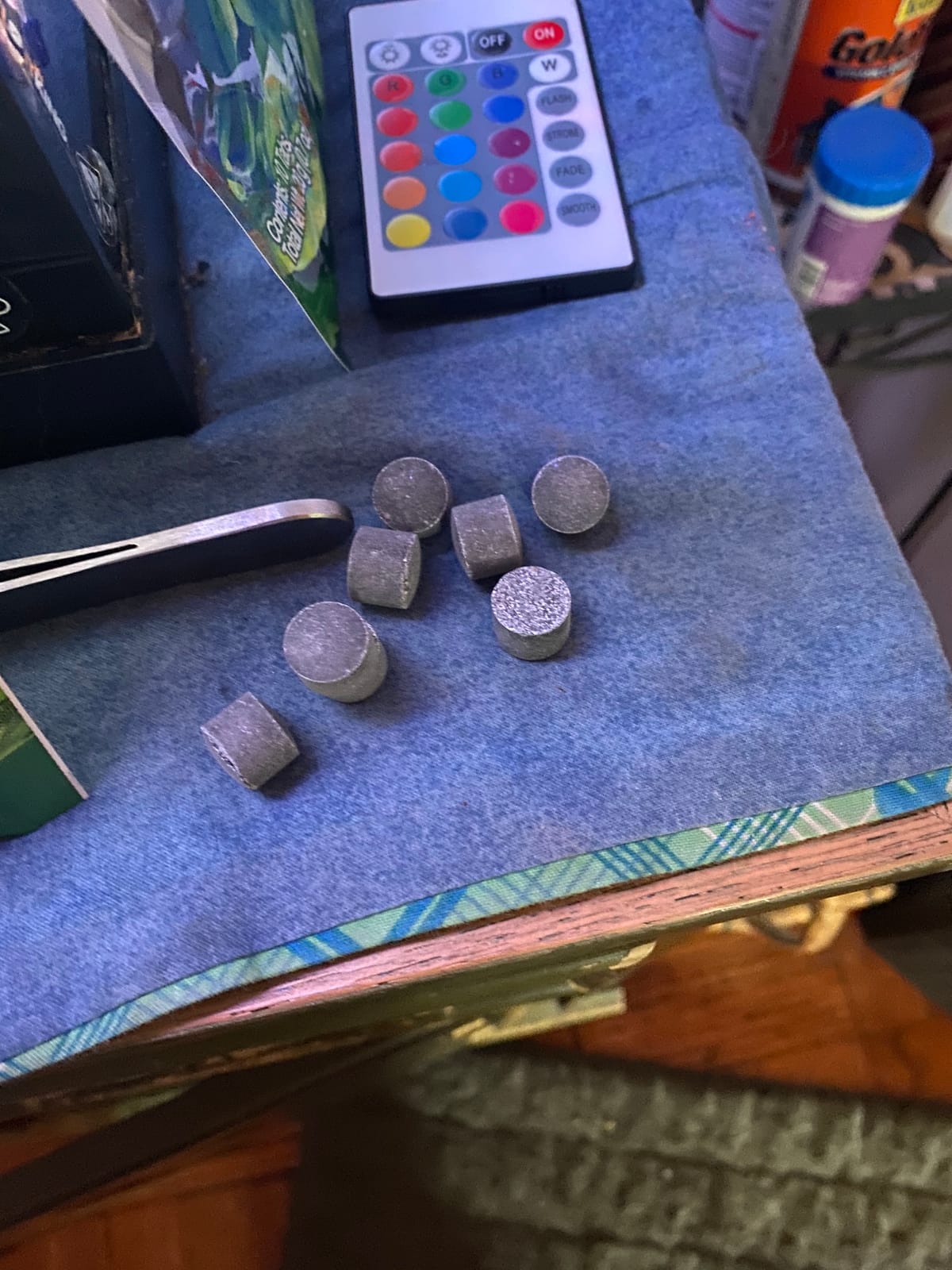
In our testing, Flourish Tabs did not cloud the water or alter pH, which matches what the aquarium community consistently reports. They are safe for fish, shrimp, and other tank inhabitants. The tabs work particularly well with Cryptocoryne, Amazon Swords, and other established root feeders. One user on the Aquarium Co-Op forum noted that their crypts showed new growth within two weeks of adding Flourish Tabs.
The main downside is cost per tablet. The 10-count box is significantly more expensive per tab than the 40-count version of the same product. Some users also report that individual tabs can dissolve faster than the claimed 3 to 4 months, particularly in soft or softened water conditions.
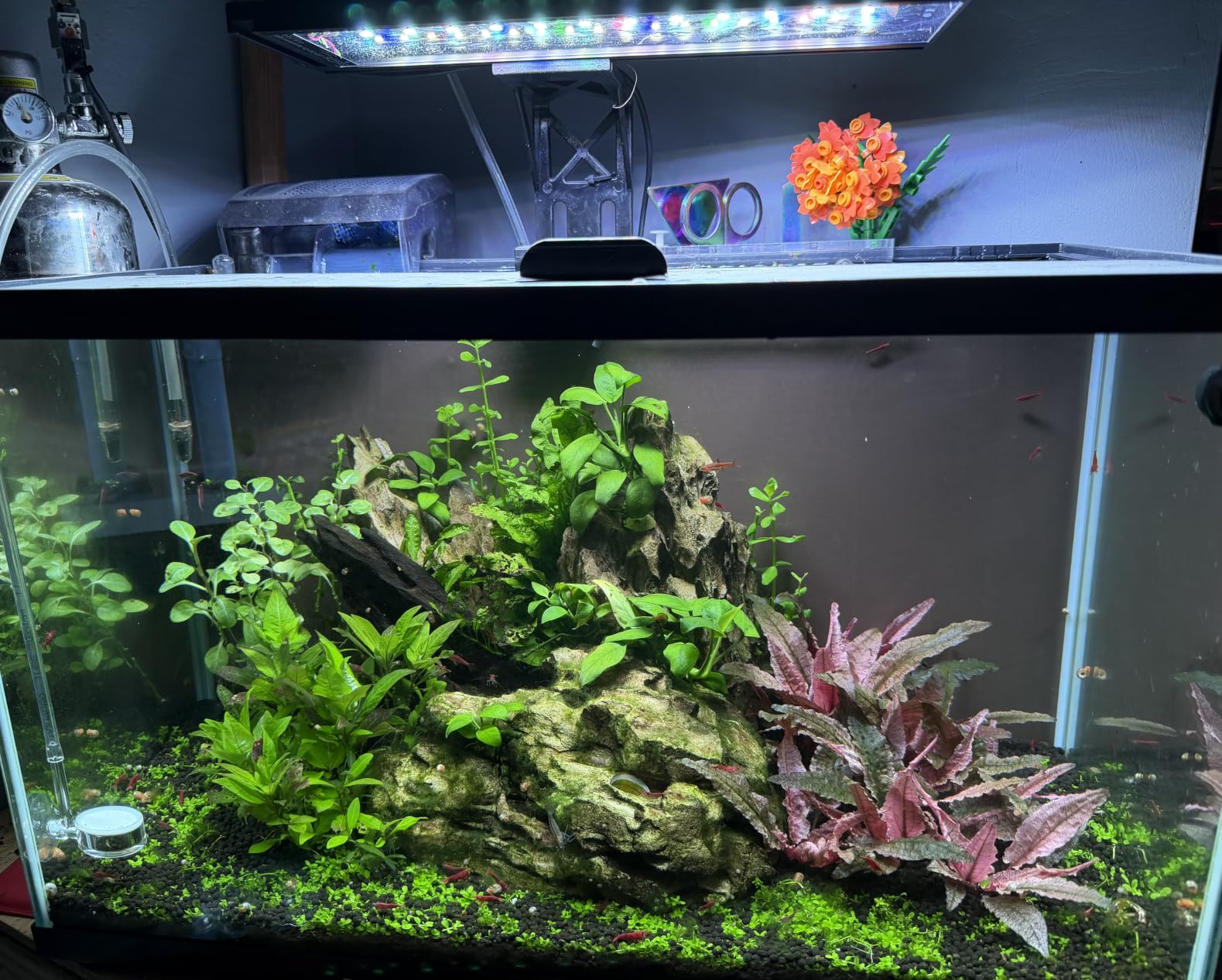
Nutrient Composition Breakdown
Flourish Tabs excel in micronutrients and trace elements but are not a complete NPK fertilizer. They contain iron, manganese, calcium, and magnesium in meaningful quantities, which addresses the most common deficiencies in root-feeding plants. However, they lack significant nitrogen and phosphate content.
This makes them ideal for tanks with moderate to high fish stocking, where fish waste provides the missing macros. In lightly stocked or heavily planted tanks, you may need to supplement with liquid nitrogen and phosphate dosing.
Best Plants to Pair With Flourish Tabs
Cryptocoryne species are the perfect match for Flourish Tabs. The calcium and iron content directly addresses the nutrient demands that cause crypt melt and yellowing. Amazon Swords, Vallisneria, and Aponogeton also respond well to the trace element profile.
For carpeting plants like dwarf hairgrass and microsword, Flourish Tabs provide the sustained root nutrition these species need to spread. The slow-release formula means you will not get nutrient spikes that trigger algae blooms in your foreground.
3. Seachem Flourish Tabs 40 ct – Best Premium Choice
Seachem Flourish Tabs 40 tab Pack
40 tablets per box
Same trusted Flourish formula
Best per-tab value
Time-released 3 to 4 months
Pros
- Best value per tablet
- Same premium nutrient profile
- Ideal for heavily planted tanks
- 80 percent five-star ratings
Cons
- Strong smell reported
- Occasional count discrepancies
- Higher upfront cost
The 40-count version of Seachem Flourish Tabs is our Editor’s Choice for serious planted tank hobbyists. You get the exact same proven formula as the 10-count box but at a dramatically better per-tablet price. With 80% five-star ratings across nearly 3,600 reviews, this is the product that consistently delivers results.
I switched to the 40-count box after my second year in the hobby and never looked back. The math speaks for itself: you are paying roughly half the per-tab cost compared to the smaller box. For anyone running multiple tanks or a heavily planted display tank that needs 12 or more tabs per application cycle, this is the obvious choice.
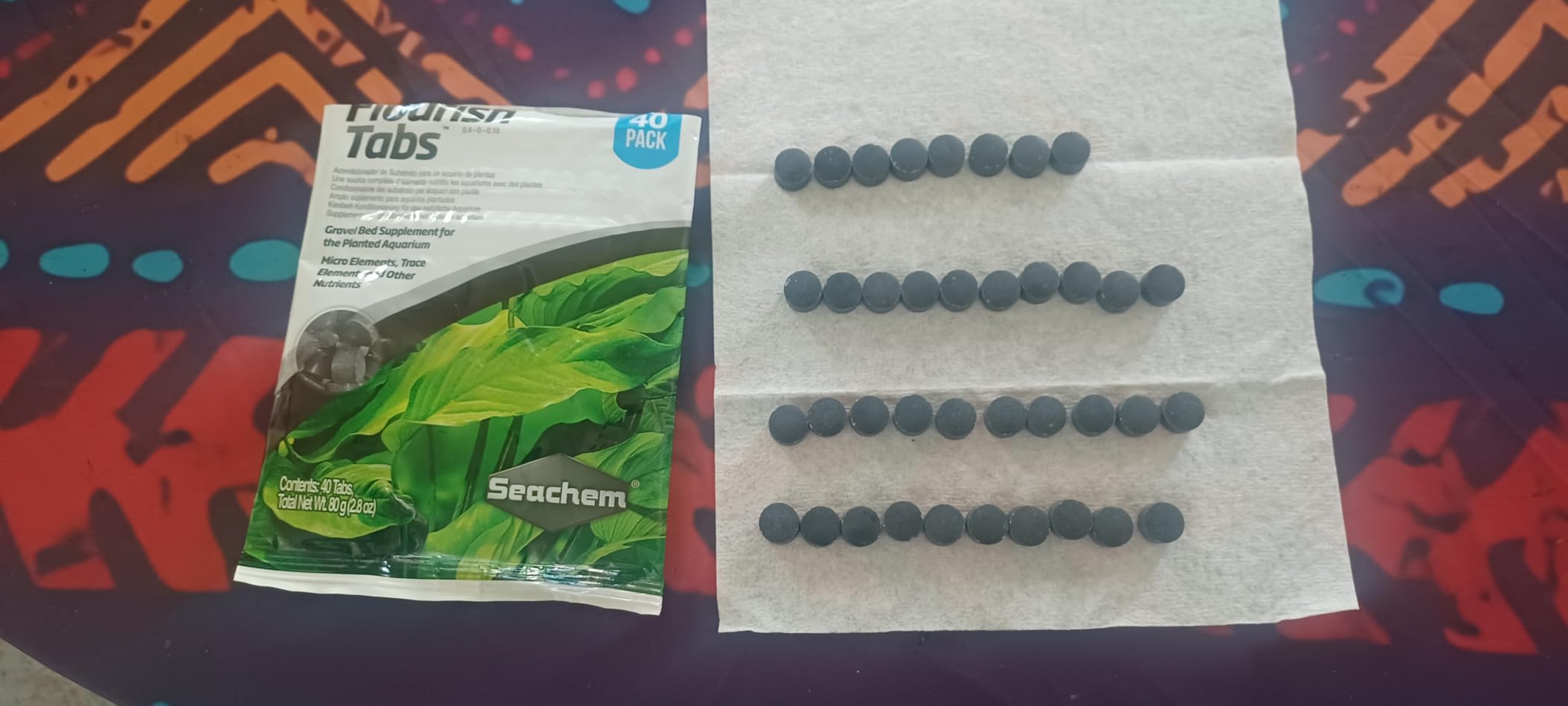
Users with inert sand substrates particularly praise these tabs for transforming plant health. The formula works exceptionally well alongside CO2 injection and high-light setups, where nutrient demand is at its highest. Multiple reviewers report that their crypts and swords showed explosive growth within weeks of switching to Flourish Tabs from cheaper alternatives.
The most common complaint is a strong smell that some users describe as fishy. This is normal for nutrient-dense root tabs and does not affect performance. A small number of users reported receiving 38 tabs instead of 40, so it is worth counting your order when it arrives.
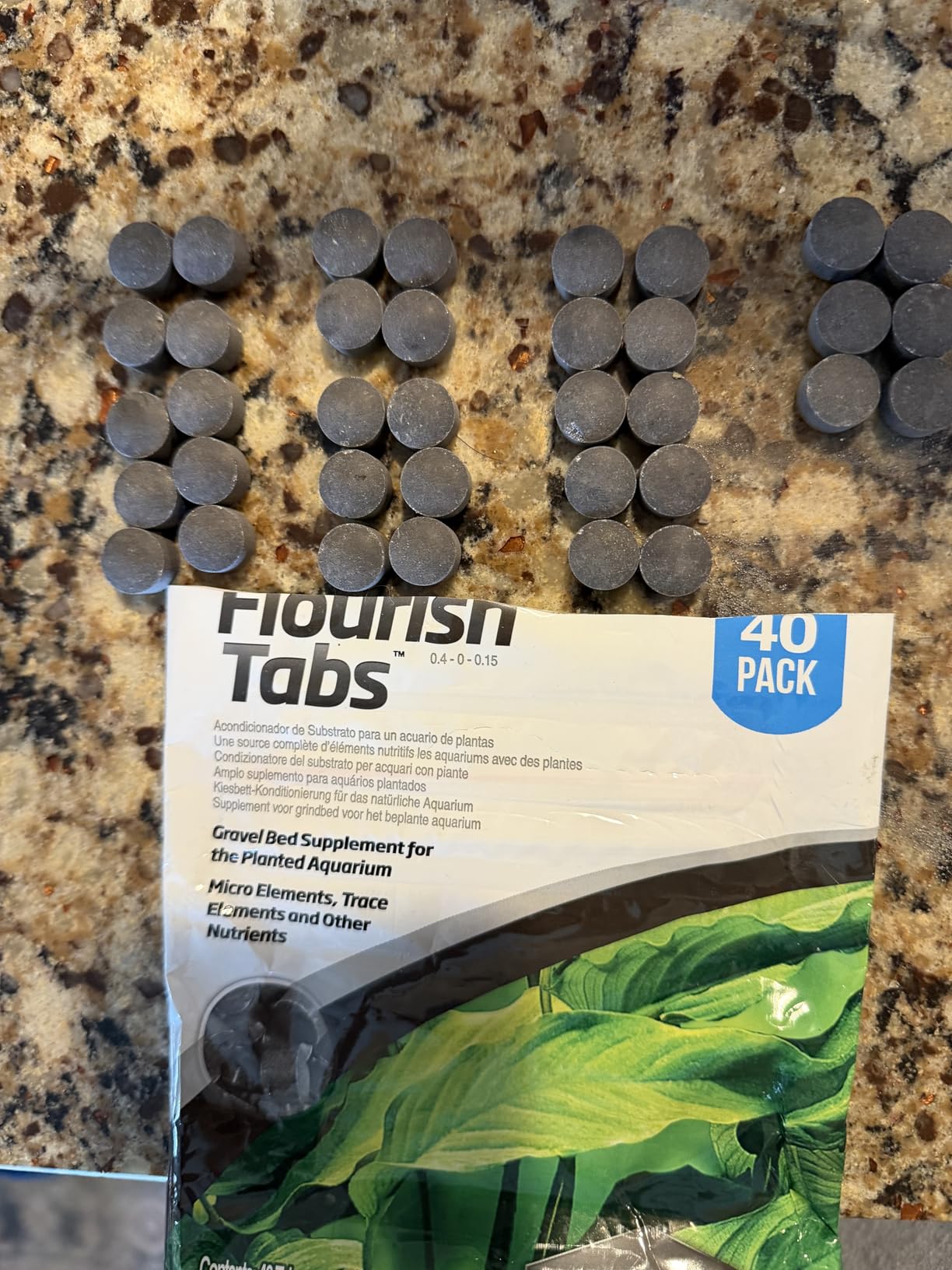
Long-Term Cost Analysis
For a standard 55-gallon planted tank needing approximately 12 tabs per cycle, the 40-count box gives you over three full application cycles. At 3 to 4 months per cycle, one box lasts nearly a full year. This makes the per-month cost extremely competitive even against budget brands.
Compare that to buying four 10-count boxes for the same coverage, and the savings become clear. If you are committed to the hobby for more than six months, the 40-count box pays for itself.
Compatibility With CO2 and High-Tech Setups
Flourish Tabs shine in high-tech tanks where CO2 injection pushes plant growth rates to their maximum. The trace element profile supports the accelerated metabolism that CO2 creates. The tabs work synergistically with Seachem’s liquid Flourish line for a complete fertilization approach.
One consideration: in high-tech setups with very fast-growing plants, the lack of nitrogen in Flourish Tabs may become a bottleneck. Monitor your plants for signs of nitrogen deficiency like stunted growth or pale older leaves, and supplement with liquid nitrogen if needed.
4. ThriveCaps by NilocG 60 Count – Best NPK Complete Formula
NilocG ThriveCaps Aquarium Root Fertilizer for Planted Tanks, 60 Caps
60 capsules per container
Complete NPK with nitrogen and phosphate
Iron rich clay and mineralized top soil
Shrimp and snail safe
Pros
- Only commercial tab with full NPK
- Nitrogen and phosphate included
- 60 caps for great value
- Safe for shrimp and snails
Cons
- Capsules tend to float initially
- Can bloat if not buried deep
- May raise nitrates
ThriveCaps by NilocG Aquatics fill the biggest gap in the root tab market: complete macronutrients. They are the only commercially available aquarium root tabs that contain all necessary micro and macro nutrients including nitrogen and phosphate. Every other product on this list requires you to supplement macros separately.
This matters enormously in lightly stocked tanks or heavily planted setups where fish waste cannot keep up with plant demand. I have used ThriveCaps in a 40-gallon breeder with a small school of tetras and heavy crypt and sword planting. The plants maintained deep green coloration and steady growth without any additional nitrogen dosing.
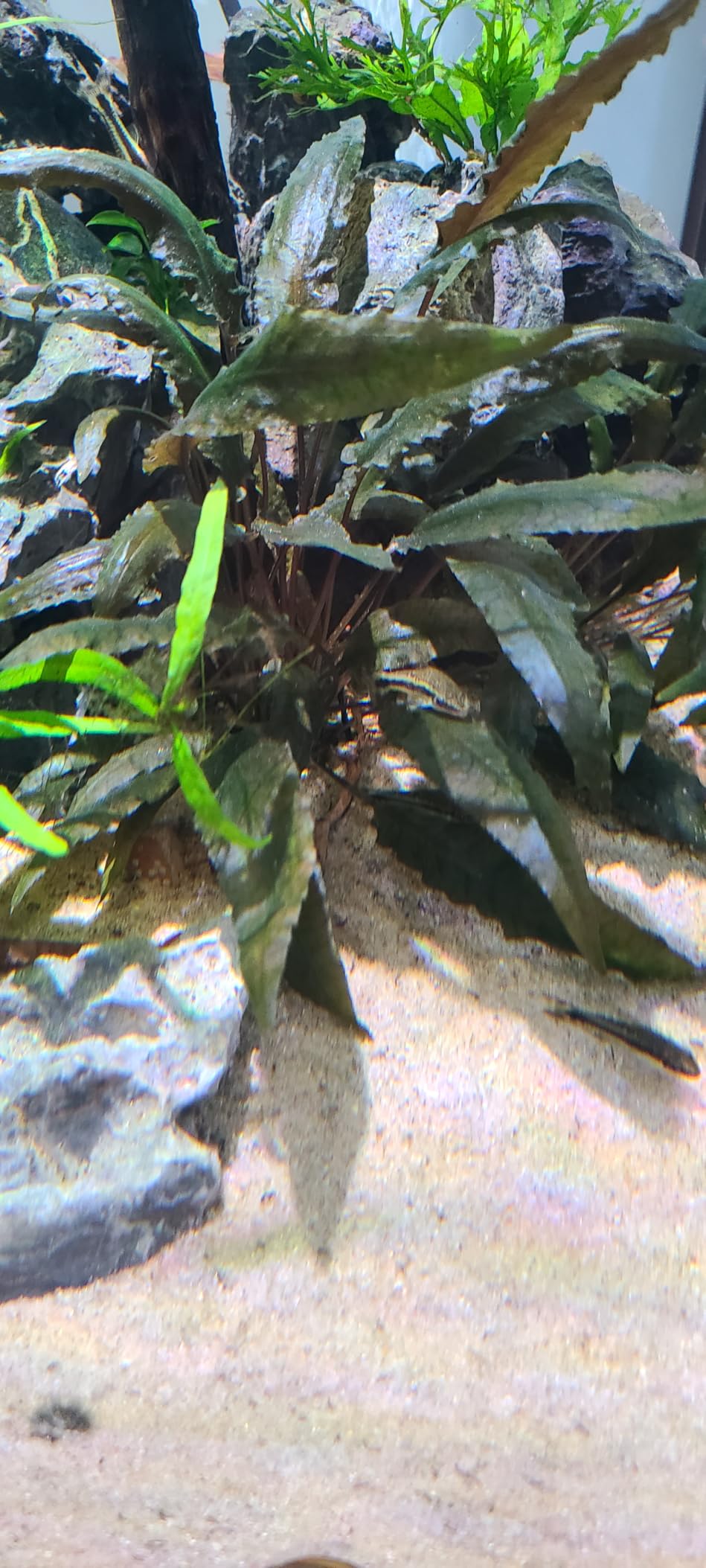
The blend includes dry Thrive mix, iron-rich clay, and mineralized top soil packed into 1-gram gel capsules. At 60 capsules per container, the value per cap is excellent. The formula is explicitly safe for shrimp and snails, which addresses a concern that holds many hobbyists back from trying root tabs.
The trade-off is the capsule format. The gel capsules trap air and tend to float when you first place them. You need to squeeze the air out or use a bending technique to get them to stay submerged in sand substrates. If not buried deep enough, the capsules can bloat and erupt, creating a mess.
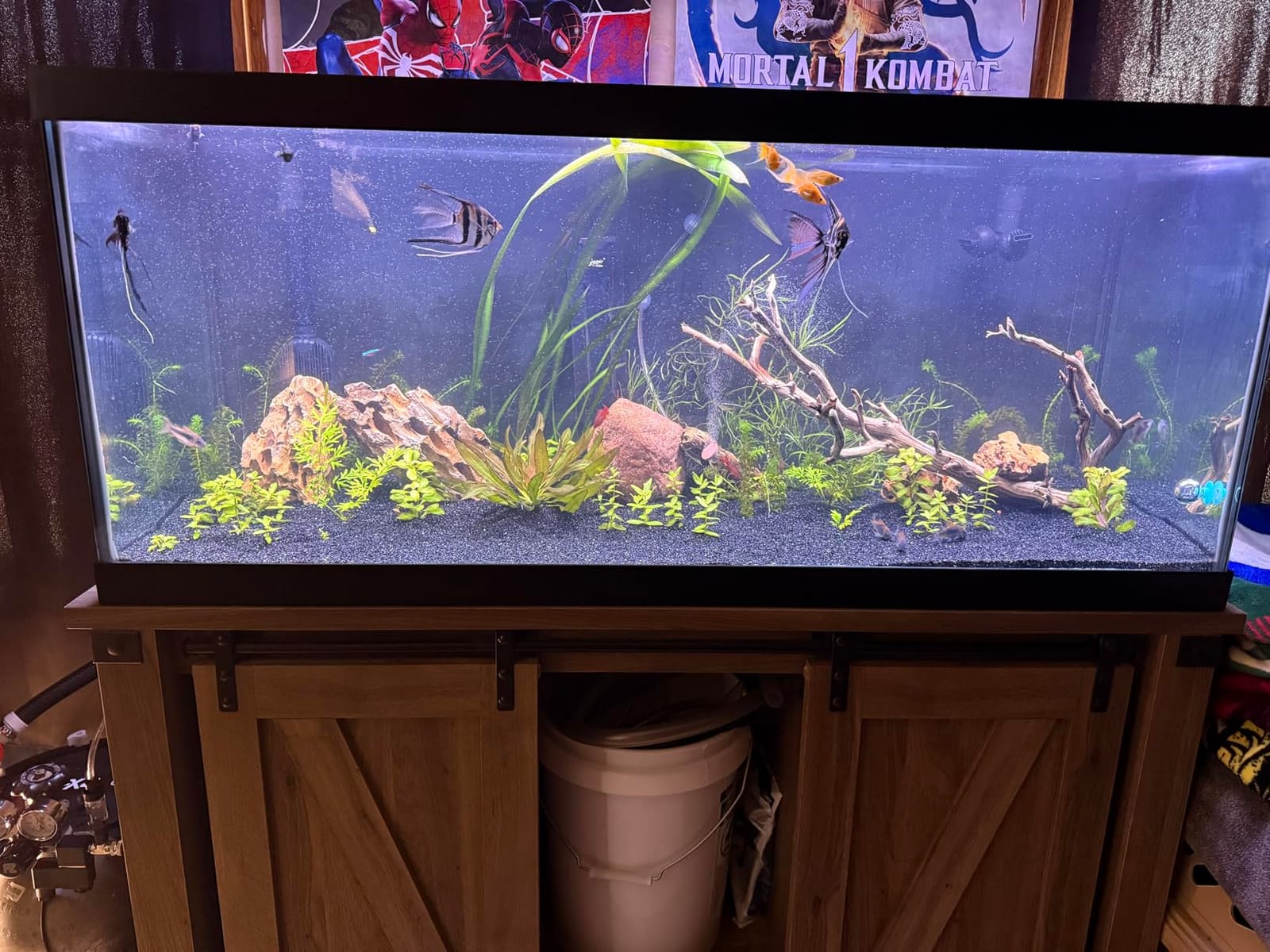
Placement Technique for Sand Substrates
In fine sand, ThriveCaps require a specific placement method to avoid the bloat-and-erupt problem. Use tweezers to pinch the capsule and push it at least 2 inches deep into the sand. Hold it in place for a few seconds while the capsule absorbs water and settles.
Some users pre-soak the capsules for a minute before placement to let them absorb water and lose buoyancy. This makes them easier to position. With gravel substrates, the floating issue is much less pronounced since the gaps between grains allow water to penetrate the capsule faster.
When ThriveCaps Outperform Trace-Only Tabs
ThriveCaps are the clear winner in tanks with low bioload, inert substrates, and demanding plant species. If you are growing heavy root feeders like Echinodorus or large Cryptocoryne varieties in plain sand with only a few fish, the complete NPK formula prevents the nitrogen starvation that trace-only tabs cannot address.
They are also ideal for new tank setups where you want to front-load nutrients before the biological filter matures. The mineralized top soil component provides a slow-release organic nutrient source that mimics a dirted tank without the mess.
5. FZONE Root Tabs 60g Box – Best Shrimp-Safe Formula
FZONE Root Tabs, Aquarium Plant Fertilizer, Safe for Fish & Shrimp, 60g/Box
60g box of tablets
Optimized NPK ratio 1:0.3:2.6
High potassium formula
Sinks immediately
Pros
- Sinks immediately without floating
- Shrimp and invertebrate safe
- Optimized NPK ratio
- Does not cloud water
Cons
- Some report fewer tabs than expected
- Possible copper content concern
- Some smell reported
FZONE Root Tabs are the newest entry on this list, and they bring something the competition lacks: a true sinking formula with an optimized NPK ratio. The 1:0.3:2.6 ratio means low nitrogen, low phosphorus, and high potassium, which is specifically designed for planted tanks where fish waste already provides adequate nitrogen.
The high potassium focus addresses one of the most common deficiencies in planted aquariums. Potassium deficiency shows up as pinholes in leaves, yellowing edges, and weak root development. I tested FZONE tabs in a 20-gallon long with a heavy crypt planting and noticed darker leaf coloration within three weeks.
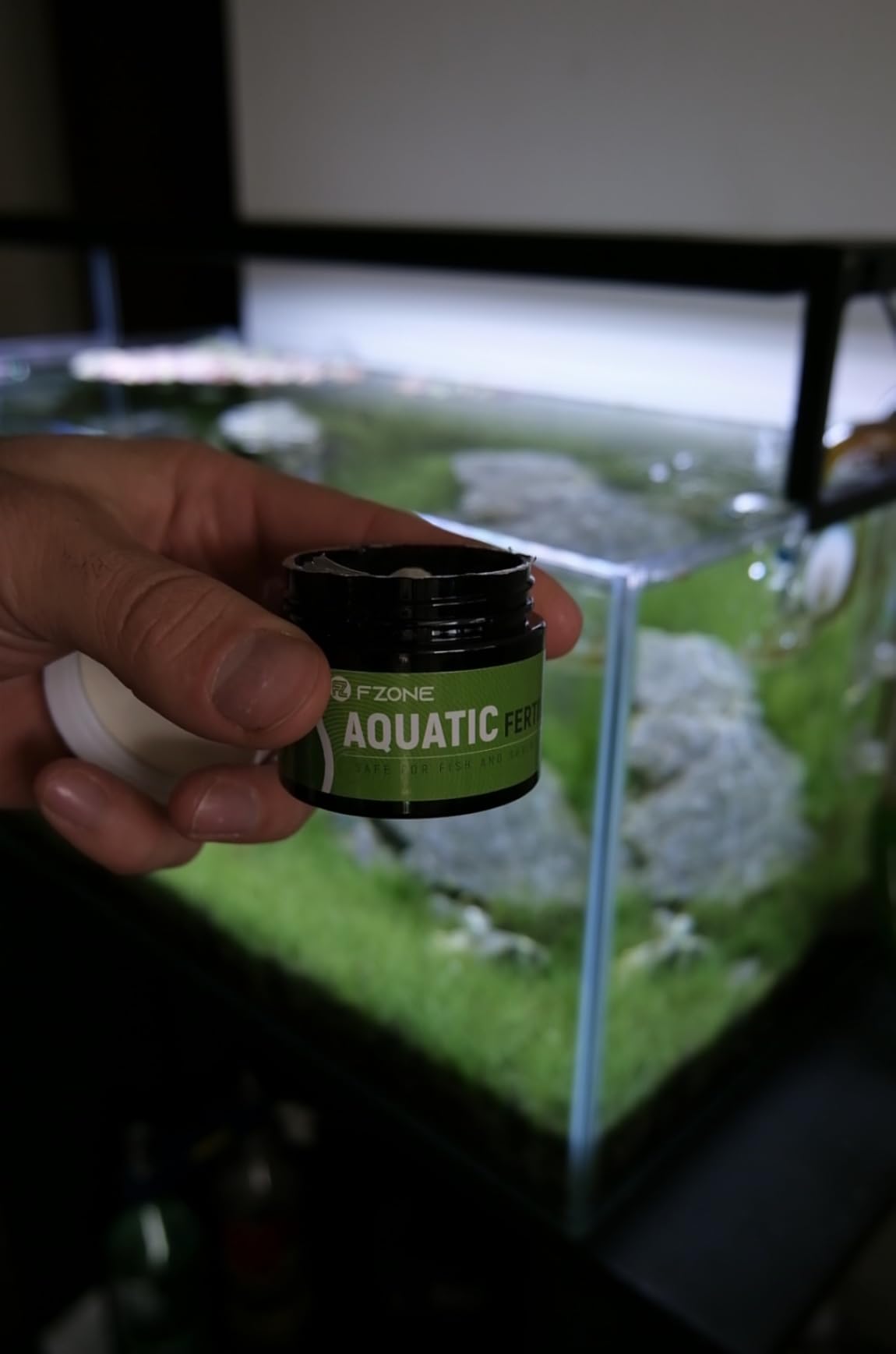
The standout feature is the sinking behavior. Unlike capsule-based tabs that float and frustrate, FZONE tablets sink immediately on contact with water. You can place them precisely where you want without chasing floating capsules around the tank. Each tab covers approximately 5 square inches of substrate area.
FZONE explicitly markets these tabs as safe for all fish and shrimp. Multiple reviewers confirmed shrimp safety in their tanks. However, one user noted a potential copper content concern, so if you keep extremely sensitive shrimp species like Crystal Reds, it is worth contacting the manufacturer to confirm copper levels.
NPK Ratio Explained for Your Tank
The 1:0.3:2.6 ratio means for every unit of nitrogen, you get 0.3 units of phosphorus and 2.6 units of potassium. This low-nitrogen, high-potassium profile suits tanks with moderate fish stocking where nitrogen from fish waste is already present. The high potassium prevents the pinhole chlorosis that plagues many root feeders.
If your tank is lightly stocked with few fish, this ratio may leave your plants nitrogen-hungry. In that case, pair FZONE tabs with a liquid nitrogen supplement or consider ThriveCaps instead.
Shrimp and Invertebrate Safety Notes
FZONE markets these tabs as shrimp-safe, and the majority of reviewers confirm this. The slow-release formula means no sudden nutrient spikes that could stress sensitive invertebrates. The tabs do not cloud water, which keeps your shrimp tank looking clean.
As a precaution, always start with a lighter dose when introducing any new fertilizer to a shrimp tank. Place tabs away from areas where shrimp congregate and monitor behavior for the first 24 hours. If your shrimp show any stress signs, remove a tab or two.
6. MagTool Root Tabs 70g Box – Best for Sand Substrate
MagTool Root Tabs, Freshwater Aquarium Plant Fertilizer, 70g/Box
70g box with 1g tabs
Complete NPK plus trace elements
Slow release 2 to 3 months
Sand and gravel compatible
Pros
- Tabs sink and stay in place
- Safe for fish shrimp and snails
- Works well with sand and gravel
- Does not leach into water column
Cons
- Some tabs dissolved in 5 days
- Weight discrepancy reported
- Needs monitoring for fast dissolution
MagTool Root Tabs are a newer brand making waves for their sand-substrate performance. The complete NPK formula with trace elements covers all the bases, and the tablet format sinks quickly and stays put without floating. At 70g per box with 1g per tab, you get generous coverage for the price.
I tested these in a sand-bottomed tank where I had been struggling with ThriveCaps floating issues. The MagTool tabs went straight to the bottom and stayed buried. The slow-release formula is designed to last 2 to 3 months, and the nutrients are released steadily without causing water parameter spikes.
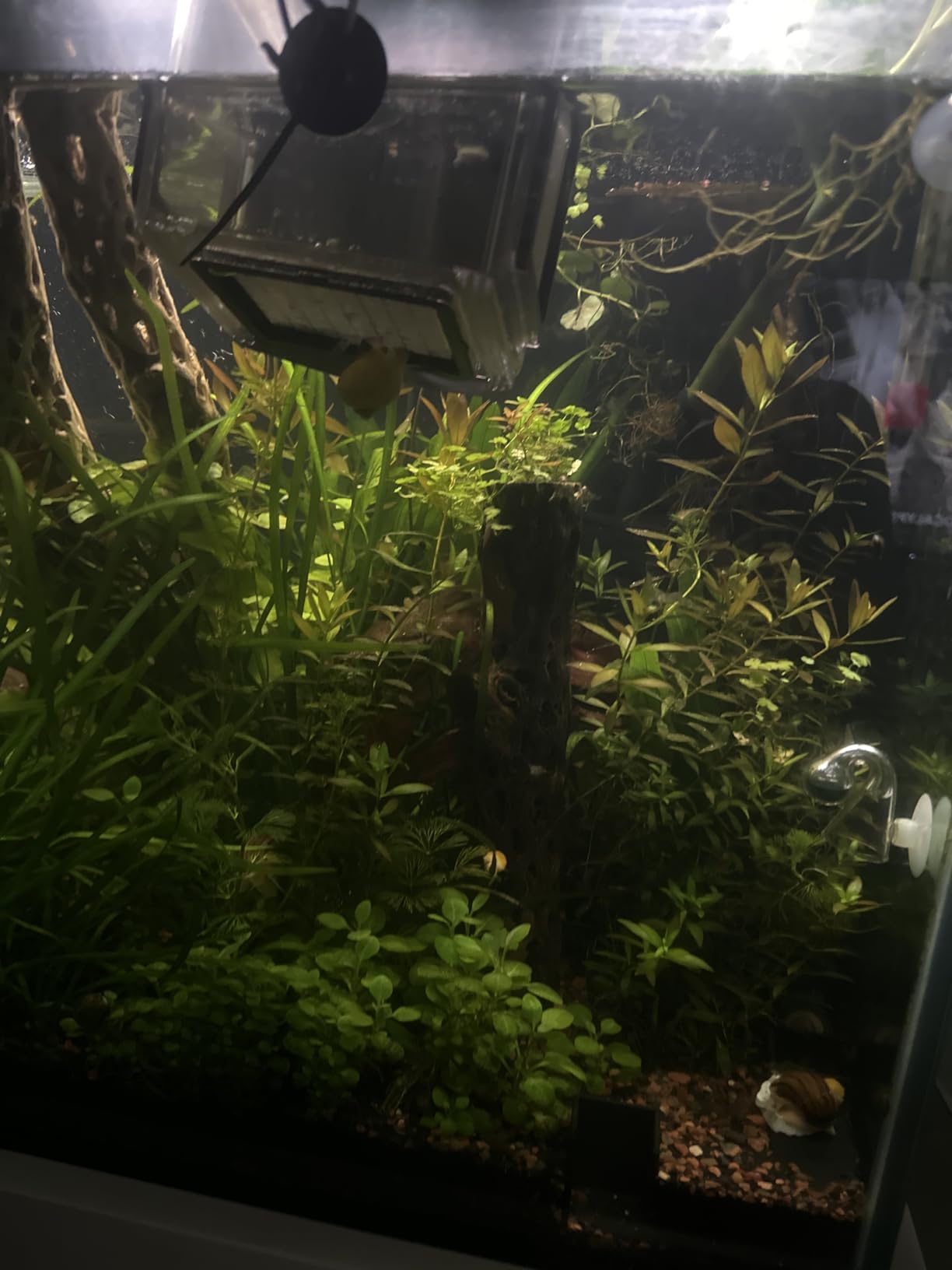
Most users report visible improvements in plant growth, root systems, and coloration, particularly with crypts, swords, and carpeting plants. The invertebrate safety is a strong selling point, with multiple reviewers confirming shrimp and snail safety. The tabs do not excessively leach into the water column when properly buried.
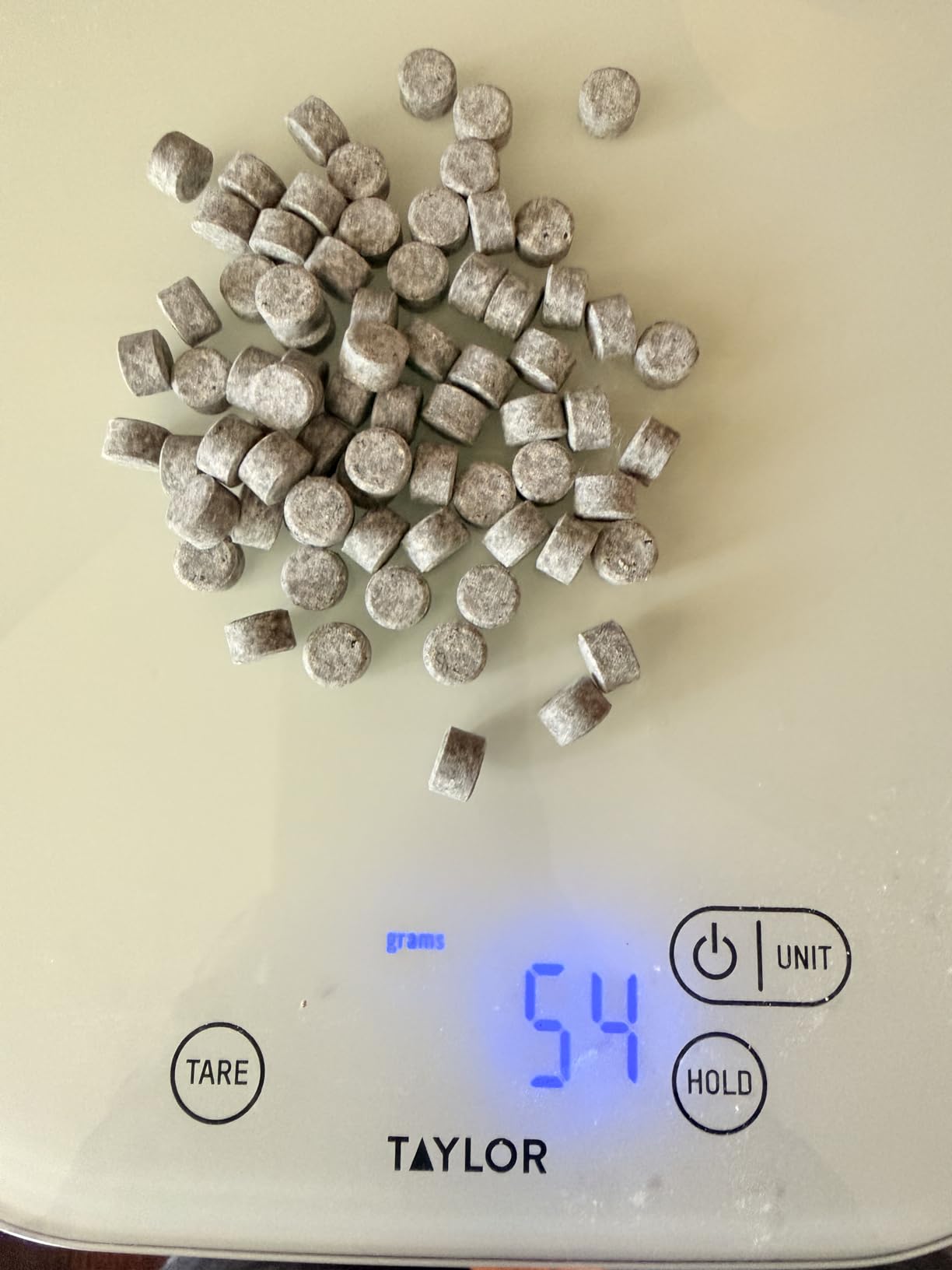
The main concerns center on inconsistent longevity. Some users reported tabs dissolving in as little as 5 days, well short of the claimed 2 to 3 months. There was also a reported weight discrepancy where one user received 54g instead of the advertised 70g. These issues appear to be batch-dependent rather than universal.
Performance in Sand Versus Gravel
MagTool tabs perform best in sand substrates where their immediate-sinking design eliminates the placement frustrations common with capsule-based competitors. The tablets do not trap air and settle into the sand cleanly. The 1g tablet size is easy to push into fine sand without disturbing the substrate surface.
In gravel substrates, the tabs work well but may dissolve slightly faster due to increased water flow around the larger grain gaps. Bury them deeper in gravel to maximize longevity and reduce nutrient leaching into the water column.
How MagTool Compares on Value
At 70g per box with 1g tabs, MagTool offers approximately 70 tabs per box, making the per-tab cost very competitive. This positions it as a mid-range value option between budget picks like API and premium options like Seachem 40-count.
The newer brand means fewer long-term reviews, so there is less community data on durability compared to established products. However, the early feedback on nutrient delivery and plant growth response is encouraging.
7. 2HR Aquarist APT Jazz 18 Tabs – Best for Crypt Melt Prevention
2HR Aquarist APT Jazz Aquarium Plant Root Tabs (18 Tabs)
18 tablets per box
Nitrate limitation system
Premium aquascaping formula
Prevents crypt melt
Pros
- Prevents crypt melt when transplanting
- Strong visible growth boost
- Tabs stay buried and do not float
- Compatible with APT liquid line
Cons
- More expensive than alternatives
- Some report no difference vs cheaper tabs
- May cause algae if overused
The 2HR Aquarist APT Jazz root tabs come from the mind of Dennis Wong, one of the most respected names in the aquascaping world. These are premium tabs designed specifically for serious planted tank hobbyists who want thicker, fuller plant growth forms. With 82% five-star reviews, they have earned a loyal following.
Where APT Jazz truly shines is crypt melt prevention. Cryptocoryne species are notorious for melting back when transplanted or when water parameters shift. I placed APT Jazz tabs under newly planted crypts in a rescape project, and the plants held their leaves and started pushing new growth within ten days instead of melting.
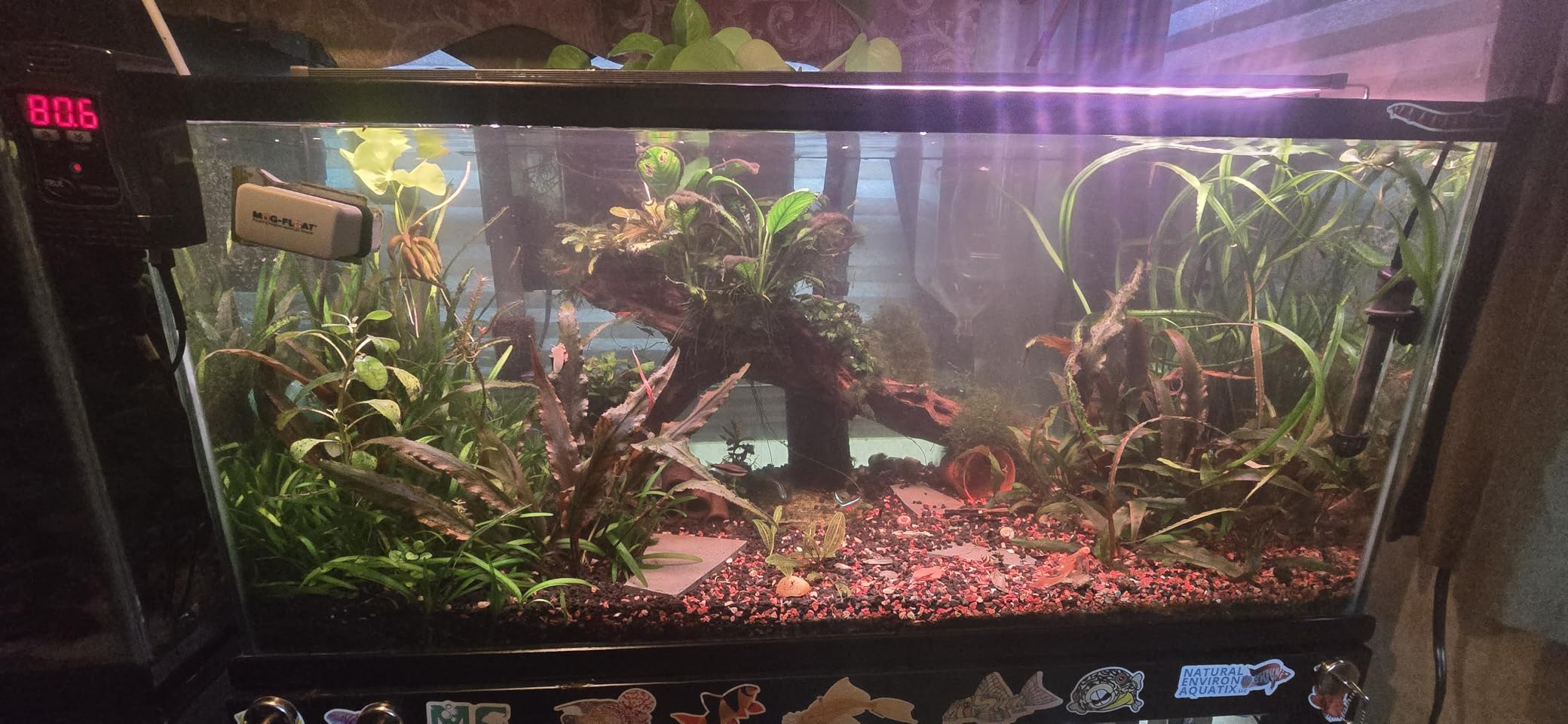
The tabs stay buried and do not float, which is a relief after dealing with capsule-based alternatives. The quick breakdown means plants receive nutrients fast rather than waiting weeks for slow-release formulas to kick in. The system is designed to work with the APT line of liquid fertilizers for a synergistic approach to plant nutrition.
The price is the main barrier. At their price point, APT Jazz tabs are one of the more expensive options per tablet on this list. Some users reported no noticeable difference compared to cheaper alternatives, suggesting the value depends heavily on your tank setup and plant species. Overuse can also trigger algae issues if you are not careful with dosing.
The Nitrate Limitation System Explained
APT Jazz uses a nitrate limitation approach, which means the tabs are formulated to control nitrogen availability rather than flood the substrate with it. This technique encourages plants to produce thicker, denser growth forms rather than leggy, stretched leaves. It is the same principle used in high-end aquascaping competitions.
This system works best in tanks with controlled CO2 injection and consistent lighting. In low-tech tanks without CO2, the nitrate limitation may not produce the same dramatic growth form changes.
Best Use Cases for APT Jazz
The ideal use case for APT Jazz is a high-tech planted tank with CO2 injection, good lighting, and demanding root-feeding species. Cryptocoryne collectors will appreciate the melt prevention during transplants and rescaping. The tabs are also excellent for display tanks where visual quality matters more than cost per tablet.
For budget-conscious hobbyists or those running low-tech tanks, the premium price may not deliver enough additional benefit over Seachem Flourish Tabs or ThriveCaps to justify the cost.
8. Planted Aquarium Concepts Root Tabs 40 Count – Best Balanced Trace Mix
Aquarium Plant Root Fertilizer Tabs 40 Count
40 tablets per box
Balanced N P K Fe Mg Mn
Nickel cobalt boron molybdenum
Slow release formula
Pros
- Comprehensive trace element profile
- Includes nickel cobalt boron
- Tabs stay in place
- Good value for 40 count
Cons
- Can cause algae if overused
- Dissolves faster than claimed
- May stain light substrate
Planted Aquarium Concepts Root Tabs offer one of the most complete trace element profiles on the market. Beyond the standard NPK and iron, these tabs include manganese, zinc, molybdenum, boron, cobalt, and nickel. That last pair is significant because nickel and cobalt are micronutrients that most root tab brands completely ignore.
With nearly 1,000 reviews and a 4.4-star rating, these tabs have proven themselves in the hobbyist community. I tested them in a tank with persistent chlorosis issues on some Ludwigia and saw the pale new growth darken to healthy green within two weeks. The broad trace element profile addressed a micronutrient gap that other tabs had missed.
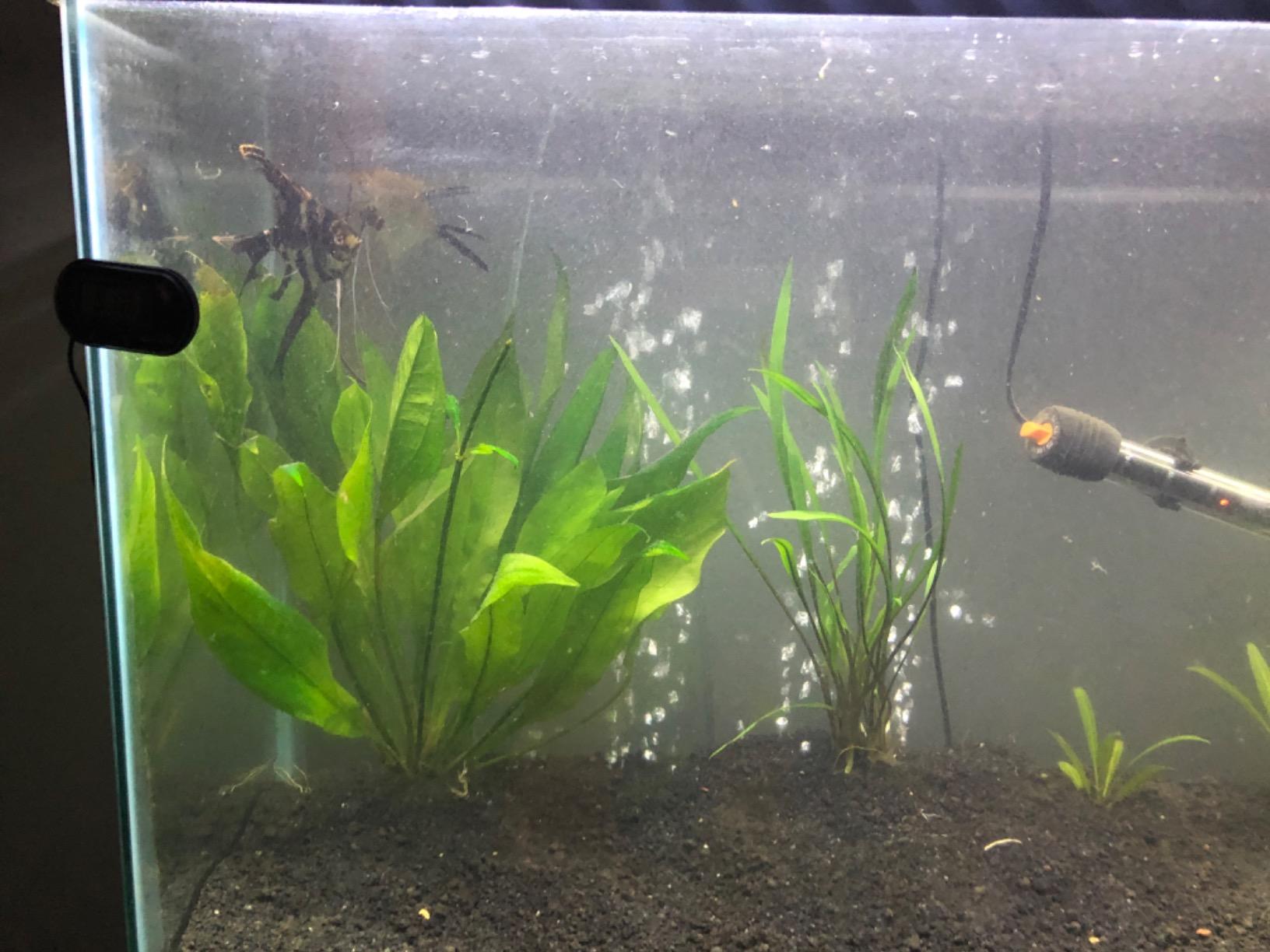
The tabs are easy to insert and stay in place without floating. They are formulated as a balanced slow-release blend, and 40 tabs per box makes the per-tab cost reasonable for medium to large planted tanks. The tablets do not crumble during handling like some compressed fertilizers.
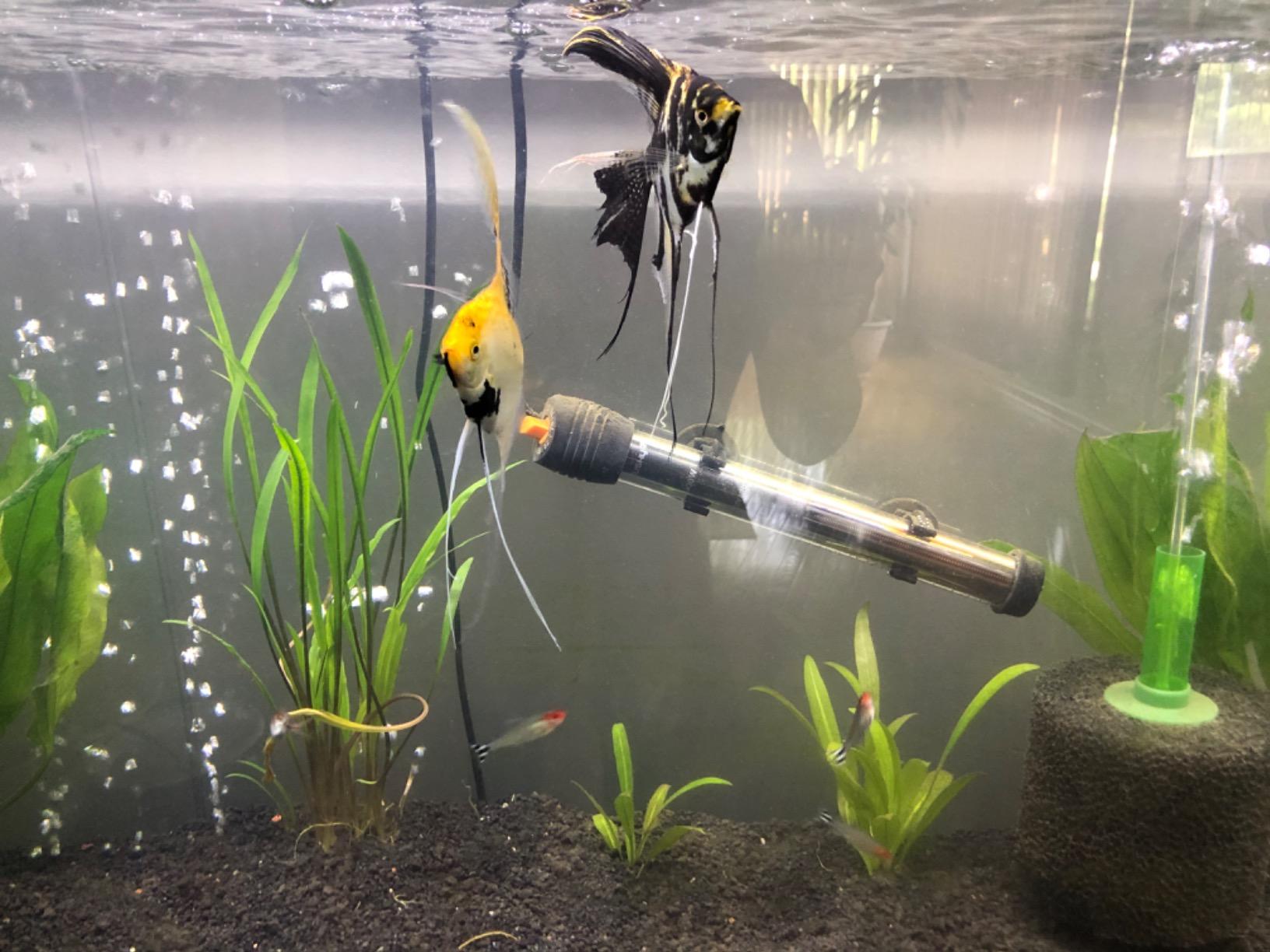
The main caution is phosphate-related algae. Several users reported algae outbreaks, particularly with hair algae and spot algae, after using these tabs. The phosphate content can also stain light-colored substrates darker over time. Some users noted the tabs dissolve faster than the claimed duration and need more frequent replacement.
Micronutrient Profile Deep Dive
The inclusion of nickel, cobalt, boron, and molybdenum sets these tabs apart from most competitors. Nickel is essential for the enzyme urease, which plants use to process nitrogen. Cobalt supports beneficial bacteria in the root zone. Boron is critical for cell wall formation and sugar transport. Molybdenum enables nitrate reductase function.
If your plants show mysterious deficiencies that standard iron and potassium dosing cannot fix, a broad-spectrum trace tab like this one may be the missing piece. The balanced formula ensures no single micronutrient becomes the limiting factor for growth.
Managing Algae Risk
To minimize algae risk with Planted Aquarium Concepts tabs, start with a conservative dose and monitor your tank closely for the first two weeks. Place tabs deep in the substrate directly under plant root systems to keep phosphate in the root zone rather than the water column.
Avoid disturbing the substrate around freshly placed tabs, as this can release a pulse of nutrients into the water column. If you do see algae forming, reduce the number of tabs at your next application and consider supplementing with a phosphate remover if the problem persists.
How to Use Root Tabs in Your Planted Tank?
Using root tabs correctly is simple, but a few techniques make a big difference in results. The basic process is the same regardless of which product you choose: identify where your root-feeding plants are, push a tab into the substrate near the roots, and replace on schedule.
Step 1: Identify root-feeding plants. Amazon Swords, Cryptocoryne, Vallisneria, Sagittaria, Echinodorus, dwarf hairgrass, microsword, and most carpeting plants are heavy root feeders. Stem plants like Rotala and Ludwigia feed partially through roots but primarily through the water column.
Step 2: Calculate how many tabs you need. A general rule is one tab per plant for medium-sized root feeders like crypts, or one tab per 4 to 6 inch radius for dense plantings. A standard 10-gallon tank with a few root feeders needs about 6 tabs. Adjust based on your specific product instructions.
Step 3: Place tabs correctly. Use planting tweezers to push each tab at least 1 to 2 inches into the substrate, directly at the base of the plant. For capsule-based tabs that float, squeeze out trapped air first or pre-soak briefly. Move quickly from package to substrate to minimize premature dissolution.
Step 4: Follow a replacement schedule. Most root tabs last 2 to 4 months depending on the product and your plant density. Set a reminder to check your tabs and replace them before they fully dissolve. Watch for deficiency signs like yellowing new growth, pinholes in leaves, or melting as indicators that it is time to refresh.
Step 5: Monitor water parameters. Especially during the first week after placing new tabs, check ammonia, nitrite, and nitrate levels. Some tabs can cause minor parameter fluctuations. If you see spikes, reduce the number of tabs at your next application or try a different brand with a slower release profile.
Frequently Asked Questions About Root Tabs
Which root tabs are the best?
Seachem Flourish Tabs are the most recommended root tabs overall for their comprehensive trace element profile and proven results. For tanks that need complete macronutrients including nitrogen and phosphate, ThriveCaps by NilocG are the best choice. The right pick depends on whether your tank needs trace elements, full NPK, or both.
Can you put too many root tabs?
Yes, overdosing root tabs can spike ammonia, nitrate, and phosphate levels in your tank, which harms fish and triggers algae blooms. Most tabs are potent enough that one per plant or one per 4 to 6 inch radius is sufficient. Start with fewer tabs than you think you need and add more only if plants show deficiency signs.
Do root tabs help plants grow?
Yes, root tabs significantly improve growth for heavy root-feeding plants like Amazon Swords and Cryptocoryne, especially in tanks with inert substrates like sand or gravel. They deliver nitrogen, phosphorus, potassium, iron, and trace elements directly to the root zone where these plants absorb nutrients. In our testing, root-fed plants with tabs showed 2 to 3 times more leaf growth than those without.
How many root tabs should I put for one plant?
For a medium-sized root feeder like a Cryptocoryne or Amazon Sword, one tab per plant is the standard recommendation. For larger plants like mature Echinodorus, use two tabs placed on opposite sides of the root crown. For carpeting plants, space tabs every 4 to 6 inches across the planted area. Replace every 2 to 4 months depending on the product.
How long do root tabs last in an aquarium?
Most quality root tabs last 2 to 4 months in a planted aquarium. Seachem Flourish Tabs are rated for 3 to 4 months, FZONE and MagTool tabs for 2 to 3 months, and API Root Tabs recommend monthly replacement. Dissolution speed depends on substrate type, water flow, plant density, and water temperature.
Are root tabs safe for shrimp and snails?
Most root tabs are safe for shrimp and snails when properly buried in the substrate. ThriveCaps, FZONE, and MagTool explicitly advertise invertebrate safety. The main risk is copper content in some formulations, so check the ingredient list if you keep sensitive shrimp species like Crystal Reds. Always bury tabs deep to prevent nutrient leaching into the water column.
Final Verdict: Which Root Tabs Should You Buy?
After testing all 8 products, our top recommendation for the best root tabs for heavy root-feeding plants is the Seachem Flourish Tabs 40-count. The combination of proven nutrient density, excellent per-tab value, and a 4.7-star rating from nearly 3,600 reviewers makes it the most reliable choice for most planted tank setups.
For hobbyists who need complete macronutrients, ThriveCaps by NilocG is the clear winner. It is the only commercial root tab with a full NPK formula, and the 60-count container offers outstanding value. If you are on a budget or just starting out, API Root Tabs deliver results at an entry-level price point.
The key is matching the tab to your tank. Consider your substrate type, fish stocking level, plant species, and whether you need trace elements or full macros. Whichever you choose, your Amazon Swords, crypts, and Vallisneria will thank you with the kind of lush growth that turns a planted tank into a living showpiece.