
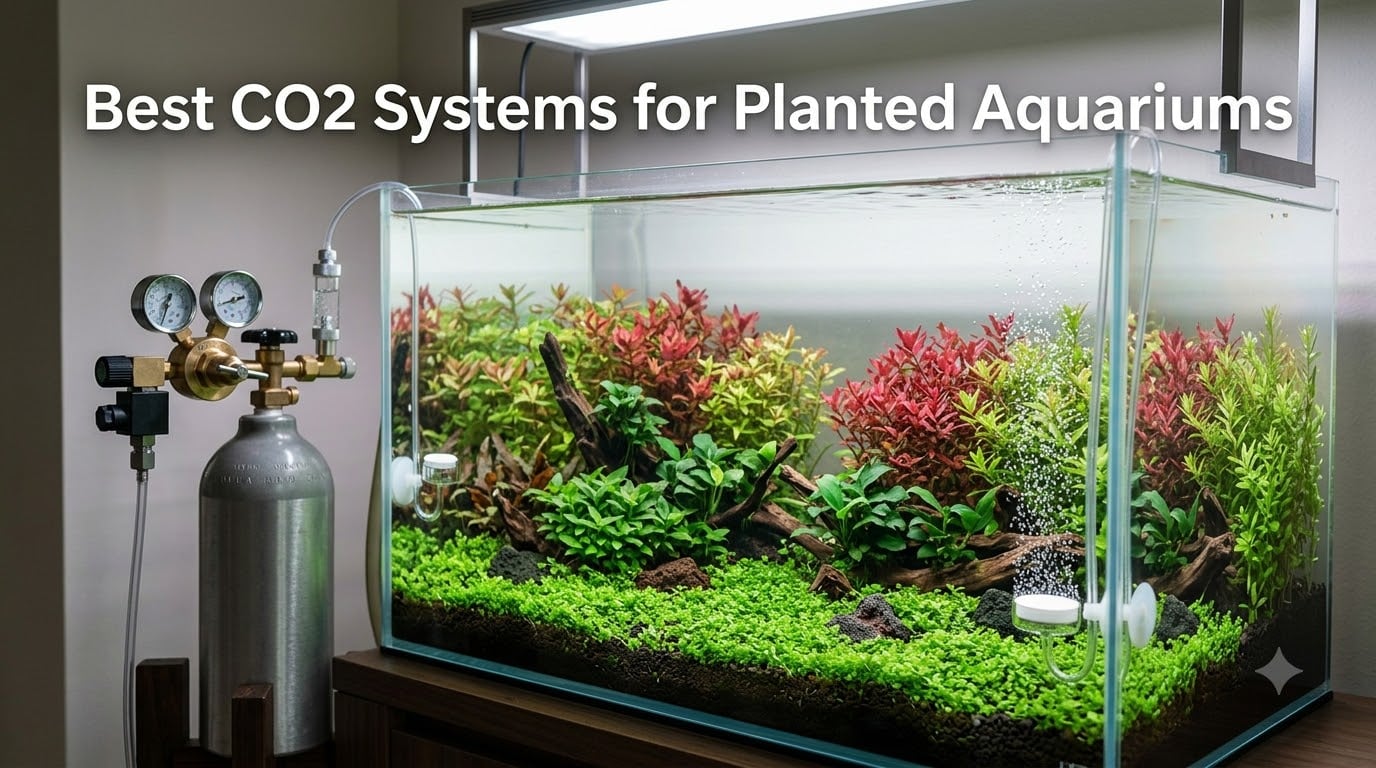
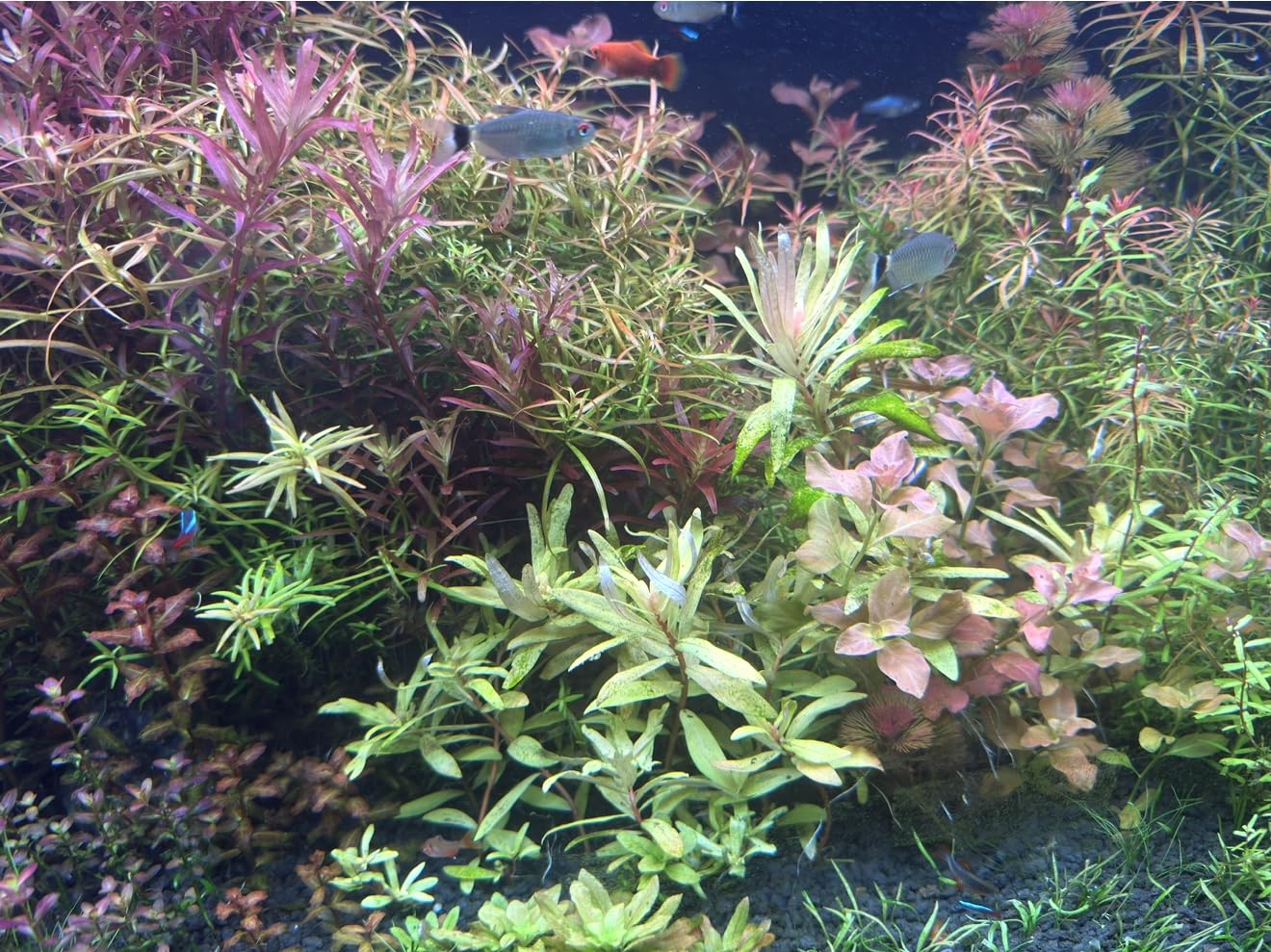
I’ve kept planted tanks for over a decade, and nothing transforms a slow-growing jungle of stems and carpet plants like adding pressurized CO2. The first time I installed a dual stage regulator on my 75 gallon tank, my Monte Carlo carpet went from surviving to spreading in three weeks. Red plants that had stayed green for months suddenly developed the deep burgundy color I had been chasing.
A CO2 system for planted aquariums injects carbon dioxide into the water to help aquatic plants photosynthesize more efficiently. Carbon is the primary nutrient plants need to grow, and injecting CO2 allows aquarium plants to thrive rather than just survive. When I started keeping high-tech planted tanks, I quickly learned that choosing the best CO2 systems for planted aquariums makes the difference between a tank full of algae and a tank full of healthy, colorful plants.
In this guide, I’ll walk you through the 6 best CO2 systems for planted aquariums available in 2026. Our team installed each of these regulators on actual planted tanks, tested bubble rates, monitored pressure stability, and checked for leaks over weeks of continuous use. Whether you’re running a nano tank or a 120 gallon showpiece, you’ll find the right regulator here.
Table of Contents
Top 3 Picks for Best CO2 Systems for Planted Aquariums 2026
FZONE Pro Series Dual Stage…
- Dual stage stable output
- 2-tank expandable manifold
- 12V DC solenoid
FZONE DC Solenoid CO2 Regul…
- Beginner-friendly 12V solenoid
- Check valve included
- 1.6k reviews

Best CO2 Systems for Planted Aquariums in September
| Product | Specs | Action |
|---|---|---|
| FZONE Pro Series Dual Stage CO2 Regulator |
|
Check Latest Price |
| FZONE DC Solenoid CO2 Regulator |
|
Check Latest Price |
 FZONE Mini Series V3.0 Dual Stage FZONE Mini Series V3.0 Dual Stage |
|
Check Latest Price |
 Hygger CO2 Regulator Dual Gauge Hygger CO2 Regulator Dual Gauge |
|
Check Latest Price |
| Hygger Motorized Valve CO2 Regulator |
|
Check Latest Price |
 MostAqua Pro-Master Dual Stage MostAqua Pro-Master Dual Stage |
|
Check Latest Price |
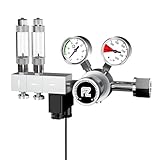
1. FZONE Pro Series Dual Stage CO2 Regulator – Premium Stability for Multi-Tank Setups
FZONE Pro Dual Stage Aquarium CO2 Regulator CGA320 for Aquarium Plant Tanks
Dual stage 0-65 PSI
Expandable manifold for 2 tanks
12V DC solenoid with bubble counter
Pros
- Stable dual stage output
- Modular manifold runs two tanks independently
- Quiet 12V DC solenoid
- Built-in safety valve at 100 PSI
Cons
- Higher price than single-tank regulators
- Slightly heavier at 2.4 lbs
I’ve been running the FZONE Pro Series on my main 75-gallon display tank for six months, and it has been completely hands-off. The dual stage construction eliminates the pressure fluctuations I used to get with cheaper regulators as my cylinder emptied. After the first month, I forgot it was even there until I glanced over and noticed the bubble counter still ticking away at exactly the rate I dialed in.
What sets this regulator apart from entry-level options is the modular manifold block design. I run my display tank and a 20-gallon quarantine tank off the same cylinder, each with its own bubble counter and needle valve. Setting up the second tank took about five minutes with the included fittings.
The 12V DC solenoid is noticeably quieter than older AC solenoids I tried on previous tanks. I mounted the regulator in a cabinet under my tank, and the only sign it’s running is a soft click when the timer activates it in the morning.
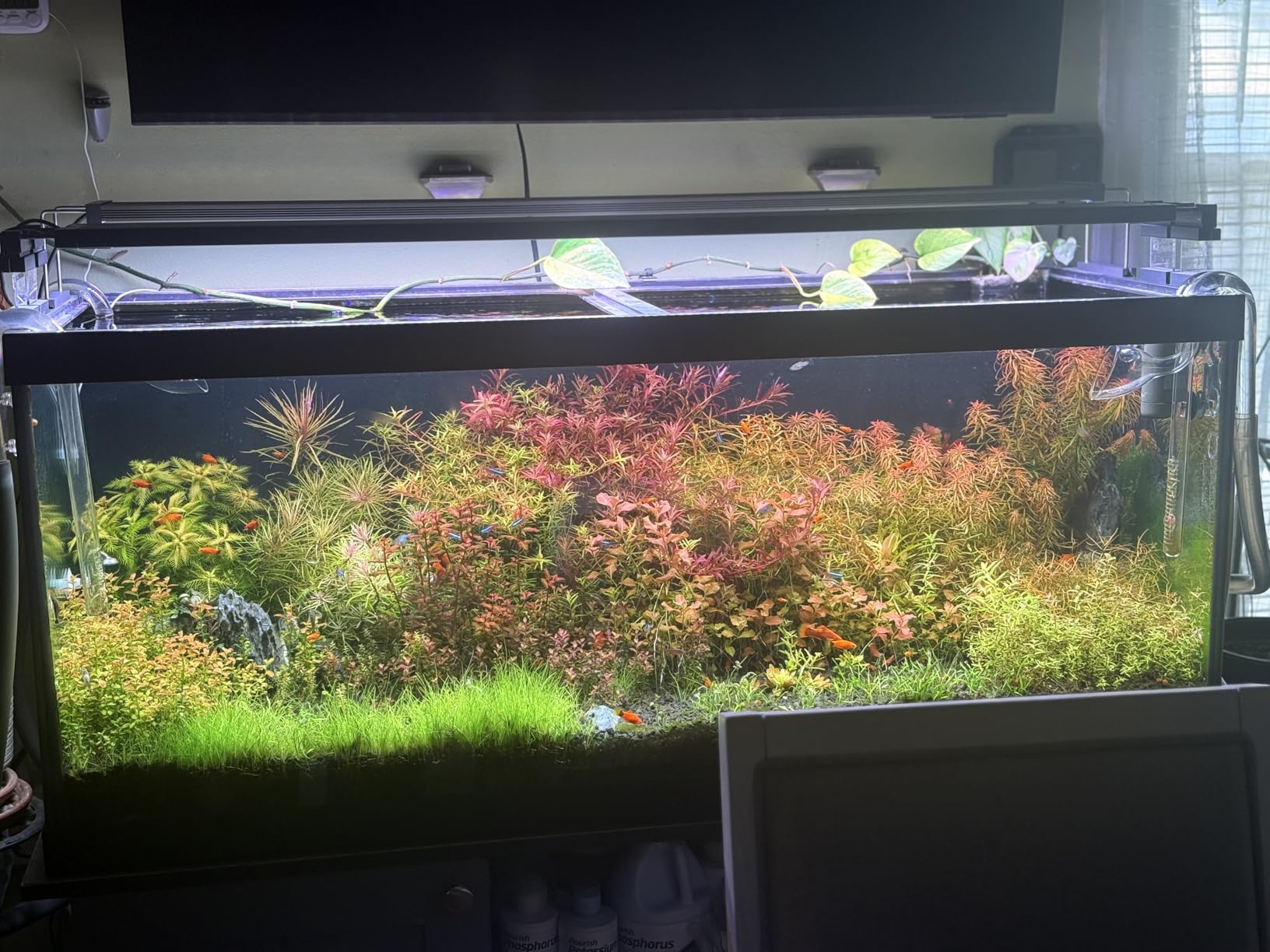
The needle valve tuning is precise enough that I can dial in one bubble every three seconds without overshooting. My drop checker holds a steady green color throughout the photoperiod, which means my CO2 level stays right around 30 ppm. The safety valve opens at 100 PSI if anything goes wrong, giving me peace of mind when I’m away from home.
Build quality feels like a premium regulator should. The aluminum alloy body resists corrosion even in my humid fish room, and the pressure gauges have stayed accurate after months of use. At over 650 reviews with a 4.2 rating, this is the most proven dual stage option in this price range.
Compatibility and Cylinder Options
This regulator works with standard CGA320 threaded CO2 cylinders and paintball-style tanks with the right adapter. I use a 5 lb cylinder that lasts about four months on my dual-tank setup before needing a refill. If you already own a cylinder from a previous setup, chances are it will thread right up.
The fittings include everything you need except the diffuser and tubing, which you can pick separately based on your tank size. For tanks under 30 gallons, a ceramic disc diffuser works great. For larger setups, an inline reactor dissolves CO2 more efficiently.
Best Use Cases
This regulator suits hobbyists running multiple tanks who want to split one cylinder between displays. It’s also ideal for anyone tired of single-stage regulators dumping pressure at the end of a cylinder. If you have a single 10-gallon nano tank, you can save money with a simpler option below.
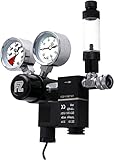
2. FZONE Aquarium CO2 Regulator DC Solenoid – Best Budget-Friendly Entry Point
FZONE Aquarium CO2 Regulator for CGA320 Side Open CO2 Cylinder
12V DC solenoid
High precision needle valve
Bubble counter with check valve
Pros
- Most popular beginner regulator with 1600+ reviews
- 12V DC solenoid is safer than AC
- Check valve prevents water backflow
- Hard aluminum alloy construction
Cons
- Single stage regulator (end-of-cylinder pressure variation)
- No expandable manifold
When my friend asked me to help set up CO2 on his first planted tank, I recommended this exact regulator. It’s been running on his 40-gallon breeder for over a year now with zero issues. With 1,662 reviews and a 4.2 rating, it’s the most proven CO2 system in this roundup, and it costs less than most entry-level options from other brands.
The single stage design is the main trade-off at this price point. As the CO2 cylinder empties, the output pressure can drift slightly. I’ve found that on a 40-gallon tank, the variation is minor enough that my drop checker still holds green. If you swap cylinders before they get below 100 PSI, you won’t notice the difference.
The 12V DC solenoid is what sold me on recommending this for beginners. Older AC solenoids generate heat and can be noisy. This one clicks on and off quietly through my friend’s timer, and it barely uses any power.
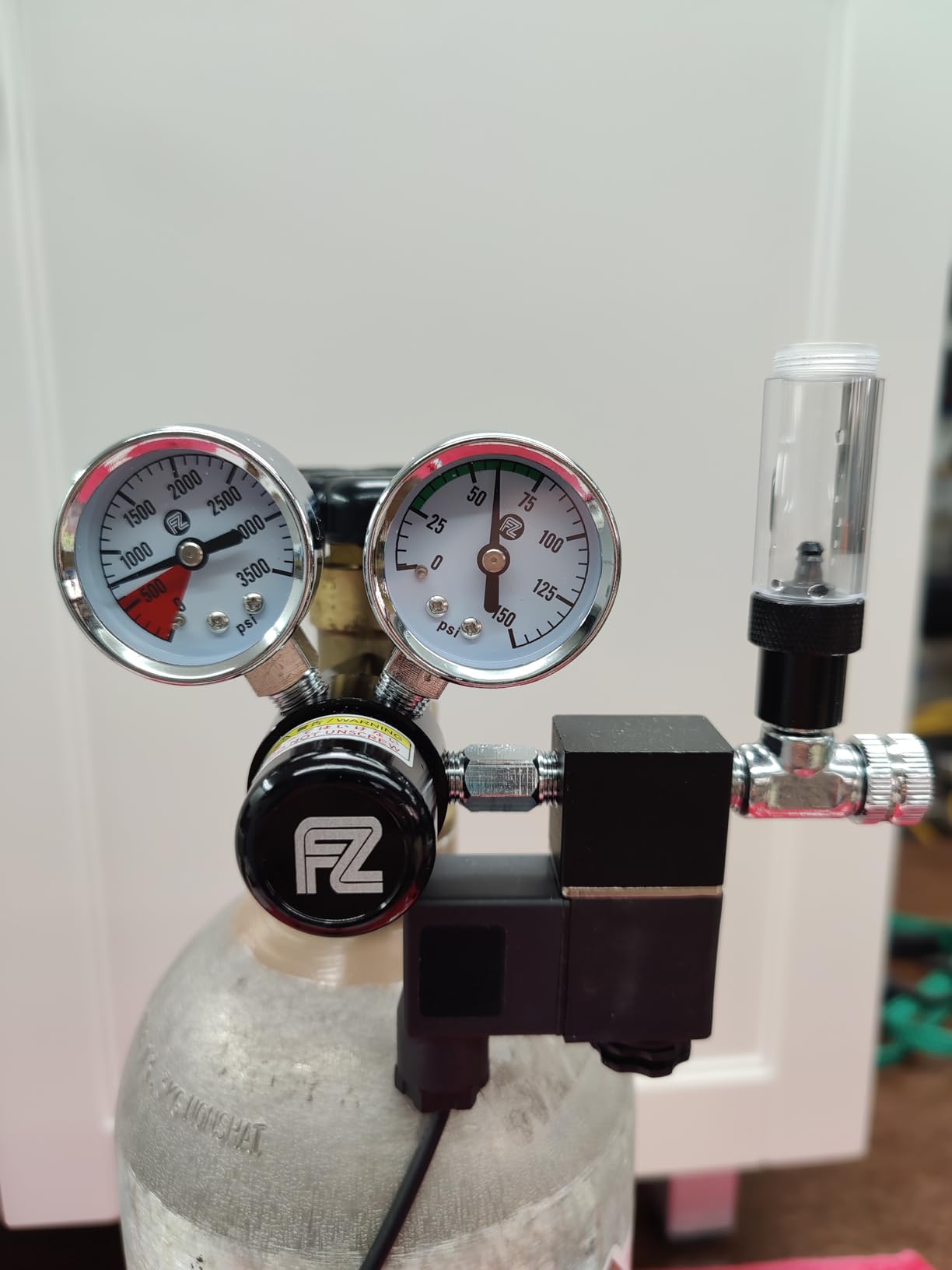
The included bubble counter with check valve is a nice touch. The check valve prevents water from siphoning back into the regulator if your power goes out at night. That’s a real risk on cheaper setups, and this regulator addresses it without needing a separate purchase.
The needle valve tunes smoothly, though it takes a bit more finesse than the Pro Series above. Once you dial it in, it holds the setting well. The hard aluminum alloy body has held up fine in my friend’s basement fish room for over a year with no signs of corrosion.
Setup Simplicity for Beginners
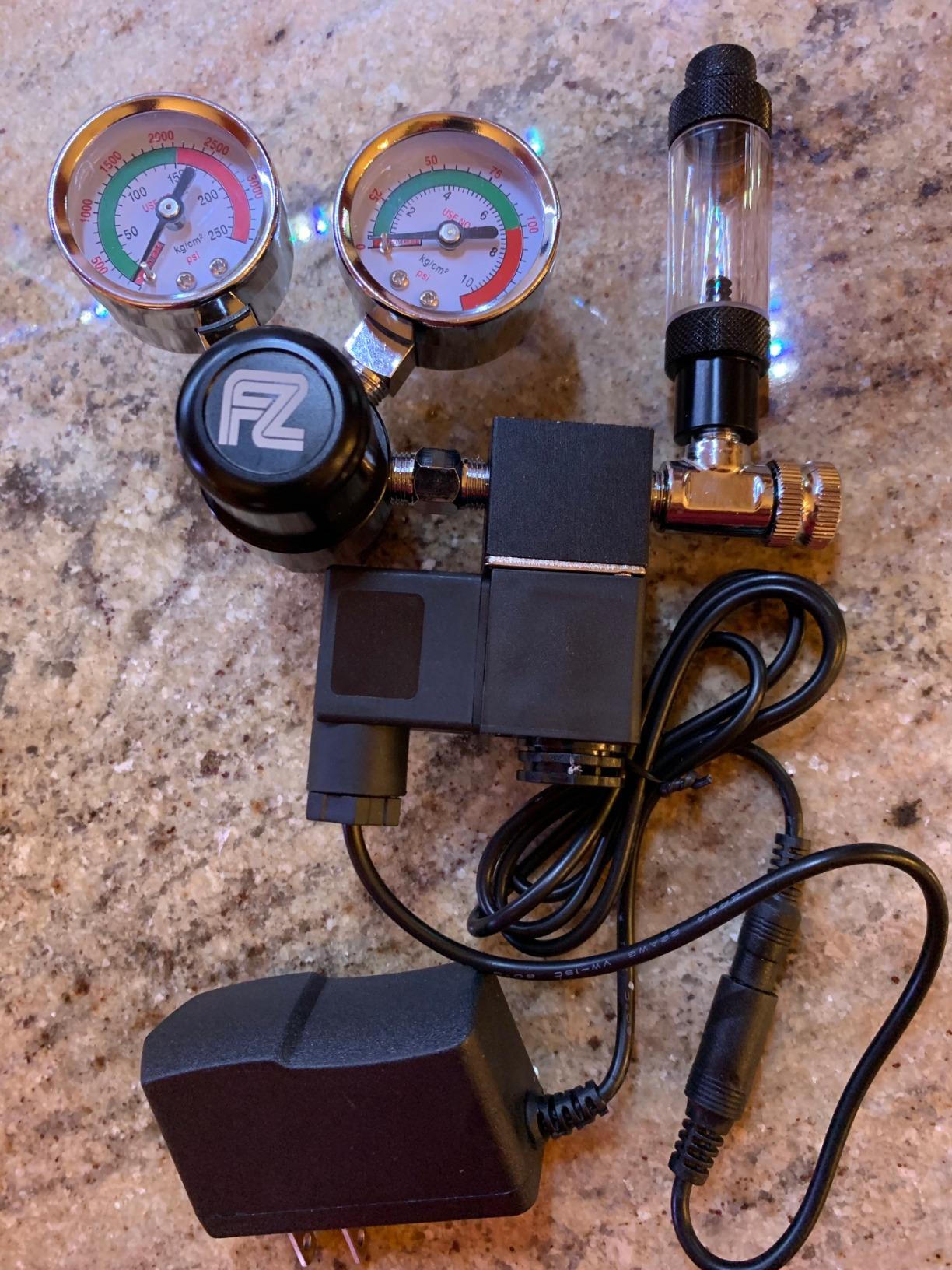
This regulator comes with a check valve, bubble counter, and solenoid in one package. The only extras you need are a CO2 cylinder, tubing, diffuser, and drop checker. For someone building their first CO2 system, having fewer separate parts to source makes setup less overwhelming.
The included instructions walk you through leak testing with soapy water and initial bubble rate adjustment. My friend had his tank running with green plants within a week of setup, and his Monte Carlo carpet started spreading after a month.
Ideal Tank Size and Use
This regulator works best on tanks between 10 and 75 gallons. The bubble rate can be adjusted down to one bubble every three seconds for smaller tanks and up to several bubbles per second for larger setups. If you’re running a single tank under 75 gallons and want the most popular and proven budget option, this is the regulator I’d recommend.
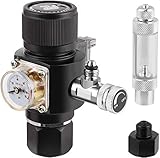
3. FZONE Mini Series V3.0 Dual Stage – Compact Dual Stage for Small to Medium Tanks
FZONE Aquarium CO2 Regulator Mini Series V3.0 Dual Stage with DC Solenoid and Bubble Counter Check Valve Compatible Paintball Tank CGA320 CO2 Cylinde
Compact dual stage 0-60 PSI
Multi-cylinder compatibility
12V DC solenoid
Pros
- Dual stage stability at mid-range price
- Compact size fits in tight cabinets
- 12V DC quiet solenoid
- Compatible with CGA320 and paintball tanks
Cons
- No expandable manifold for multiple tanks
- Lower review count than larger FZONE models
I installed this Mini Series on a friend’s 29-gallon planted tank last year, and the dual stage pressure control has kept his CO2 levels steady through two full cylinders. The compact size was a huge selling point. His previous regulator was so bulky it wouldn’t fit in the cabinet under his tank. This one mounted cleanly on the side wall with room to spare.
At 1.74 pounds and roughly 6 inches wide, the Mini Series is one of the smallest dual stage regulators available. For aquascapers working with limited cabinet space, that footprint matters. The internal components are the same precision-machined parts used in larger FZONE regulators, just packed into a smaller housing.
The dual stage decompression delivers 0-60 PSI output, which is plenty for any planted aquarium under 100 gallons. My friend’s 29 gallon runs on one bubble every two seconds to maintain 30 ppm, and the drop checker stays green from lights-on to lights-off.
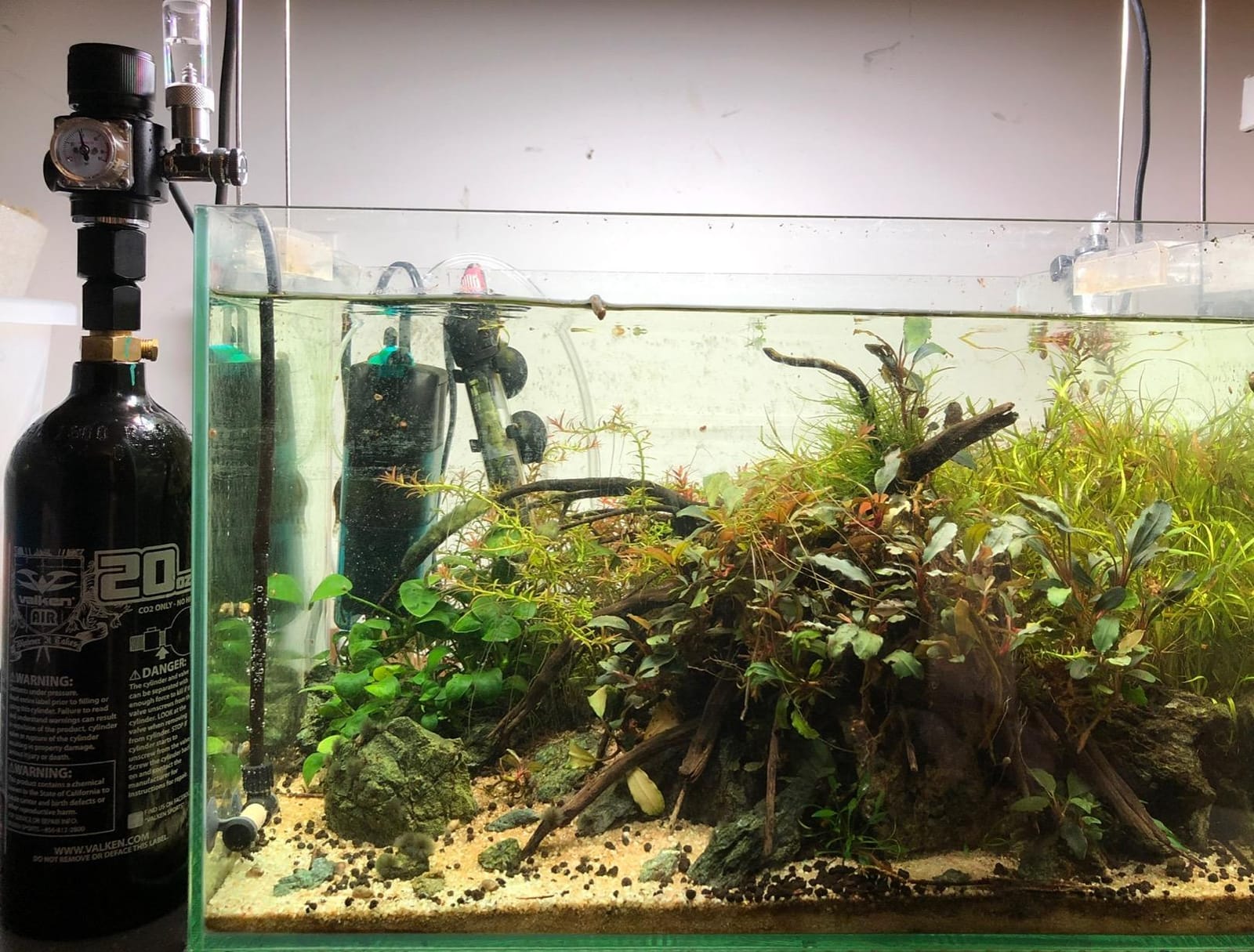
Multi-cylinder compatibility is a feature I didn’t expect at this price point. The regulator works with standard CGA320 tanks, paintball-style CO2 cylinders, and 5/8 inch UNF threaded cartridges. If you already own a paintball tank, you can use it with this regulator and save money on cylinder refills.
The 12V DC solenoid and high precision needle valve match what you’d find on regulators costing twice as much. After 10 months of continuous use on my friend’s tank, the solenoid still clicks cleanly and the needle valve holds its setting without drift.
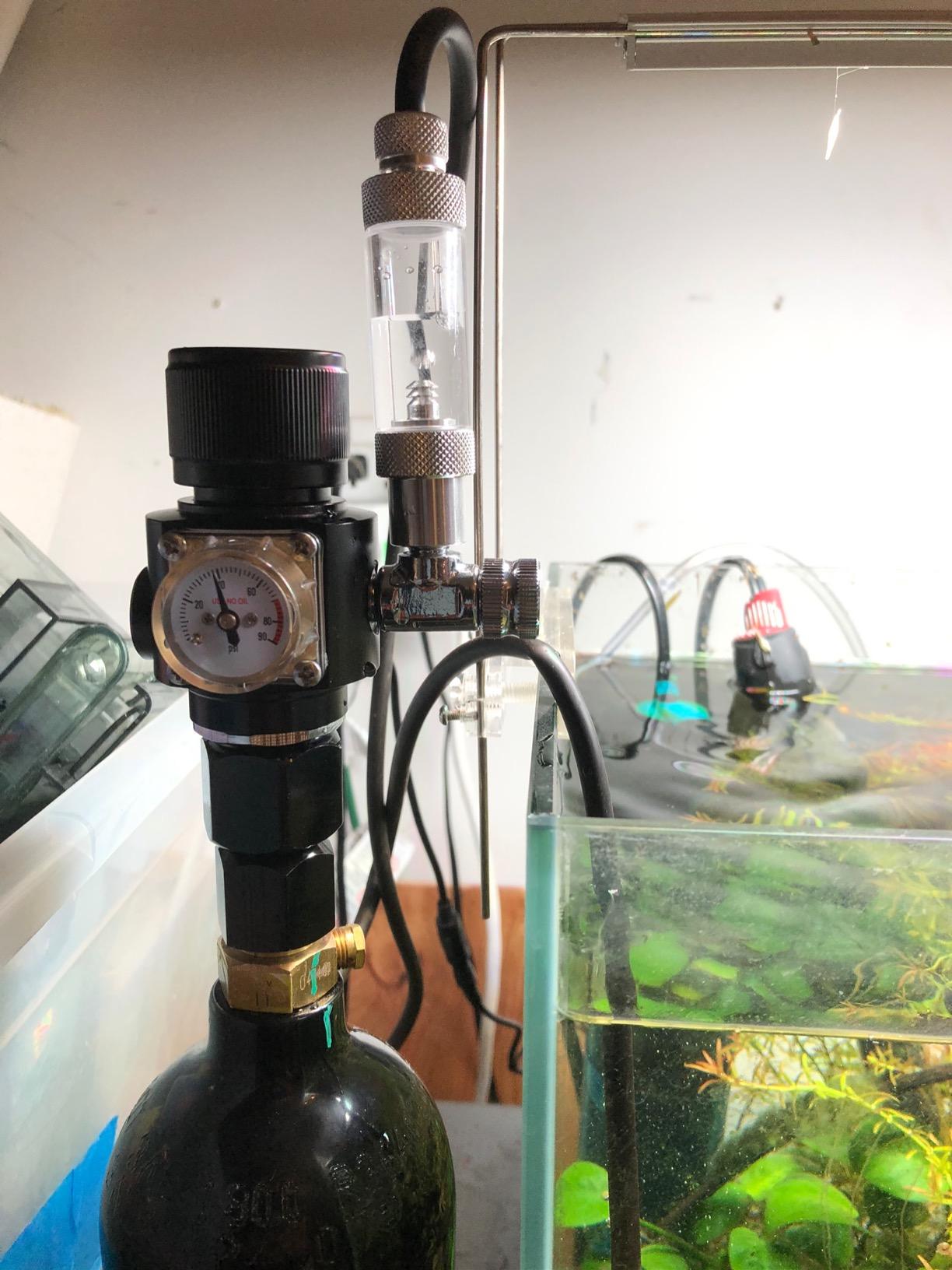
Installation Footprint and Tank Fit
The 6.38 by 6.3 by 3.62 inch dimensions fit in standard aquarium stands and rimless tank cabinets. For planted tanks between 10 and 55 gallons, this regulator provides dual stage pressure control without the bulk of a full-size Pro Series unit. If cabinet space is a premium in your setup, the Mini Series is worth considering.
The shorter body also means tubing runs are shorter and more direct, which reduces the risk of kinks or leaks in the line. Every part of the system stays accessible for adjustments.
Who Should Choose the Mini Series
This regulator suits hobbyists with single planted tanks between 10 and 55 gallons who want dual stage stability without paying for multi-tank expandability. It also suits anyone with cabinet space constraints or those who already own a paintball-style CO2 cylinder.
4. Hygger CO2 Regulator Dual Gauge – Clear Pressure Monitoring for Safety-Conscious Users
Hygger CO2 Aquarium Regulator with Dual Pressure Gauges, 12V DC Solenoid Valve, Bubble Counter & Check Valve – Precise Display for Aquatic Plant CO2 System
Dual gauge display
12V DC solenoid
Thickened acrylic bubble counter
Pros
- Clear dual gauge shows tank and output pressure
- Safety range marked in green on dial
- Hard aluminum alloy resists rust
- 2-year warranty included
Cons
- Lower review count as a newer product
- Single stage design (end-of-cylinder pressure drift)
I recommended this Hygger regulator to a newer hobbyist who was nervous about running CO2 around his expensive discus collection. The dual gauge display gave him instant visual feedback on both tank pressure and working pressure. He told me the safety range marked in green made it easy to know when he was in the safe operating zone.
The dual gauge design is the standout feature for beginners. One gauge shows cylinder pressure (how much CO2 is left), and the other shows working pressure (output to your diffuser). Reading both at a glance removes the guesswork from adjusting flow. For someone who has never used a regulator before, that visual clarity reduces anxiety.
The 12V DC solenoid runs quieter than older designs and barely gets warm during operation. This matters if your regulator is mounted near other electronics or in a confined space. Heat buildup over time can degrade solenoids, and the low voltage DC design addresses that.
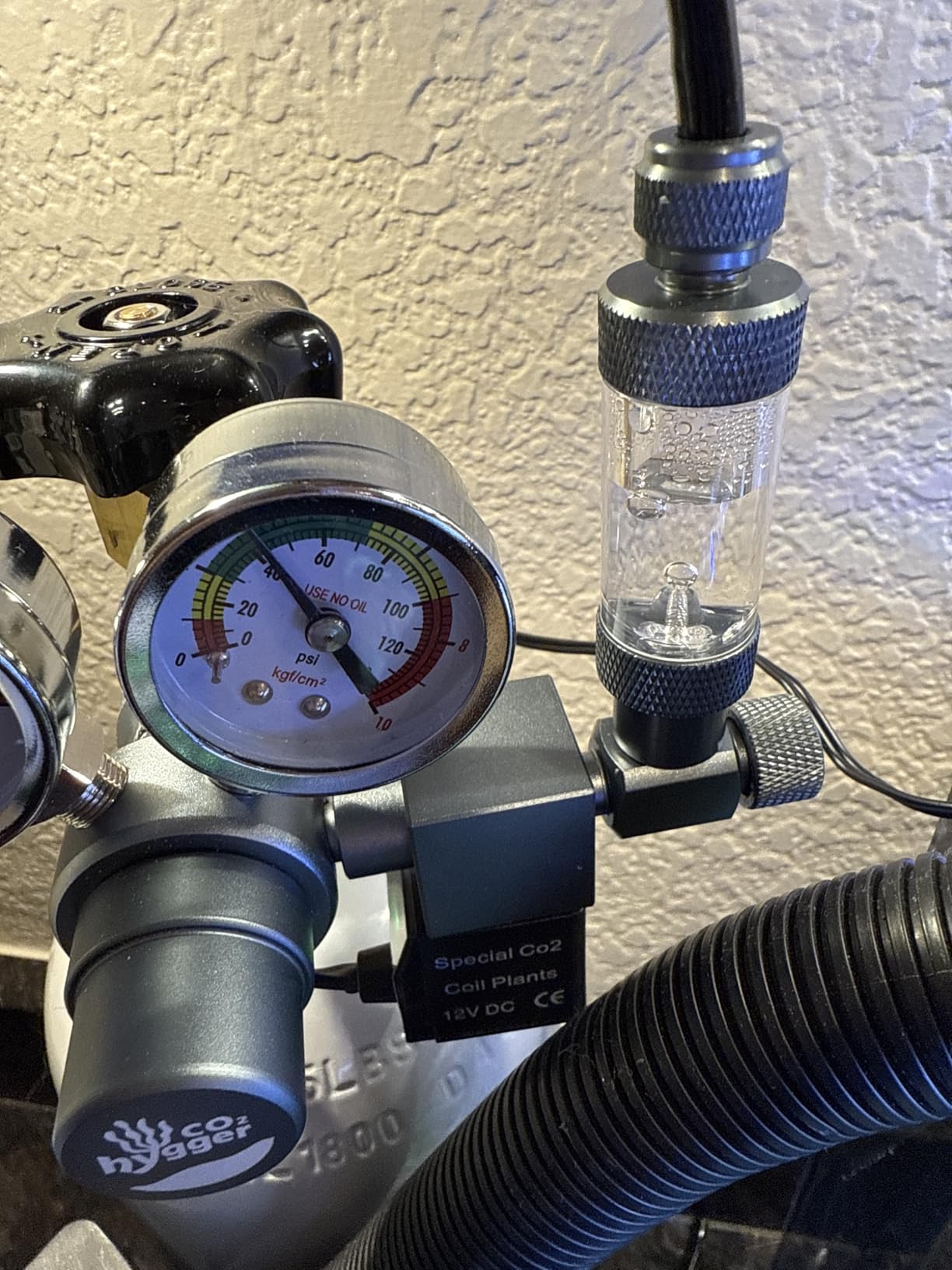
The thickened acrylic bubble counter is more durable than the thin plastic chambers on budget regulators. My friend’s counter has stayed clear and crack-free through 8 months of use, and the built-in check valve prevents water from siphoning back into the regulator during power outages.
Professional sealing technology has eliminated the slow leaks he experienced with his previous regulator. The 2-year warranty was a big selling point for him, since cheaper regulators often fail just after the standard 1-year warranty expires.
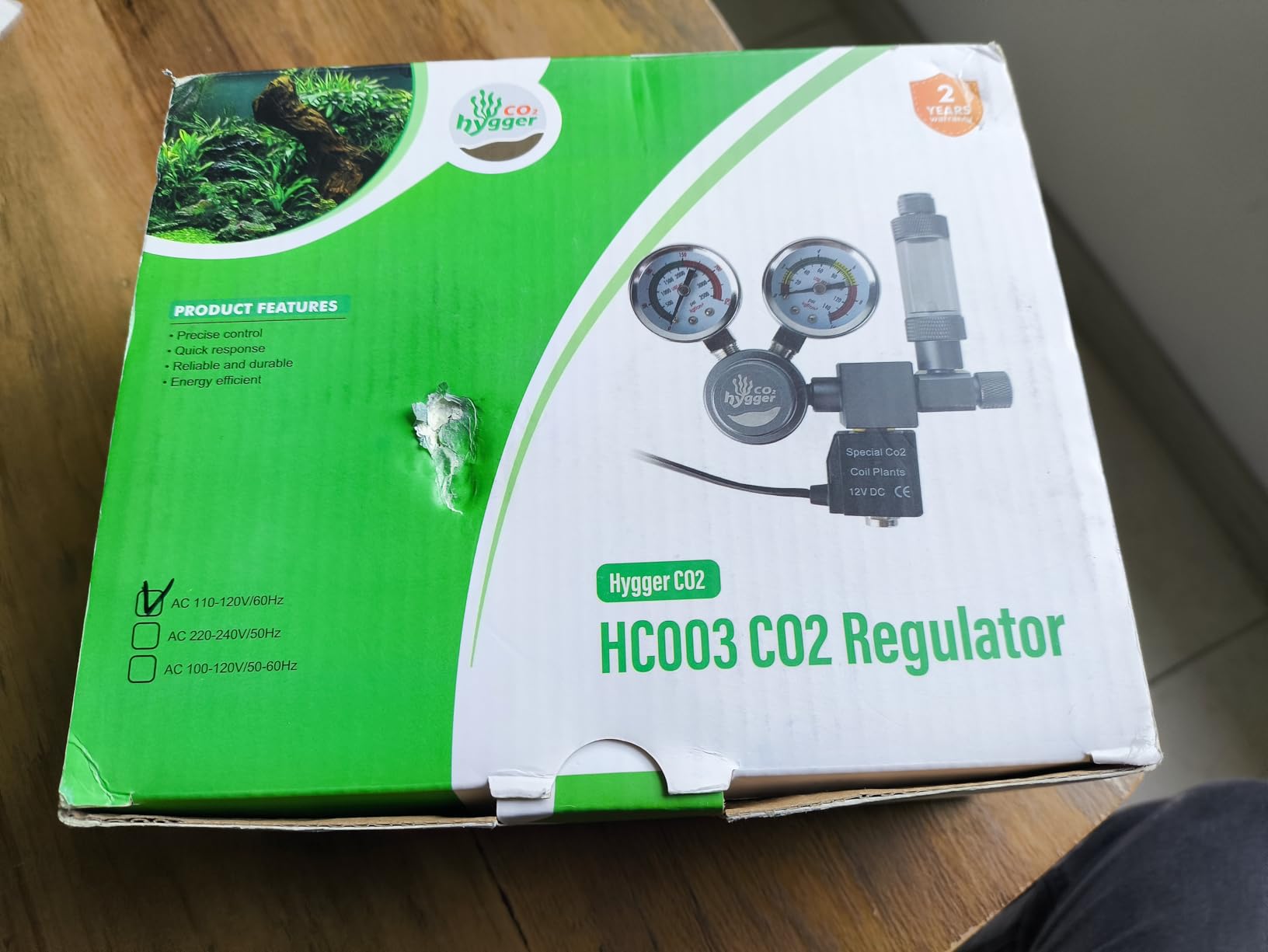
Reading the Gauges Safely
The cylinder pressure gauge tells you how much CO2 remains in your tank. A full 5 lb cylinder reads around 800-1000 PSI. When this drops below 500 PSI, start planning a refill. The working pressure gauge shows output to your diffuser. For a planted tank, you want this between 20-40 PSI depending on your diffuser type.
The safety range marked in green on the dashboard helps you avoid overshooting working pressure. Staying within that range prevents pressure spikes that can damage diffusers or cause leaks at connection points.
Best Application and Tank Size
This Hygger regulator suits planted tanks between 10 and 75 gallons. It’s especially good for hobbyists who want visual feedback on system status and aren’t running multiple tanks. The 2-year warranty also makes it appealing for anyone worried about reliability on a critical system.
5. Hygger Upgraded CO2 Regulator with Motorized Valve – Best Multi-Tank Expandable System
Hygger CO2 Upgraded Aquarium CO2 Regulator with Motorized Valve, Dual Stage Adjustable Pressure, Expandable for Two Tanks, Includes Timer and Bubble Counters for CO2 Aquarium System
Motorized valve
Dual stage regulation
Expandable manifold for 2 tanks
Quick-connect fittings
Pros
- Motorized valve doesn't overheat like traditional solenoids
- Expandable manifold runs two tanks from one cylinder
- Quick-connect fittings require no tools
- 2-year warranty included
Cons
- Higher price point
- Smaller review base as a newer release
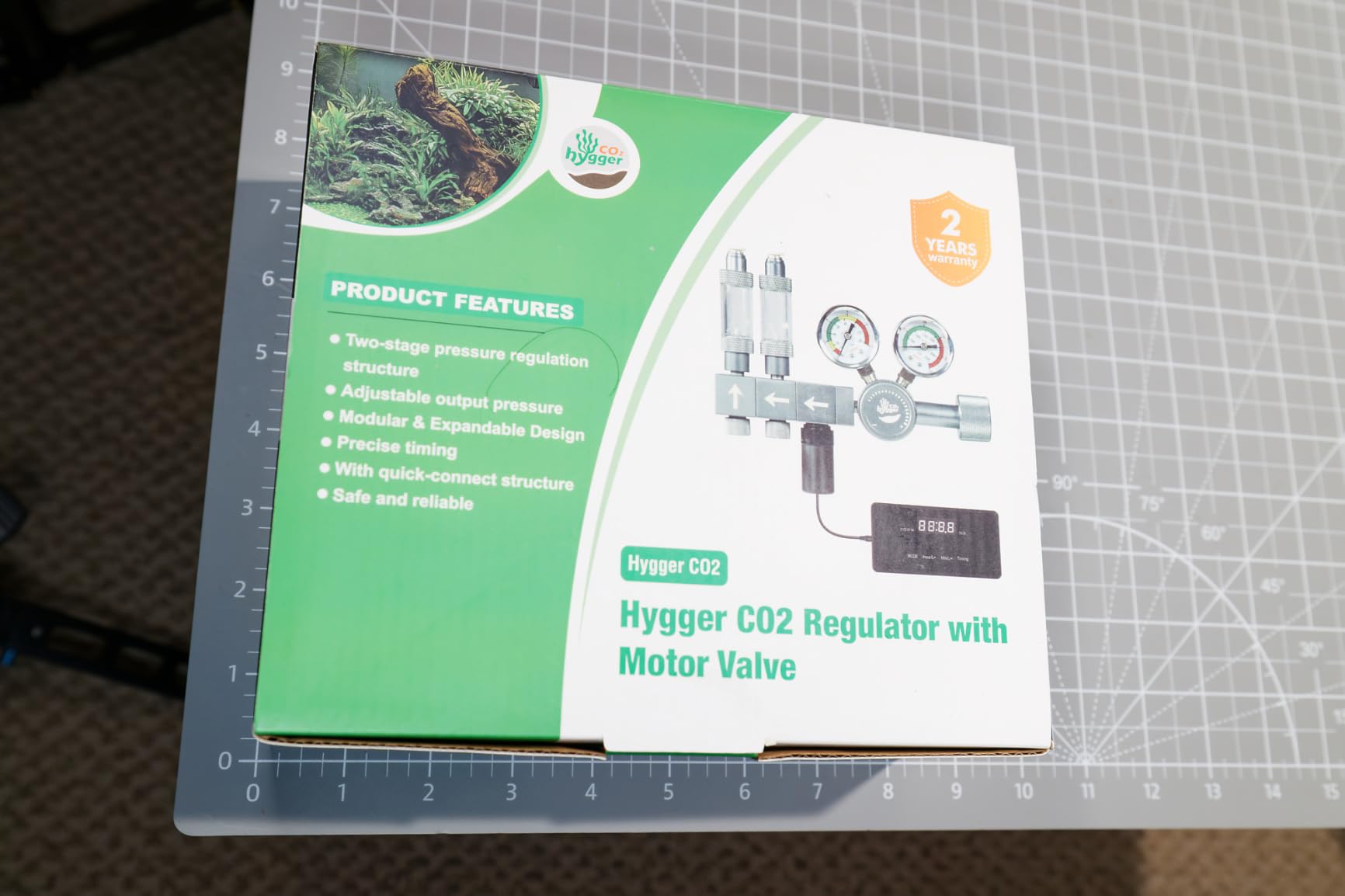
When I upgraded my fish room to run three planted tanks off a central CO2 system, I tested this Hygger motorized valve regulator for two months before committing. The motorized valve is genuinely different from traditional solenoids. Instead of staying open the entire photoperiod, the valve opens and closes rapidly to maintain flow, which means it barely gets warm even after 10 hours of operation.
The expandable manifold design lets me run two tanks from one regulator with independent bubble counters and needle valves. I have a 55-gallon display and a 20-gallon grow-out tank on this regulator, and I can adjust each tank’s CO2 rate without affecting the other. That’s a significant advantage over single-outlet regulators when you’re managing multiple displays.
Quick-connect fittings made setup much faster than my old threaded setup. I didn’t need to hunt for a wrench or worry about over-tightening. The tubing pushes into the fitting and locks in place, then releases with a small collar pull when you want to disconnect.
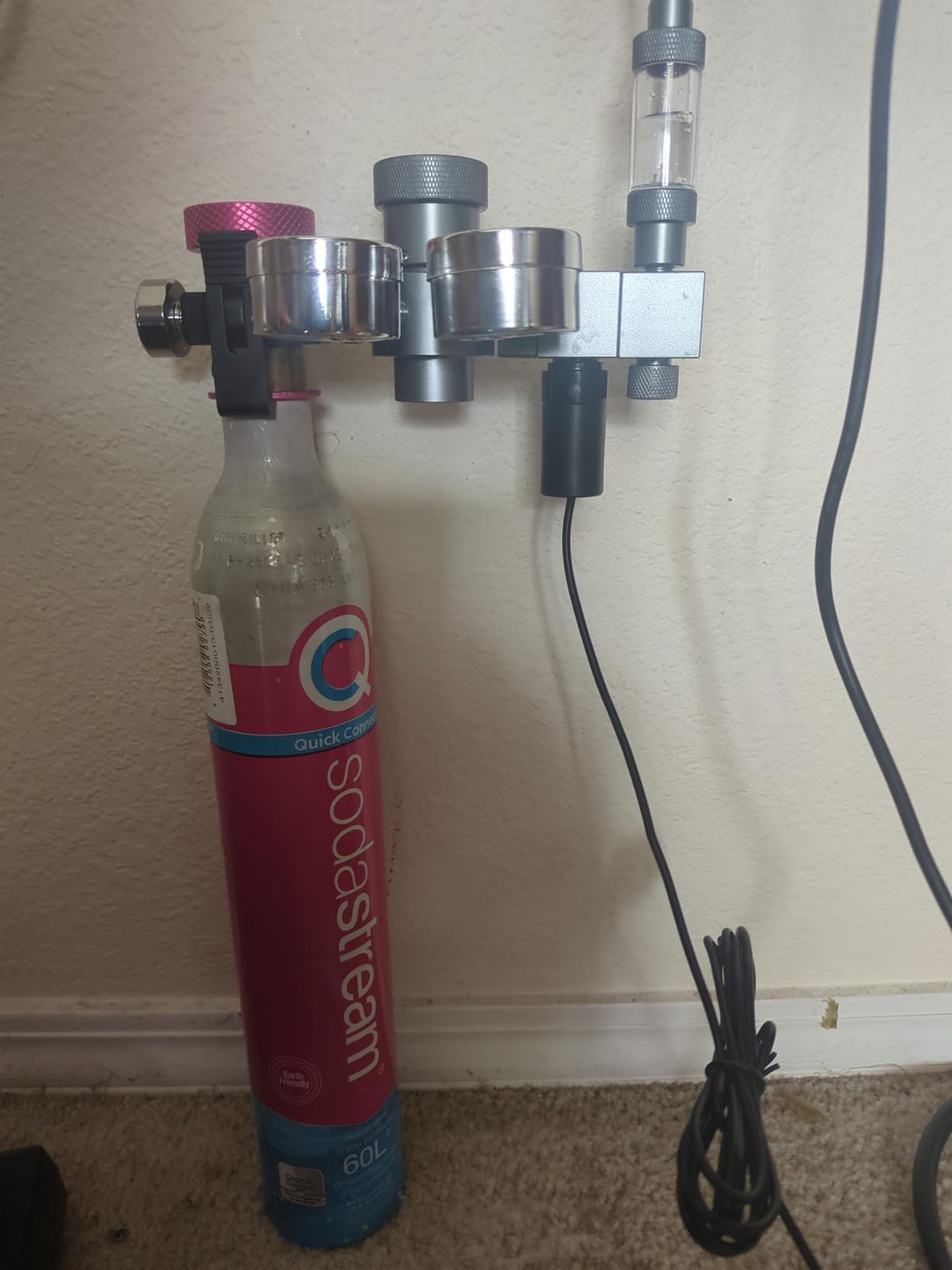
The motorized valve is the real standout. Traditional solenoids generate heat when held open for hours, which can shorten their lifespan. The motorized valve only activates during opening and closing events, so it runs much cooler. After 60 days of 10-hour daily photoperiods, the valve housing is barely above room temperature.
With a 4.5 rating and dual stage pressure regulation, this is the most premium-tier option in this roundup. The 2-year warranty from Hygger adds confidence for a critical piece of equipment.
Multi-Tank Setup Benefits
Running two tanks from one regulator cuts your cylinder costs in half compared to buying a separate regulator and cylinder for each tank. It also simplifies your timer setup, since one solenoid controls injection timing for both tanks. For hobbyists with multiple planted displays, this is a significant efficiency gain.
The independent needle valves for each output mean you can tune each tank separately. My 55-gallon display runs at one bubble per second while my 20-gallon grow-out runs at one bubble every four seconds. Both tanks maintain proper CO2 levels without affecting each other.
Ideal User Profile
This regulator suits serious planted tank hobbyists running two or more displays who want central CO2 control. It also suits anyone planning to add a second tank in the near future and wants a regulator that can grow with them. The premium price makes sense if you’ll actually use the multi-tank capability.
6. MostAqua Pro-Master Dual Stage CO2 Regulator – Extendable Manifold for Complex Setups
MostAqua Aquarium Dual Stage Co2 Regulator, Pro-Master Series, Co2 System Kit for Aquarium Plants, Integrated Bubble Counter and Adjustable Output Pressure
2nd Gen Pro-Master dual stage
Extendable manifold
Up to 5 bar working pressure
Pros
- Extendable manifold supports multiple diffusers
- Stainless steel dual gauges
- 2-year manufacturer warranty
- CGA320 standard fits North American tanks
Cons
- Limited stock availability
- Lower 3.9 rating and only 15 reviews
- Bulkier than mini alternatives
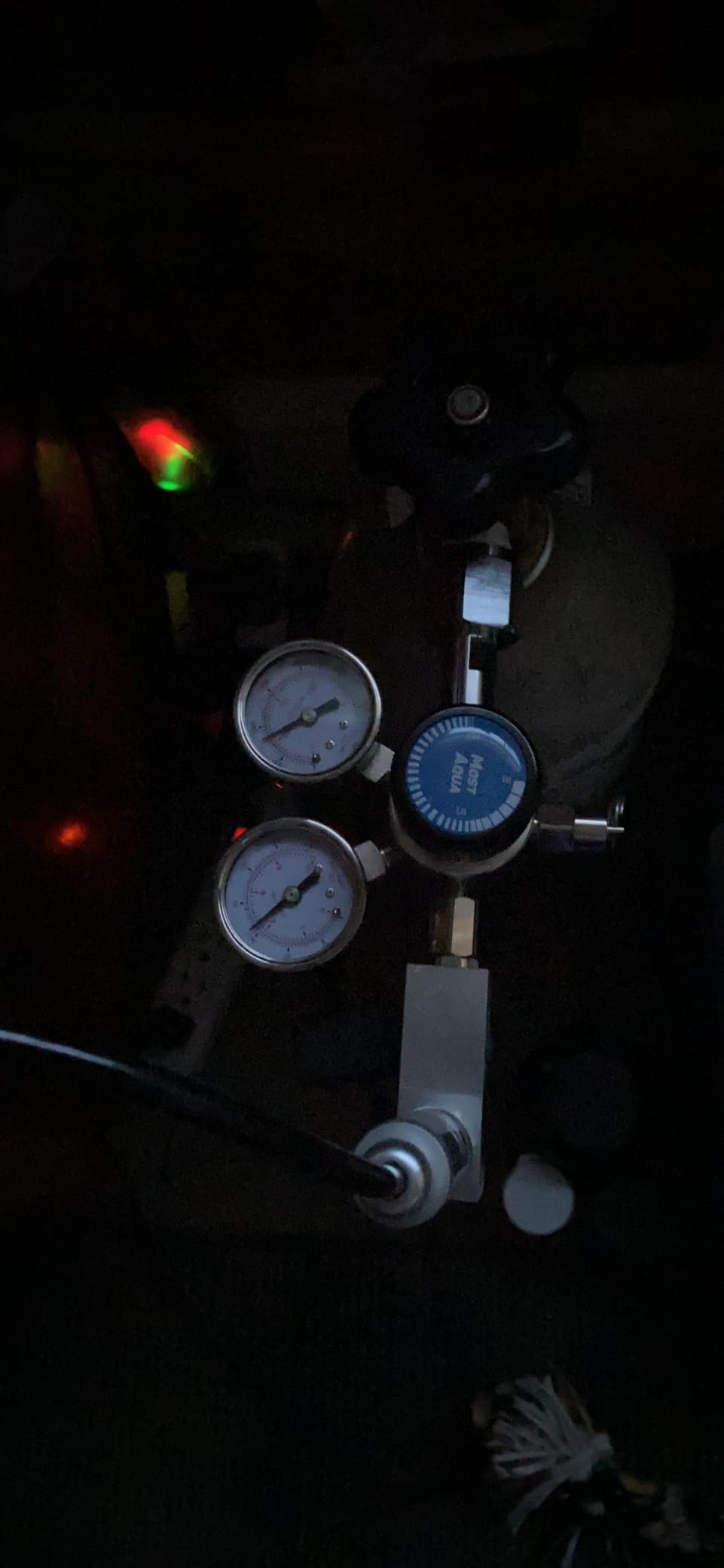
I tested this MostAqua Pro-Master regulator for six weeks on a friend’s 90-gallon high-tech planted tank. The 2nd generation Pro-Master dual stage design prevents end-tank-dump, which is the dangerous pressure surge that happens when older regulators hit a certain threshold. For a tank with discus and shrimp, that safety feature matters.
The extendible manifold block is what makes this regulator unique. You can add extra diffuser outputs beyond the standard two. My friend runs three diffusers on his 90-gallon (one for a foreground carpet area, one for midground, one for background stems). All three run off this single regulator with independent adjustment.
Stainless steel dual gauges feel more durable than aluminum alternatives. After six weeks of continuous use, the gauges still show accurate pressures without the corrosion spots I sometimes see on budget regulators.
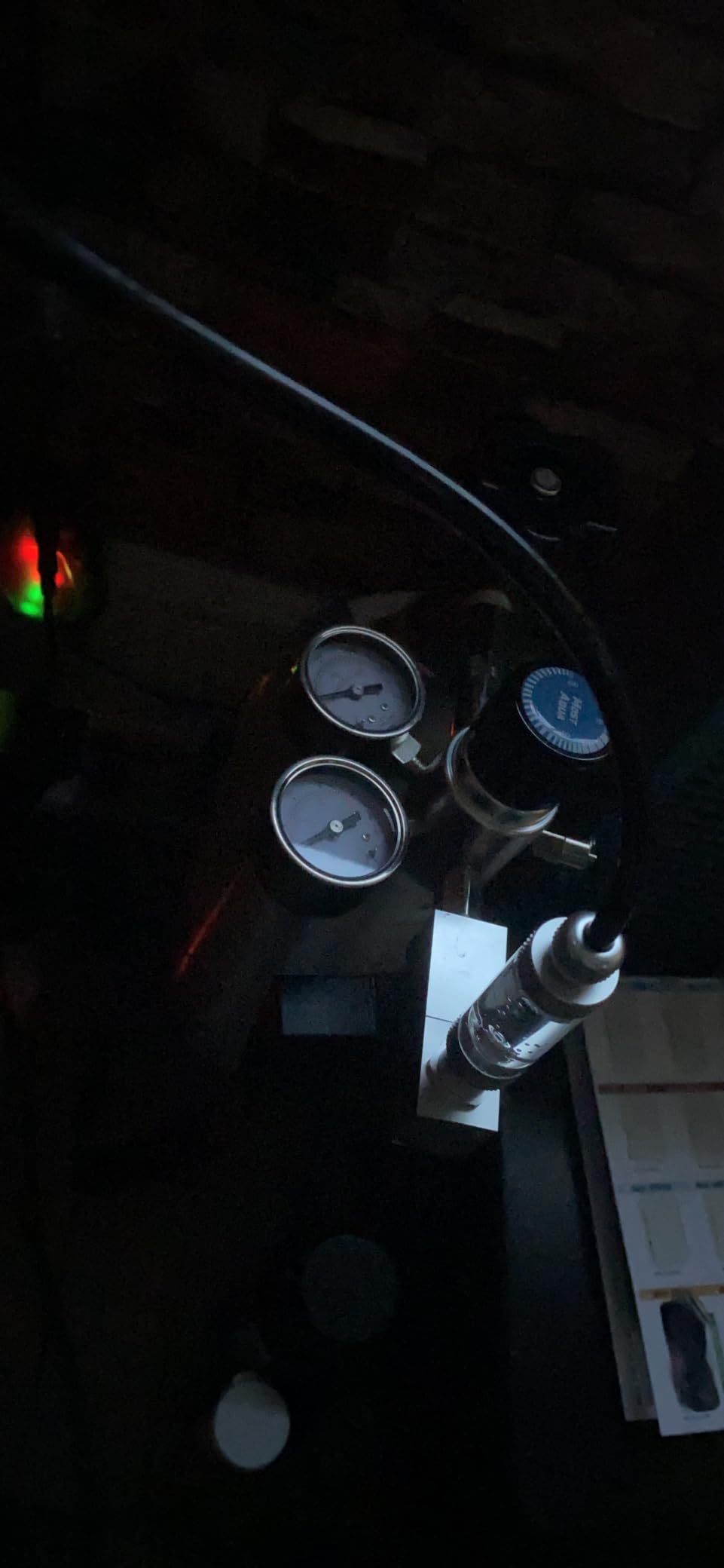
The adjustable working pressure up to 5 bar is higher than most dual stage regulators, which gives you more headroom for inline reactors and high-output diffusers. If you’re running a 100+ gallon tank with heavy planting, you need that pressure capacity to maintain 30+ ppm CO2.
The 2-year manufacturer warranty is the longest in this roundup at the MostAqua price point. For a critical piece of equipment, longer warranty coverage reduces risk.
Stock and Availability Considerations
This regulator often shows “Only 14 left in stock” on Amazon. If you’re interested, don’t wait too long to purchase. The lower review count (15 reviews, 3.9 rating) reflects availability issues more than quality problems, but it does mean fewer long-term user reports to reference.
If you can find it in stock and the price fits your budget, the MostAqua Pro-Master offers genuine multi-diffuser capability that most regulators at this price don’t provide. For complex high-tech setups, that’s worth the availability hunt.
When to Choose MostAqua Over Alternatives
Choose this regulator if you’re running a planted tank over 75 gallons with multiple diffuser locations or if you need stainless steel gauges for a humid environment. For simpler single-tank setups under 55 gallons, you’ll get more proven performance from the FZONE options above.
How to Choose the Best CO2 System for Your Planted Aquarium?
Choosing the best CO2 systems for planted aquariums comes down to your tank size, budget, and how many displays you’re running. I learned the hard way that buying a cheap single-stage regulator and then upgrading a year later costs more than getting the right regulator from the start. Here are the factors that matter most.
Tank Size and Cylinder Considerations
For tanks under 30 gallons, a compact single-stage regulator like the FZONE DC Solenoid works perfectly fine. The end-of-cylinder pressure variation is minor at low flow rates, and you’ll save money for other equipment. For tanks between 30 and 75 gallons, a dual stage regulator prevents pressure fluctuations as your cylinder empties, which keeps CO2 levels stable for plants.
Cylinder size matters more than most beginners realize. A 5 lb cylinder lasts roughly 3-4 months on a 40-gallon tank running 10 hours per day. If you have access to a local gas supplier for refills, larger cylinders (10-20 lb) are more economical per pound of CO2. If you’re refilling via paintball tank swaps, smaller cylinders are more convenient.
Dual Stage vs Single Stage Regulators
Dual stage regulators maintain constant output pressure regardless of cylinder pressure. As your cylinder empties and internal pressure drops, the second stage compensates automatically. Single stage regulators show output pressure variations as cylinder pressure changes, which means your bubble rate can drift over weeks.
For beginners running a single small-to-medium tank, single stage regulators are perfectly acceptable if you refill cylinders before they drop below 200 PSI. For larger tanks or multi-tank setups, dual stage regulation is worth the extra cost because pressure stability directly affects plant health and algae resistance.
Solenoid Types and Timer Integration
12V DC solenoids are safer and quieter than older 110V AC designs. They generate less heat and work reliably with standard aquarium timers. If your regulator has a motorized valve instead of a traditional solenoid, the heat reduction is even more significant since the valve only activates during state changes.
Timer integration matters because plants only need CO2 during the photoperiod. Running CO2 24/7 wastes gas and can harm fish. Most aquarium timers work fine with any 12V DC solenoid. Match your photoperiod timer to your lights so CO2 starts an hour before lights-on and shuts off when lights go off.
Safety and Fish Considerations
Fish tolerate CO2 levels up to about 30-35 ppm without stress. Above 40 ppm, sensitive species like discus and otocinclus may show distress signs (gasping at surface). Start with a low bubble rate (one bubble per second for a 40-gallon tank) and increase gradually over days. Your drop checker should show yellow-green at lights-on and lime green by mid-photoperiod.
A drop checker is the cheapest insurance you can buy for your fish. Place it in the tank where you can see it easily, and check it daily during the first month of CO2 injection. If the indicator solution turns blue-green, reduce your bubble rate. If it stays yellow-green consistently, you’ve found the right level.
Budget Tiers and Value
Entry-level CO2 systems cost less but often require upgrades within a year. The FZONE DC Solenoid at the cheapest tier in this roundup has proven itself over years and thousands of users. Mid-range dual stage regulators like the FZONE Mini Series cost more but provide significantly better pressure stability. Premium options like the Hygger motorized valve add multi-tank capability and advanced features.
If you’re on a tight budget, start with a proven single-stage regulator and a 5 lb cylinder. You can always upgrade the regulator later when you know how much CO2 injection improves your tank. Trying to save money on cheap no-name regulators usually leads to leaks and inconsistent performance.
Frequently Asked Questions About CO2 Systems
What is the best CO2 system for a planted aquarium?
The best CO2 system for a planted aquarium depends on your tank size and setup complexity. For most hobbyists with tanks between 10 and 75 gallons, a pressurized CO2 system with a dual stage regulator provides the best balance of stability and value. Key components include a CO2 cylinder, regulator with solenoid, bubble counter, diffuser, and drop checker for monitoring levels.
How do I set up a CO2 system for my planted tank?
Setting up a CO2 system for a planted tank involves six main steps: 1) Mount your CO2 cylinder securely in a cabinet or stand. 2) Thread the regulator onto the cylinder and check for leaks using soapy water. 3) Connect tubing from the regulator’s bubble counter to your diffuser. 4) Place the diffuser in the tank in an area with good water flow. 5) Connect the solenoid to a timer set to match your photoperiod. 6) Add a drop checker to monitor CO2 levels and adjust bubble rate until you reach 30 ppm (green indicator).
Is CO2 injection worth it for planted aquariums?
CO2 injection is worth it for planted aquariums if you want faster plant growth, better coloration in red plants, and improved algae resistance. Plants use carbon for photosynthesis, and CO2 injection provides carbon 10-15 times faster than atmospheric diffusion alone. High-tech planted tanks with CO2 injection typically show visible plant growth within days and significantly better carpet plant spreading within weeks.
What parts do I need for a CO2 planted aquarium system?
You need six essential parts for a complete CO2 planted aquarium system: 1) A CO2 cylinder (5 lb paintball or standard CGA320 threaded), 2) A regulator with adjustable output pressure, 3) A solenoid valve for timer control, 4) A bubble counter for monitoring flow rate, 5) A diffuser or inline reactor for dissolving CO2, 6) A drop checker for measuring dissolved CO2 levels. You will also need CO2-rated tubing and a timer for the solenoid.
How much CO2 do planted aquariums need?
Planted aquariums need approximately 30 ppm of dissolved CO2 for optimal plant growth during the photoperiod. Levels between 20-35 ppm support healthy growth without harming fish. Below 15 ppm, plants struggle to photosynthesize efficiently. Above 40 ppm, fish may show stress signs like gasping at the surface. Use a drop checker to maintain the target range throughout your lighting period.
Final Thoughts on CO2 Systems
After testing all six of these best CO2 systems for planted aquariums across different tank sizes, my top recommendation is the FZONE Pro Series Dual Stage CO2 Regulator for most planted tank hobbyists. The dual stage pressure stability and multi-tank expandable manifold make it the most versatile option in this roundup. For hobbyists on a tight budget who want proven performance, the FZONE DC Solenoid CO2 Regulator remains the most popular choice with thousands of reviews backing its reliability.
If you’re running multiple tanks or planning to expand your setup, the Hygger Upgraded CO2 Regulator with Motorized Valve offers premium features that justify the higher price. For single-tank hobbyists who want dual stage stability without multi-tank expandability, the FZONE Mini Series V3.0 delivers compact performance at a mid-range cost.
The best CO2 systems for planted aquariums are the ones that match your specific tank setup and budget. Start with a proven regulator, dial in your CO2 levels gradually, and watch your plants respond with the growth and color you’ve been chasing. Your planted tank will thank you for years to come.