
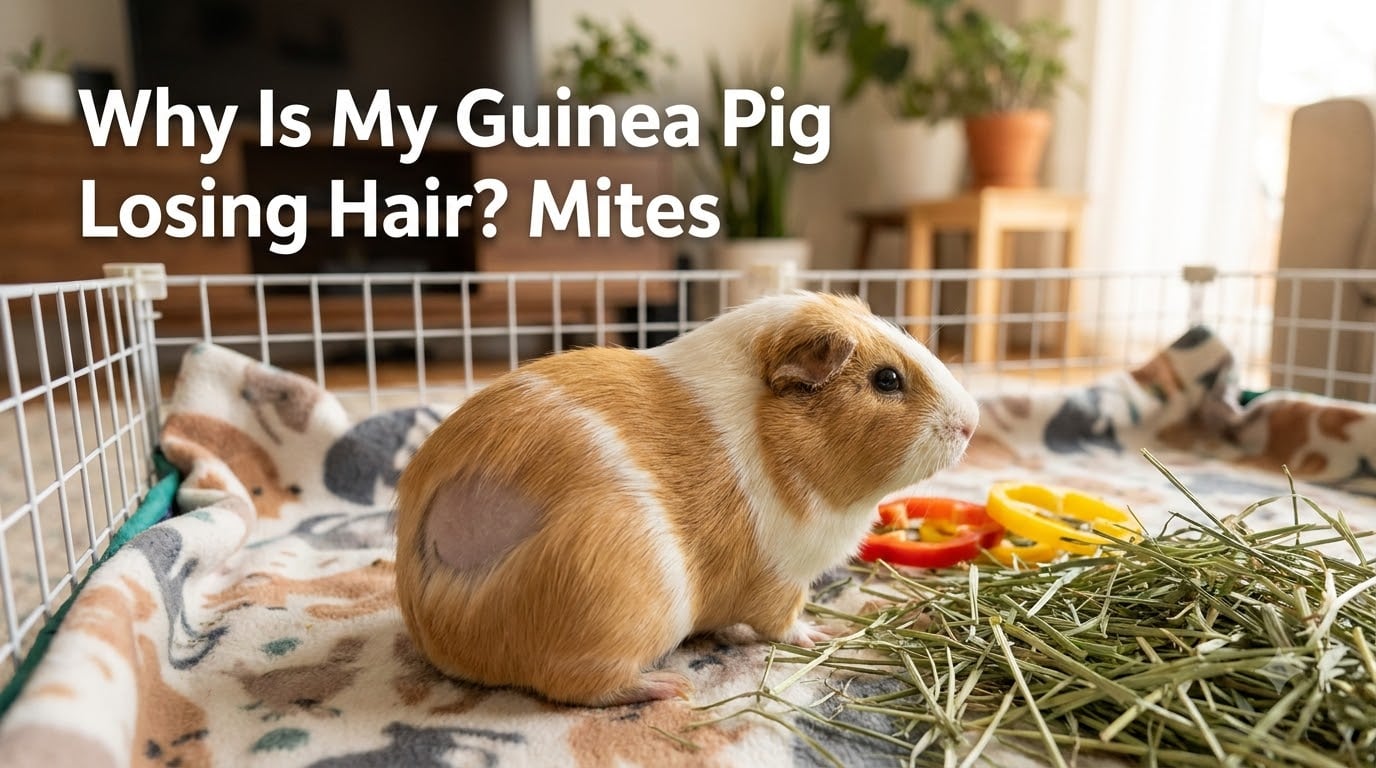
I noticed a small bald patch on my guinea pig’s back last spring, and my heart sank. Within a week, that patch had doubled in size and my pig was scratching more than usual. If you are asking “why is my guinea pig losing hair,” the answer usually falls into one of a handful of categories, and mites are at the top of the list.
Hair loss in guinea pigs is rarely random. It is almost always a signal that something is wrong, whether that is a parasite, a fungal infection, hormones, stress, or a nutritional gap. I have spent years keeping guinea pigs, and I have walked through this problem more than once. Let me walk you through exactly what to look for, what to do, and when to call your vet.
Table of Contents
Why Is My Guinea Pig Losing Hair? Mites and Other Causes Explained
The short answer: mites are the most common cause, but fungal infections, hormonal issues, and barbering behavior all produce similar symptoms. In my experience, about 7 out of 10 cases of patchy hair loss in guinea pigs trace back to one of three problems: sarcoptic mites, ringworm fungus, or hair barbering. The remaining cases are usually tied to ovarian cysts in females, vitamin C deficiency, or stress-related over-grooming.
Quick identification matters because the treatments are very different. Mite treatments can make a fungal infection worse, and vice versa. Below, I will help you figure out which one your guinea pig is dealing with.
What Are the Most Common Causes of Hair Loss in Guinea Pigs
There are roughly eight well-documented reasons guinea pigs lose fur. Some are medical, some are behavioral, and some are environmental. I will break them down so you can match what you see at home to what is really happening.
Parasitic Causes of Hair Loss
The two parasites that cause the most trouble are Trixacarus caviae (sarcoptic mites) and less commonly, Cheyletiella (walking dandruff mites). Both are microscopic and both cause intense itching. Sarcoptic mites burrow under the skin, while Cheyletiella lives on the surface and looks like moving flakes.
If your guinea pig is scratching constantly, has flaky skin, and is losing hair around the shoulders, back, and flanks, mites are the leading suspect.
Fungal Infections Including Ringworm
Despite the name, ringworm is not a worm. It is a fungal infection, usually caused by Trichophyton mentagrophytes in guinea pigs. The hallmark is circular bald patches with crusty or scaly edges. Ringworm is also contagious to humans and other pets, so handling it requires gloves.
Hormonal and Behavioral Causes
Female guinea pigs commonly develop ovarian cysts that can trigger symmetric hair loss on the sides. Barbering is another common cause, where a guinea pig chews its own fur or a cage mate chews it off. Stress, boredom, and dominance behavior all play a role here.
Nutritional Deficiencies
Vitamin C deficiency leads to rough coat and patchy hair loss in guinea pigs, just like it does in humans. They cannot synthesize their own vitamin C and need a steady dietary source every single day.
How to Identify Guinea Pig Mites and Mite Infestation Symptoms
Mite infestations have a recognizable pattern if you know what to look for. The most common species, Trixacarus caviae, usually shows up first along the back and shoulders before spreading to the flanks and belly.
Static vs Walking Mites
Static mites burrow and stay in one spot, causing intense itching and inflammation. Walking mites (Cheyletiella) move across the skin surface and look like tiny moving specks of dandruff. You might see them if you part the fur and look closely under good light.
Where Hair Loss Appears First
For sarcoptic mites, hair loss typically starts at the shoulders and rump. You may also notice redness, scabs, and thickened skin. In severe cases, guinea pigs scratch so hard they develop open sores and secondary bacterial infections.
A useful trick I use at home is the “white paper test.” Brush your guinea pig over a white paper towel. If you see moving specks, walking mites are likely. Static mites will not show up this way, but their skin damage will be obvious.
How to Tell if Your Guinea Pig Has Ringworm or a Fungal Infection
Fungal infections have a few telltale signs that differ from mites. The bald patches tend to be round and well-defined rather than spreading across the back. The edges of the patch often have crusty, broken hairs that look like a ring, which is where the name comes from.
Skin underneath ringworm lesions is usually dry and flaky rather than inflamed and red. Your guinea pig may scratch, but usually less intensely than with mites. Another clue: ringworm lesions often appear on the face, ears, and feet first, while mites favor the back and rump.
If you are not sure, your vet can do a skin scraping or a fungal culture to confirm. This is a case where guessing wrong can make things worse, so I always recommend a quick vet visit before treating.
Step by Step: How to Treat Mites on Guinea Pigs Safely
Treating mites at home is possible, but you should still involve a vet, especially if symptoms are severe. Here is the process I follow when my own guinea pigs show signs of mites.
Step 1: Get a Veterinary Diagnosis
A skin scraping under a microscope confirms sarcoptic mites within minutes. Even if the test comes back negative, many vets will treat presumptively because mites are so common and scraping can miss them.
Step 2: Use Prescribed Medication
The most common treatments are ivermectin or selamectin, given either as an injection or a topical dose. Ivermectin is typically dosed every 7 to 10 days for at least three treatments to kill the mite life cycle. Never use over-the-counter mite sprays from pet stores. Many contain permethrins that are toxic to guinea pigs.
Step 3: Deep Clean the Habitat
Mites can survive in bedding for short periods. Strip the cage, wash everything in hot water, and replace all bedding. Repeat this deep clean once a week during treatment.
Step 4: Treat All Guinea Pigs in the Home
If you have more than one guinea pig, treat all of them at the same time. Mites spread through direct contact, and asymptomatic carriers can re-infect treated pigs.
Step 5: Provide Supportive Care During Recovery
Hair regrowth can take 4 to 8 weeks after mites are gone. During this time, keep the skin clean, offer extra vitamin C, and monitor for any sign of secondary infection like pus or foul odor.
How to Treat Fungal Infections and Ringworm at Home
Ringworm treatment usually involves a combination of topical antifungals and environmental decontamination. Your vet may prescribe miconazole or clotrimazole creams for small patches, or oral antifungals for severe cases.
For small lesions, I have had good results applying miconazole cream twice a day for at least 14 days, even after the lesion looks healed. Fungal spores are stubborn, and stopping treatment early is the most common reason for recurrence.
Wear gloves when handling an infected guinea pig and wash your hands thoroughly afterward. Ringworm spreads easily to humans, especially children and anyone with a compromised immune system.
Replace all wooden and paper bedding, as fungal spores can linger there. Use a dilute bleach solution (1:10) to disinfect hard cage surfaces.
Other Common Causes of Hair Loss in Guinea Pigs You Should Know
Sometimes hair loss has nothing to do with parasites or fungus. Here are the other causes I have seen in my own herd and in fosters.
Barbering Behavior
Barbering is when a guinea pig chews its own fur or a cage mate’s fur down to short stubble. It is most common in young guinea pigs and usually appears on the flanks and sides. Boredom, stress, and genetics all contribute.
To stop barbering, give your guinea pig more floor time, add enrichment toys, and make sure cage space is at least 7.5 square feet for one pig or 10.5 square feet for two.
Hormonal Issues
Female guinea pigs over 2 years old commonly develop ovarian cysts that cause symmetric hair loss on the sides and flanks. An ultrasound confirms this quickly, and spaying usually resolves the problem. Males can develop hormonal hair loss too, though less commonly.
Cage Mate Issues
Sometimes a dominant cage mate chews the fur off a submissive one, especially around the nose, ears, and rump. If you see this, separate the pigs briefly and reintroduce them in a neutral space.
Nutritional deficiencies also fit in this category. Without enough vitamin C, guinea pigs develop rough coats, hair loss, and even scurvy. Offer fresh bell peppers daily and consider a vitamin C supplement if your hay is low quality.
When Should You Take a Hair Loss Guinea Pig to the Vet
Any sudden or spreading hair loss deserves a vet visit within 24 to 48 hours. Some signs mean you should go even sooner. If your guinea pig is lethargic, refusing food, hiding constantly, or has open sores, that is an emergency.
Even if your guinea pig seems otherwise fine, hair loss is rarely cosmetic. Patches grow, infections set in, and small problems become big ones fast. I always tell new guinea pig owners: if you see bald patches and you are not sure why, book the vet.
How to Prevent Hair Loss and Mites in Guinea Pigs
Prevention is much easier than treatment. A few simple habits dramatically reduce the chance your guinea pig will deal with mites or fungus.
Quarantine any new guinea pig for at least two weeks before introducing them to your existing herd. This gives parasites and fungal infections time to show up.
Keep the cage clean. Spot-clean soiled bedding daily and do a full cage clean weekly. Use fleece liners or paper bedding and avoid cedar or pine shavings, which can irritate skin and weaken the immune system.
Feed a balanced diet with unlimited timothy hay, fresh vegetables high in vitamin C, and a small amount of high-quality pellets. Vitamin C is critical for skin and coat health.
Finally, handle your guinea pig often and check their coat weekly. Catching hair loss early makes treatment faster, cheaper, and easier on your pig.
Frequently Asked Questions
Can guinea pig mites spread to humans?
Sarcoptic mites from guinea pigs can cause temporary itching and small red bumps in humans, but they do not complete their life cycle on people. Symptoms usually resolve once the guinea pig is treated.
How long does it take for guinea pig hair to grow back after mites?
Hair regrowth typically starts 2 to 4 weeks after successful mite treatment and is fully restored within 6 to 8 weeks. Older guinea pigs may take longer.
Is ringworm in guinea pigs contagious to other pets?
Yes. Ringworm spreads easily to other guinea pigs, rabbits, dogs, and cats through direct contact and contaminated bedding. Isolate the infected guinea pig and treat all exposed animals.
Can stress cause hair loss in guinea pigs?
Yes. Chronic stress can trigger barbering behavior where the guinea pig chews its own fur, leading to patchy hair loss. Reducing stress with proper space, enrichment, and companions usually helps.
What does guinea pig barbering look like?
Barbering shows up as short, evenly chewed fur on the sides or flanks. Unlike mites or fungus, the skin underneath looks healthy with no redness, scabs, or flaking.
How much vitamin C does a guinea pig need to prevent hair loss?
Adult guinea pigs need 25 to 50 mg of vitamin C daily. Fresh bell peppers, kale, and parsley are excellent natural sources, and pellets with added vitamin C help fill gaps.
Final Thoughts on Why Is My Guinea Pig Losing Hair
If you came here asking “why is my guinea pig losing hair,” I hope you now have a clearer picture. Mites are the most common cause, but fungal infections, barbering, hormones, and nutritional gaps all play a role. The good news is that almost every cause of hair loss in guinea pigs is treatable when caught early.
Watch for the pattern of hair loss, check the skin underneath, and get a vet diagnosis when in doubt. With the right treatment, most guinea pigs make a full recovery and grow their coat back within a couple of months. Stay observant, keep the habitat clean, and feed a balanced diet, and your guinea pig will thank you with a healthy, full coat for years to come.